


The Ultimate Logistical Nightmare
Planning a trip to Mars, which could take years, presents a massive food problem. Every kilogram of supplies launched into space costs a fortune in fuel. Packing enough pre-packaged meals for astronauts is simply not feasible due to the immense weight
and volume. Growing food hydroponically is an option, but it requires significant energy, water, and space—all precious commodities on a spacecraft. This has pushed space agencies and researchers to think radically about sustainability, leading them to explore a closed-loop system where nothing is wasted, not even what the astronauts leave behind in the bathroom.
Meet Nature’s Recycling Champions
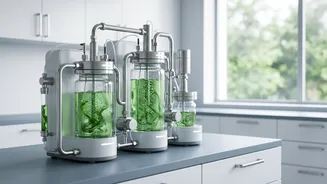
The heroes of this innovative solution are microbes. These microscopic organisms, like bacteria and yeast, are nature's master recyclers, breaking down complex organic matter into simpler components. Scientists are harnessing this natural process to tackle space waste. One approach, developed by researchers at Penn State University, uses a process called anaerobic digestion. In this system, specific microbes break down solid and liquid human waste without needing oxygen, much like how our own digestive systems work. This process efficiently treats the waste and, crucially, produces methane gas as a byproduct.
From 'Microbial Goo' to Protein-Rich Food
That methane byproduct is then fed to a different microbe, Methylococcus capsulatus, which consumes it and grows into a biomass. This resulting substance, described by one researcher as a 'microbial goo' similar in concept to Marmite or Vegemite, is incredibly nutritious. Tests have shown this biomass can be composed of 52% protein and 36% fats, making it a viable food source or a high-protein supplement for astronauts. While the idea might take some getting used to, the science is sound. The process is designed to be fast, breaking down solids in hours rather than days, and to eliminate dangerous pathogens by using high heat or alkaline conditions where other edible microbes can thrive.
Introducing the 'µBite' Cookie
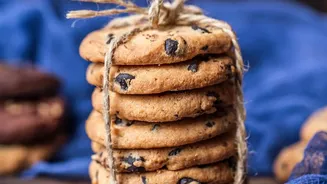
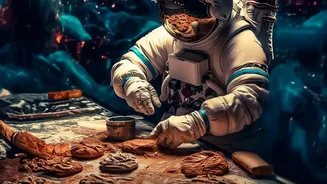
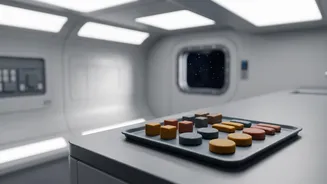
Taking the concept even further, a different team from Southern Illinois University Carbondale developed 'µBites' (pronounced microbites) as part of a NASA challenge. These aren't made from human waste, but from other mission leftovers like plastic packaging (specifically PET bottles) and agricultural waste. The process breaks down these carbon-based materials using heat, pressure, and oxygen. Then, genetically engineered yeasts consume these smaller molecules and transform them into proteins, fats, and even flavoring. One yeast strain is programmed to create a vanilla flavor, while another produces beta-carotene (a precursor to Vitamin A) from the plastic components. The final microbial mixture is combined with starch and sweetener, then 3D-printed into a cookie.
Safety, Palatability, and the Future
Of course, the two biggest questions are whether these creations are safe and if anyone would actually eat them. Researchers are tackling safety head-on. The systems are designed to operate at high temperatures or pH levels that kill most harmful bacteria. The µBites have reportedly passed initial safety analyses, though they are awaiting final institutional approval for human taste tests. Early 'smell tests' have been promising, with most participants saying they would eat the cookies in a resource-limited scenario. The psychological barrier is significant, but for astronauts on a three-year mission to Mars, a freshly printed, nutrient-rich cookie—no matter its origin—could be a welcome sight.