




Choose a Container-Friendly Champion
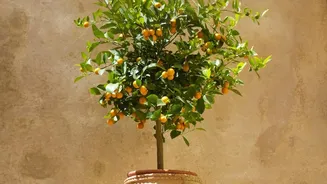
Not all lemon trees are suited for pot life. For the best chance of success, seek out dwarf or semi-dwarf varieties, which are specifically grafted onto rootstock that keeps them compact. The 'Improved Meyer' lemon is a popular favourite for containers
because it is naturally smaller, resilient, and produces a slightly sweeter, less acidic fruit. Another excellent choice is the 'Dwarf Eureka' lemon, which also stays a manageable size in a large pot. If you want a visual statement, the 'Variegated Pink' lemon offers beautiful striped leaves and pink-fleshed fruit. These dwarf varieties won't grow into towering trees, but they will still produce full-sized, delicious lemons.
The Right Home: Pot and Soil
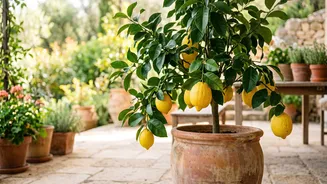
Your lemon tree's container is its world, so choose wisely. Select a pot that is at least 12-15 inches deep and has plenty of drainage holes. While a very large pot might seem like a good idea, starting too big can lead to waterlogged soil and root problems. Terracotta is a good material as it allows the roots to breathe, but keep in mind it dries out faster than glazed ceramic pots. When it comes to soil, never use dense garden soil from your yard. Citrus trees need a well-draining, slightly acidic potting mix. You can buy a pre-made citrus potting mix or create your own by blending potting soil with perlite or orchid bark to improve aeration and drainage. A healthy root system is the foundation of a healthy tree.
Let There Be Light
Lemon trees are sun worshippers. To thrive and produce fruit, your container-grown lemon needs at least eight hours of direct, bright sunlight every day. A south-facing window is often the best indoor location. If you're growing your tree on a patio or balcony, find the sunniest spot available. In very hot climates, be mindful that the roots in a dark-coloured pot can overheat in intense afternoon sun, so some protection may be needed. If you don't have enough natural light, especially during winter months indoors, you may need to supplement with a grow light to keep your tree happy and productive.
Watering Wisdom
Finding the right watering balance is crucial. Overwatering is one of the most common mistakes and can lead to root rot. The goal is to keep the soil consistently moist but never soggy. A good rule of thumb is to water deeply but infrequently. Before you water, check the soil by inserting your finger two inches deep; if it feels dry at that depth, it's time to give your tree a thorough drink until water runs out of the drainage holes. You'll need to water more often during hot, dry summer months and less frequently in the winter.
Feeding for Fruit
Container plants rely entirely on you for their nutrients. Lemon trees are heavy feeders, especially of nitrogen, and require regular fertilization to support leaf growth, flowering, and fruit production. Use a balanced, slow-release fertilizer specifically formulated for citrus trees. Follow the package directions for application rates, as over-fertilizing can cause a build-up of salts in the soil and harm the plant. Generally, you should feed your tree during the growing season (spring and summer) and reduce or stop fertilizing during the dormant winter months.
Pruning for Shape and Health
Annual pruning helps maintain your lemon tree's compact size and encourages a fruitful, healthy structure. The best time to prune is in late winter or early spring, just before the new growth begins. Use clean, sharp bypass pruners to remove any dead, diseased, or crossing branches. The goal is to open up the canopy to allow for better light penetration and air circulation. You can also shorten new shoots to maintain a bushy, compact shape. Avoid removing more than one-third of the tree's branches in a single year to prevent stressing the plant.