








The Problem with Perfect Silence
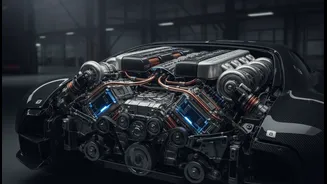
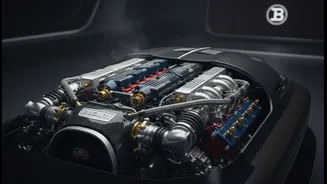
For over a century, the soul of a luxury performance car was intrinsically linked to its engine. The thunderous roar of a V8 or the complex symphony of a W12 wasn't just noise; it was character, emotion, and a core part of the brand's identity. The shift
to electric vehicles presents a profound challenge: what happens when that soul goes silent? For a brand like Bentley, whose vehicles are defined by an immersive, emotional driving experience, the near-silent hum of an electric motor is a serious problem. It threatens to strip away a century of carefully crafted heritage, leaving a void where a powerful, mechanical heartbeat used to be. Other brands have tried to fill this void with synthesized engine sounds or by amplifying the motor's whine, but Bentley decided to take a much more philosophical path.
Crafting a Dynamic Symphony
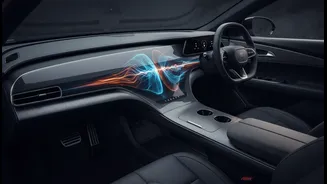
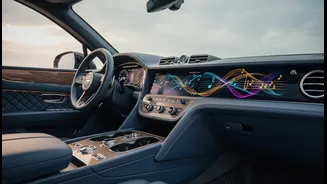
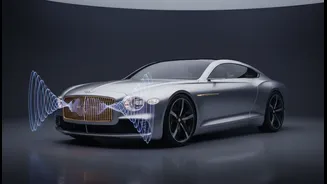
Instead of faking the past, Bentley decided to evoke it. The company's engineers put their iconic V8 engines into a recording studio to analyze what made them so compelling. Their key discovery was that the emotional appeal came not from the mechanical tone itself, but from its rhythm. They found that the cadence and impact of a V8 had striking similarities to that of a live drummer. The result of this research is the 'Bentley Dynamic Symphony', the soundtrack for the new Torcal EV. It’s not a recording of an old engine. It is a newly composed piece of music created by musicians using real instruments, primarily drums, but also incorporating the viola and bass guitar to create a powerful and emotive soundscape that responds to the driver's inputs.
The Beauty of an Imperfect Beat
Here is where the genius of the idea reveals itself. The engineers' research uncovered another crucial insight: a real combustion engine's soundtrack is not perfectly uniform. Like a live musician, it has subtle variations, tiny imperfections that give it a distinctly human quality. A human drummer is not a metronome; their rhythm breathes and shifts in nearly imperceptible ways. Bentley has intentionally programmed this 'stumble' into the Torcal’s sound. It’s a slight, almost unnoticeable variation in the rhythm designed to mimic the imperfect, organic quality of its V8 ancestors and the human musicians who inspired the track. By choosing not to be perfectly on beat, the sound aims to feel less like a machine and more like a living, breathing entity. It's emotion derived from engineered imperfection.
A High-Tech Take on Wabi-Sabi
This embrace of imperfection aligns with an ancient Japanese philosophy known as Wabi-Sabi. This worldview centers on finding beauty in things that are imperfect, impermanent, and incomplete. It is the art of appreciating the cracks in a ceramic bowl or the patina on aged wood. In a digital age that relentlessly pursues flawless perfection and sterile uniformity, Bentley’s approach can be seen as a form of high-tech Wabi-Sabi. It’s a bold rejection of the idea that 'better' always means more perfect. Instead, the Torcal suggests that character, warmth, and a connection to the human touch are the new hallmarks of luxury. By deliberately adding a flaw, a human-like inconsistency, Bentley is attempting to give its electric vehicle a soul that a perfectly sterile machine could never have.