






Who is Dr. Anil Menon?
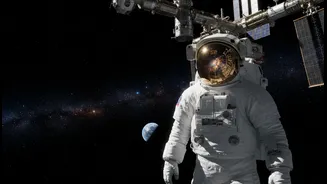
Anil Menon is a NASA astronaut, a US Space Force colonel, and a highly specialized physician. Born in Minneapolis, Minnesota, to Indian and Ukrainian immigrant parents, his roots trace back to Kerala. Before being selected as an astronaut in 2021, Menon had
already built an incredible career at the intersection of medicine and extreme environments. He served as a first responder in disasters like the 2010 Haiti earthquake, worked with climbers on Mount Everest, and was a flight surgeon in the U.S. Air Force, deploying to Afghanistan. His journey also includes a year in India as a Rotary Scholar supporting polio vaccination efforts. This diverse experience on the ground was a perfect precursor to his next roles: serving as a NASA flight surgeon for ISS crews and then becoming the first-ever flight surgeon at SpaceX, where he helped build the medical program that supported the first private and commercial human spaceflights.
The Doctor is In… Orbit
Sending a doctor to space isn't new, but Menon's specific expertise is what makes his presence on a long-duration mission so valuable. He is an actively practicing emergency medicine physician with fellowship training in both wilderness and aerospace medicine. This combination is vital. Space is the ultimate remote, hostile environment. On a mission lasting months, the crew can’t just come home if someone gets sick or injured. The communication delay with Earth makes real-time guidance for complex procedures impossible. Having an astronaut who can handle medical emergencies independently, with limited resources—much like a wilderness doctor—is a game-changer. His experience includes over 100 sorties in F-15 fighter jets and transporting over 100 patients as a part of a critical care air transport team, preparing him for high-stakes medical situations.
The Human Body's Uncharted Territory
An eight-month stay in microgravity is a serious undertaking for the human body. Without Earth's constant pull, astronauts can experience bone density loss of up to 1% per month, significant muscle atrophy, and shifts in bodily fluids that can affect everything from vision to balance. There's also the constant exposure to space radiation, which increases long-term health risks. Part of Menon's job is not just to be the crew's doctor but also a test subject. He will participate in a wide range of scientific investigations, many designed to understand how the human body adapts to space. His mission includes conducting experiments on how microgravity affects blood flow and composition and testing new medical technologies that could be crucial for future deep-space voyages to the Moon and Mars.
A Mission of Research and Innovation
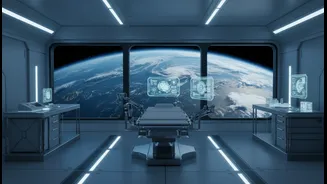
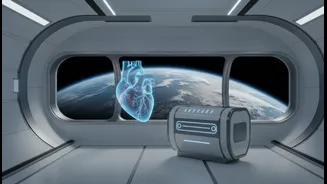
During his time on the ISS, Menon will be at the forefront of cutting-edge research. He will help test an AI-assisted ultrasound system that could one day allow astronauts to perform complex diagnostics without guidance from Earth. He is also slated to work on bioprinting of vascular tissues and refining the in-space manufacturing of semiconductor crystals, technologies with potential benefits for both future space missions and life on Earth. One of the most forward-looking experiments involves testing technology to produce intravenous (IV) fluids from the station's existing water supply. This capability would be revolutionary for missions to Mars, where carrying every single medical supply from Earth simply won't be feasible.