

A Cosmic Demolition Derby
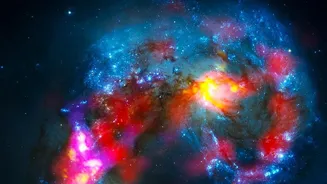
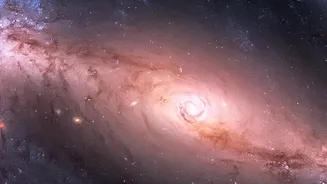
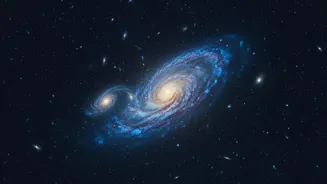
Images captured by the Hubble Space Telescope often reveal scenes of immense drama, none more so than the collision of galaxies. Systems like NGC 7764A or Arp-Madore 2339-661 showcase trios of galaxies caught in a gravitational tug-of-war millions of light-years
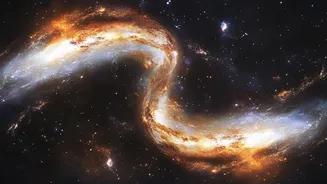
away. In these cosmic portraits, we see galaxies pulling, twisting, and tearing at each other. Long, faint trails of stars and gas, known as tidal tails, stretch into the void, giving the impression of objects struck at great speed. Though they look like snapshots of a sudden crash, these interactions are incredibly slow-motion events, unfolding over hundreds of millions of years. They are not just beautiful; they are natural laboratories for understanding how galaxies grow and change over cosmic time.
The Science of the Smash-Up
When you hear “galaxy collision,” you might imagine a cosmic pile-up of stars. In reality, the distances between individual stars are so vast that direct stellar collisions are almost nonexistent. Instead, the primary force at play is gravity. As two or more galaxies draw closer, their mutual gravitational pull begins to warp their shapes. The most significant interaction happens between their vast clouds of interstellar gas and dust. As these clouds from different galaxies slam into each other, they are compressed and shocked. This gravitational disruption is the engine of transformation, scrambling the neat spiral arms of galaxies and funnelling enormous amounts of material towards their centers, forever altering their structure and fate.
A Starburst of Creation
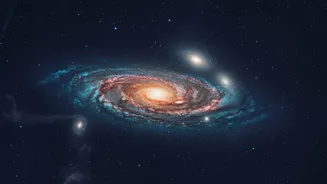
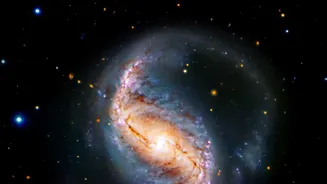
While galactic collisions are destructive on a structural level, they are also incredibly creative. The shock and compression of gas clouds trigger a massive wave of star formation, an event astronomers call a “starburst”. In images of colliding galaxies like Arp-Madore 417-391, we can see this process in action. The collision has created a spectacular, brilliant blue ring of hot, young, massive stars. This intense burst of activity can forge new stars at a rate hundreds of times higher than in a quiet galaxy like our own Milky Way. These dazzling clusters of newborn stars are a key feature of galactic mergers, providing tangible evidence that these violent events are also a primary mechanism for building new stellar populations.
Galactic Fossils and Our Own Future
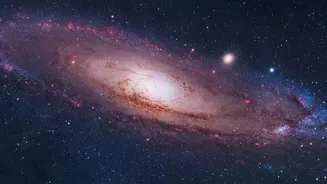
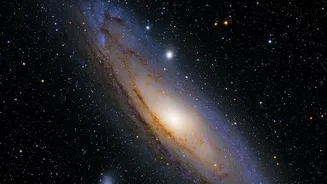
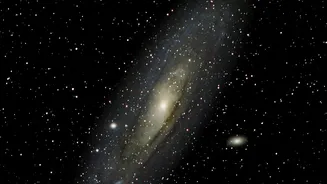
These cosmic collisions are a fundamental part of galaxy evolution. Most large galaxies, including our own, are thought to have grown to their current size by consuming smaller ones over billions of years. The interacting galaxies we see today are snapshots of a process that was even more common in the early universe. Eventually, the colliding galaxies will completely merge, their distinct structures erased to form a single, often larger and more elliptical, galaxy. This cosmic story is not just happening in the distant universe; it's a preview of our own future. Astronomers have confirmed that the Milky Way is on a collision course with its large neighbour, the Andromeda Galaxy, with the two set to begin merging in about 4.5 billion years.
Hubble's Peculiar Zoo
Hunting for these cosmic smash-ups is a key mission for telescopes like Hubble. Many of these strange and wonderful objects are catalogued in collections like the Arp-Madore catalogue, which specifically lists “peculiar galaxies” in the southern sky, many of which are interacting or merging. Instruments like Hubble’s Advanced Camera for Surveys (ACS) are optimized to capture these distant, ancient events with stunning clarity. These observation campaigns not only produce breathtaking images but also help build a list of intriguing targets for even more advanced observatories like the James Webb Space Telescope, ensuring that our understanding of these cosmic dances will continue to deepen.