




A Picture of Cosmic Deception
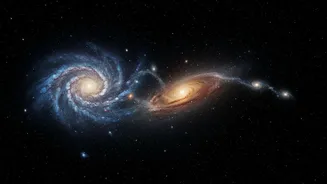
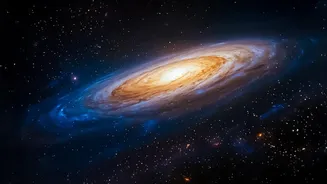
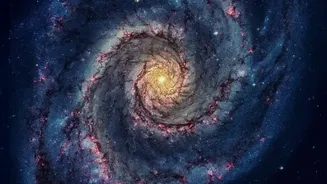
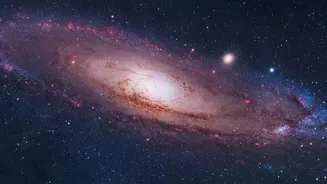
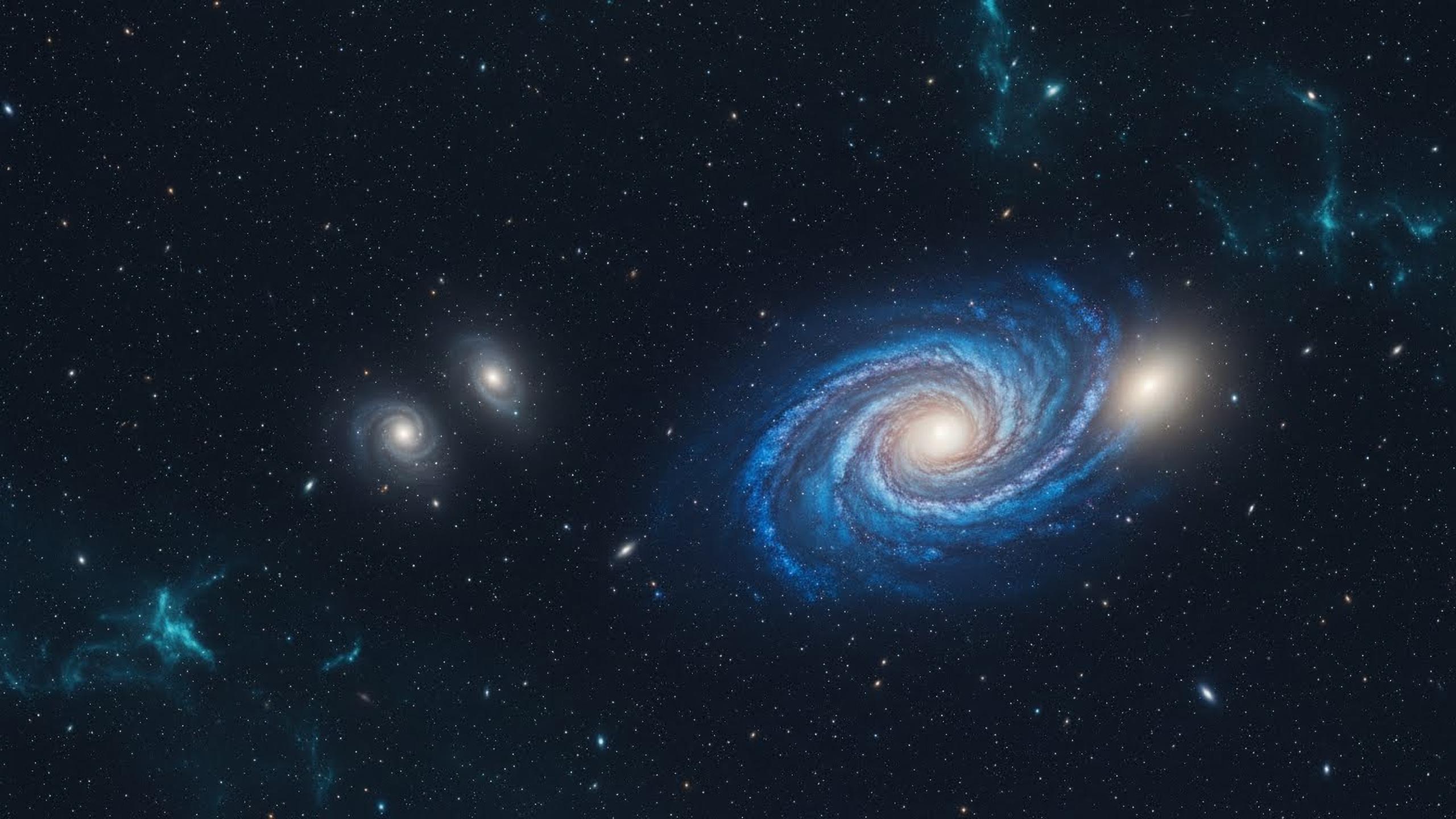
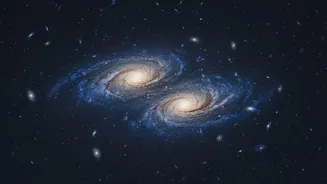
The image, featured as NASA's Astronomy Picture of the Day for August 10, 2026, presents a trio of galactic pairings set against a black, star-speckled canvas. To the casual observer, they look like neighbours. One pair seems to be in the early stages
of a gravitational dance, their glowing arms reaching toward one another. Another appears to be a large galaxy with a smaller companion tagging along. A third pair looks to be actively merging, a slow-motion collision billions of years in the making. It’s easy to imagine these are six galaxies in three distinct, interacting systems. Yet, for most of them, this apparent closeness is nothing more than a magnificent optical illusion, a chance alignment from our specific vantage point here on Earth. They are the astronomical equivalent of holding your thumb up to the Moon; they look close, but they are separated by unimaginable distances.
The Universe's Ultimate Perspective Trick
This illusion stems from our two-dimensional view of the three-dimensional universe. When we look at the night sky, we see objects projected onto a flat plane. It’s difficult to perceive depth. An incredibly bright and distant galaxy can appear right next to a dimmer, much closer one. Astronomers call this a line-of-sight-alignment, and it can be misleading. To peel back this illusion, scientists become cosmic detectives, using sophisticated tools to measure the true distances to these objects. One primary method involves analyzing the light from a galaxy. As the universe expands, distant galaxies are moving away from us, stretching the wavelength of their light towards the red end of the spectrum—a phenomenon known as redshift. The greater the redshift, the farther away the galaxy is. By measuring the redshift for each galaxy in the image, astronomers can determine whether they are true partners or just passing strangers in the cosmic night.
Unpacking the 'Couples'
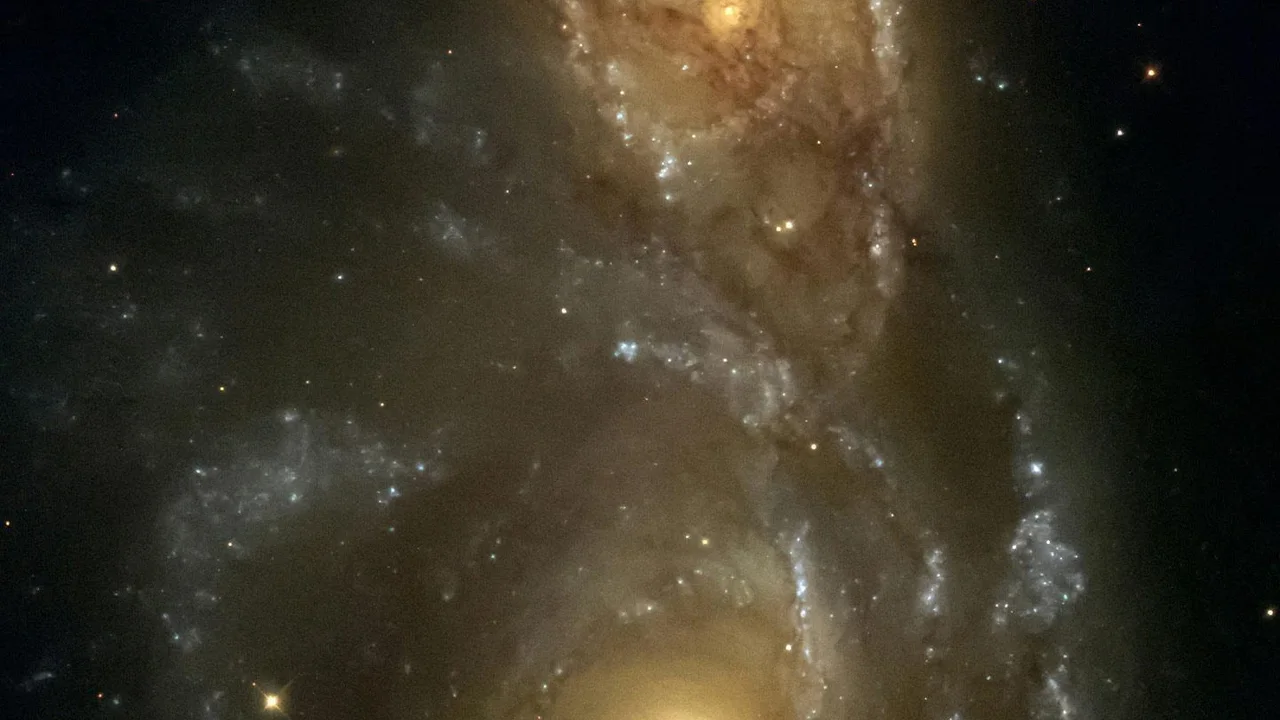
The featured image is a masterclass in this concept, with each pair telling a different story. The top pair features NGC 4650A, a fascinating polar ring galaxy, but it is likely not currently interacting with its apparent neighbour. The middle pair includes the large spiral galaxy NGC 4650. While it and its smaller companion look like they could be gravitationally bound, analysis of their relative speeds suggests this is not the case. They are ships passing in the night. It is only the bottom pair, NGC 4622A and NGC 4622B, that are confirmed to be truly interacting. These two are in the process of a slow-motion merger that will likely result in a single, larger galaxy in about a billion years. All of these galaxies are believed to be members of the much larger Centaurus Galaxy Cluster, but even within this cluster, distances are immense.
Why The Real Story Matters
Distinguishing between a true galactic merger and a chance alignment is crucial for astronomers. When galaxies actually collide, their gravitational forces tear at each other, triggering massive bursts of star formation and fundamentally reshaping their structures over millions of years. Studying these real interactions provides invaluable insight into how galaxies, including our own Milky Way, have grown and evolved over cosmic time. If scientists were to mistake a line-of-sight illusion for a real merger, their conclusions about galaxy evolution would be based on flawed data. These chance alignments aren't useless, however. They provide unique opportunities, such as when a foreground galaxy backlights a background one, allowing astronomers to study the dust and gas in the closer galaxy in silhouette, as was the case with the famous NGC 3314 pairing. These visual tricks, therefore, offer their own unique scientific rewards.