

The 'Doomsday Glacier' Explained
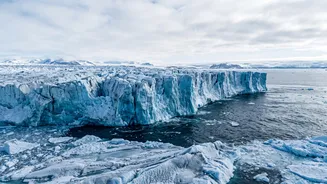
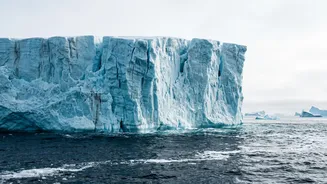
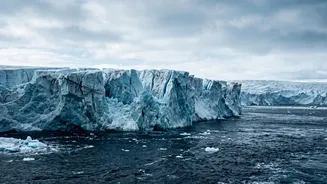
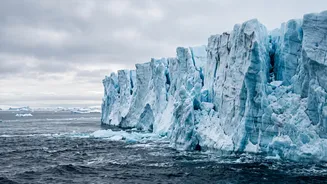
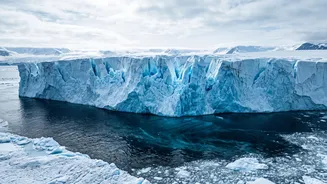
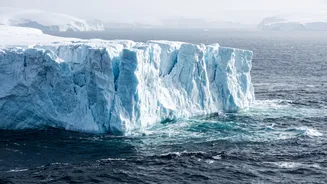
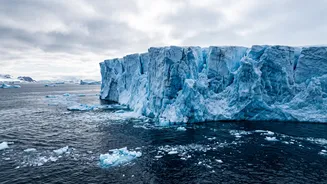
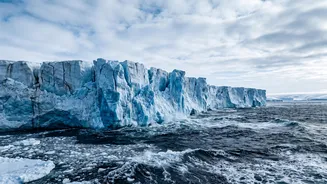
Thwaites Glacier is an immense river of ice in West Antarctica. It is enormous, covering an area of 192,000 square kilometres, and it is moving faster than most glaciers on the continent. Its precarious position has earned it the ominous nickname 'Doomsday
Glacier'. The reason for this alarming title is simple: it acts as a natural dam, holding back the rest of the West Antarctic Ice Sheet. If Thwaites were to collapse entirely, it alone contains enough ice to raise global sea levels by more than half a metre, or about two feet. But the real danger is that its failure could destabilize the surrounding ice, leading to a potential sea-level rise of up to three metres in the long term. For decades, scientists have watched it with growing concern as warmer ocean temperatures eat away at it from below.
Holding On By Its Fingernails
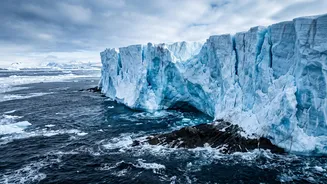
To understand the latest threat, imagine the glacier as a massive, slow-moving sheet resting on the ground beneath the ocean. Its stability depends heavily on certain points where it is anchored to the seabed. These anchors are known as 'pinning points' or submarine ridges—essentially underwater mountains that the ice rests upon. For years, these ridges have acted as a crucial brake, slowing the glacier's relentless march into the sea. Scientists monitoring the glacier have described its current state as 'holding on by its fingernails'. This is because the glacier has been losing its grip on these critical pinning points, making its future increasingly uncertain and raising alarms about the speed of its potential collapse.
The Great Ungrounding
The central problem is a process called 'ungrounding'. As climate change warms the planet, the ocean absorbs a vast majority of the excess heat. This warm, dense, and salty deep ocean water is flowing underneath Thwaites, melting it from its base. As the ice melts from below, it becomes more buoyant and begins to lift off the seabed. When it lifts off a key underwater ridge, it has become 'ungrounded' from that anchor. Recent research using high-resolution imaging of the seafloor has revealed that this is not just a future possibility; it has happened before. At some point in the last two centuries, the glacier unpinned from a ridge and retreated at a stunning rate of more than two kilometres per year—a pace far faster than observed today. This historical precedent serves as a stark warning for what could happen again as the glacier loses its current footing.
What is the Real Timeline?
While some projections have sparked headlines with specific dates, scientists are focused on the process rather than a single doomsday date. The glacier is not a single, solid block that will suddenly shatter. Instead, its collapse is expected to happen in stages. Researchers from the International Thwaites Glacier Collaboration have warned that the eastern ice shelf, which helps buttress the glacier, could fracture and collapse in the coming years. The ungrounding from the seabed ridges is a process that is already underway and accelerating. Rather than a single event in a year like 2038, scientists expect a series of cascading events over the next several years and decades. The key takeaway from recent studies is that the glacier has entered a state of rapid retreat and that the timeline for significant, irreversible change is likely much shorter than previously estimated.
Why Antarctica's Problem Matters to India
A melting glacier thousands of kilometres away can feel like a distant problem, but its consequences are global and direct. For India, with its extensive 7,500-kilometre coastline, the stakes could not be higher. Even a partial collapse of Thwaites would contribute significantly to the sea-level rise that threatens major coastal cities like Mumbai, Kolkata, Chennai, and Surat. Millions of people live in low-lying areas that would become vulnerable to more frequent and severe flooding, storm surges, and eventual permanent inundation. Rising seas also lead to saltwater intrusion, which can contaminate coastal freshwater sources used for drinking and agriculture, impacting livelihoods and food security. The fate of Thwaites Glacier is therefore directly linked to the future stability and prosperity of India's coastal regions.