

A Famous Star with a New Secret
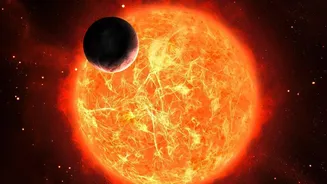
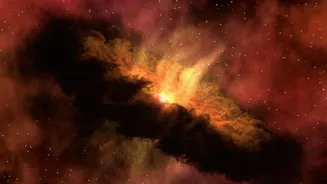
For decades, the star Beta Pictoris has been a celebrity in the astronomical community. Located just 63 light-years from Earth, it is cosmically young, at only about 23 million years old. This youth makes it a perfect laboratory for studying how planetary
systems form. Astronomers have long known it was surrounded by a massive, swirling disk of dust and debris—the raw material for planet-building. For years, two giant planets, Beta Pictoris b and Beta Pictoris c, were the known stars of this system. Beta Pictoris b was one of the very first exoplanets ever to be directly photographed. The system was thought to be well understood, a familiar cosmic neighbourhood that had been intensely observed. But it was hiding a secret.
A New Eye on the Cosmos
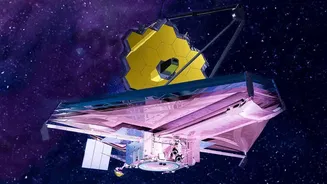
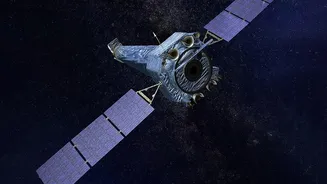
Enter the James Webb Space Telescope (JWST), a joint mission by NASA, the European Space Agency, and the Canadian Space Agency. With its unparalleled sensitivity and powerful instruments, Webb was tasked with looking at Beta Pictoris to gather more details about this fascinating system. The observing program, led by a team from the University of California, San Diego, was designed to gain a deeper understanding of the existing planets and their environment. Researchers were combing through data, not on a dedicated hunt for new worlds, but to analyze the intricate details Webb could provide. The telescope’s Near-Infrared Spectrograph (NIRSpec) instrument was mapping the chemical contents of the system, a routine but powerful capability. It was during this analysis that something unexpected appeared.
Found by Fingerprint, Not by Photograph
This is where the 'accident' happened. The new planet wasn't spotted as a tiny dot of light, the way most directly imaged planets are found. Instead, it was discovered through its chemical fingerprint. As astronomers analyzed the light from the system, Webb's spectrograph detected the tell-tale signs of a planet's atmosphere—specifically, the presence of molecules like methane, carbon monoxide, and water vapour. This atmospheric signature was hiding in the data, buried within the bright glare of the star and its dusty disk. An unexpected bright spot in the imaging data first hinted at something, but it was the spectral analysis that confirmed it was a planet. This marks a breakthrough, demonstrating a powerful new way to find exoplanets that are otherwise concealed from direct view.
Meet Beta Pictoris d
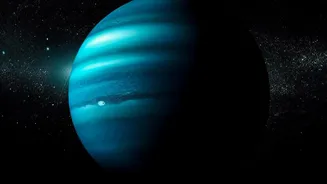
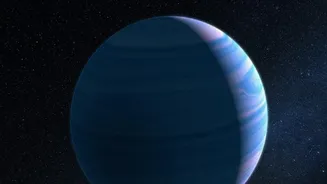
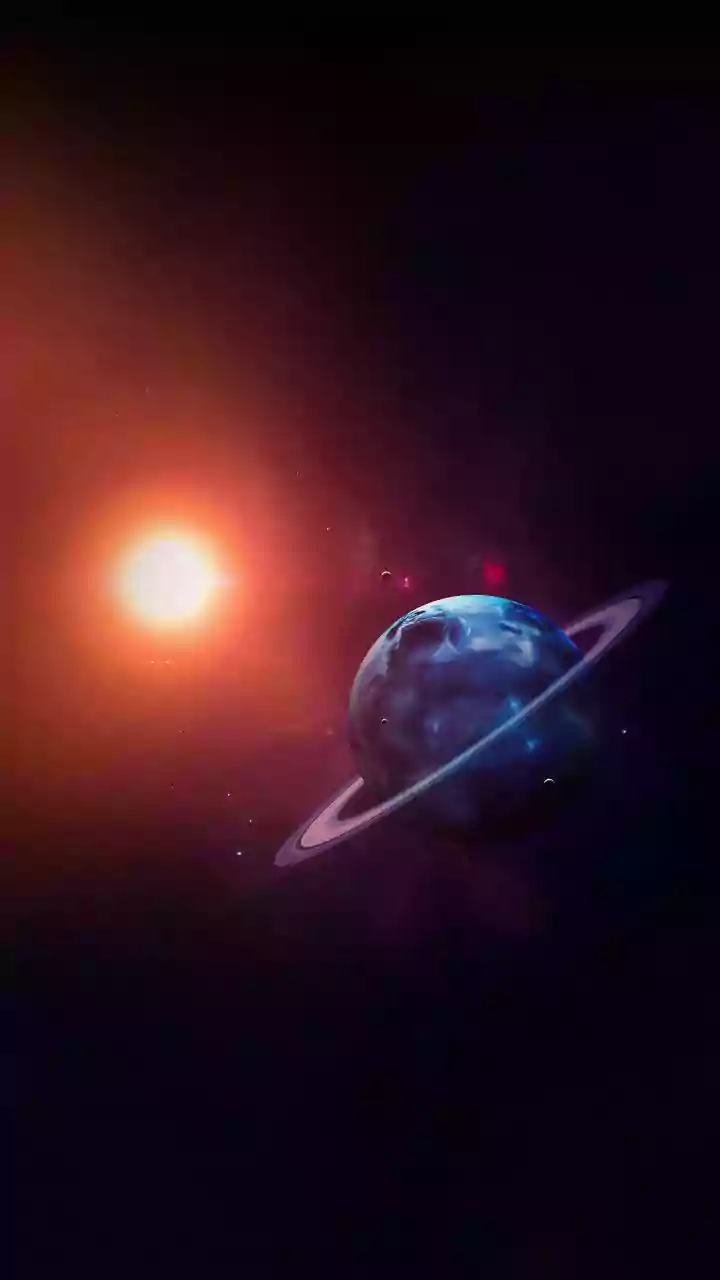
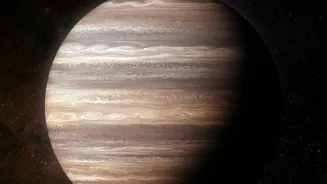
The newfound world has been named Beta Pictoris d. It is a gas giant with at least twice the mass of Jupiter, though it is the smallest of the three planets now known to orbit the star. Its orbit is quite wide, placing it at a distance from its star comparable to Neptune's position in our own solar system. The discovery makes Beta Pictoris only the second star system, after HR 8799, where astronomers have directly imaged three planets. The confirmation of Beta Pictoris d changes our understanding of this system, providing another key piece in the puzzle of how multiple giant planets can form and interact within the same chaotic, youthful environment.
Why This 'Accidental' Discovery Matters
This finding is more than just adding another planet to the catalogue. It represents a significant leap forward in our ability to find hidden worlds. The technique of detecting a planet solely by the chemical composition of its atmosphere could revolutionize the search for exoplanets, especially those lost in the glare of their stars or obscured by dust. Furthermore, studying a system with three giant planets gives scientists an invaluable opportunity to test and refine theories of planetary formation. Understanding how gas giants like Beta Pictoris d form and settle into their orbits provides crucial context for how our own solar system may have developed, helping us answer the fundamental question of whether our cosmic home is common or exceptionally rare in the universe.