






The New Winners
A new class of professionals is reaping enormous rewards in the AI-driven economy. Those with skills in machine learning, data analytics, and AI development are commanding significant wage premiums. Some reports indicate that workers with AI skills can earn salaries
up to 23% higher than their peers in comparable roles. This is not just about a few elite coders; companies are actively cultivating a new tier of 'power users' within their ranks. These are employees, often in marketing or HR, who can skillfully use AI to automate workflows and innovate, making them far more productive. As a result, these individuals are much more likely to receive promotions and pay raises, creating a clear financial incentive for AI fluency.
The Widening Chasm
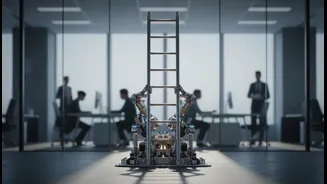
For every high-flyer, however, there are many more workers whose futures are becoming less certain. The core of the issue is what some analysts call a 'two-track' or 'two-tier' workforce. One track is for those who can manage, direct, and innovate with AI; the other is for everyone else. Routine, process-driven jobs—the kind that have long formed the stable middle of the workforce—are precisely the ones most susceptible to being augmented or automated by AI. This is particularly threatening in India, where the ladder from education to a stable, middle-class office job has been a cornerstone of economic development for a generation. The concern is that AI could hollow out this middle, leaving an hourglass-shaped economy: a few high-paid jobs at the top, many low-paid service jobs at the bottom, and a shrinking centre.
A Tale of Two Skillsets
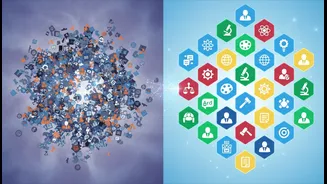
The divide is fundamentally about skills. The demand for workers who can design, develop, and manage AI systems far outstrips the available supply, creating a massive skills gap. But it’s not just about technical expertise. The most valuable skills are becoming those that complement AI, such as critical thinking, complex problem-solving, strategic workflow design, and ethical judgment. In contrast, skills related to tasks that can be codified and automated are seeing their value decline. Reports show that the skills required for AI-exposed jobs are changing twice as fast as those in other roles, making continuous learning essential. Without it, employees risk becoming professionally obsolete, as proficiency with AI is increasingly seen as a basic requirement for career advancement.
India's Unique Position
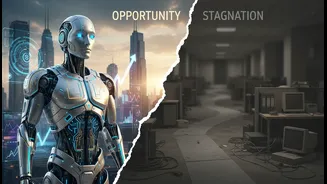
For India, this global trend presents both a monumental challenge and a significant opportunity. With a vast technology workforce and a young population, the country is well-positioned to capitalize on the AI revolution. However, the sheer scale of the transition is daunting. Millions of workers in sectors like IT services, manufacturing, and retail are in roles that AI is set to reshape. Recognizing this, there is a growing push for national reskilling initiatives, with organizations like the World Economic Forum and major tech companies collaborating on training programs. In India, many companies are now shifting their strategy from external hiring to reskilling their existing employees to fill the AI talent gap, a move that acknowledges the urgency of workforce transformation.
Bridging the Opportunity Gap
Closing the divide created by the uneven AI dividend is not about halting technological progress. It's about managing the transition more equitably. The solution lies in a concerted effort involving governments, companies, and individuals. For businesses, this means investing seriously in workforce transformation, treating AI as a 'people-first' change rather than just a tool deployment. For governments, it means streamlining skill development programs and creating policies that foster inclusive upskilling, ensuring that people in both urban and rural areas have access to training. For individuals, it underscores the new reality of lifelong learning, where adapting and acquiring new skills is no longer optional but a core component of a successful career. The future of work won't be a race against machines, but a race to equip people with the skills to work alongside them.