









The Golden Hour Problem
In law enforcement, the period immediately following a crime or disappearance is often called the “golden hour” or, more realistically, the first 24 to 72 hours. This window is when evidence is freshest, witness memories are sharpest, and the chances
of a successful resolution are highest. However, this is also when investigators are most overwhelmed. They face a deluge of information: hours of CCTV footage, social media activity, witness statements, and call records. The sheer volume of this data makes manual review a bottleneck. With limited manpower, it's nearly impossible for a human team to sift through everything quickly enough, causing critical leads to be missed and the trail to go cold.
Enter the Digital Detective
Artificial Intelligence is emerging as a potential game-changer to solve this data overload problem. These are not sentient robots from science fiction, but powerful analytical tools designed to perform tasks that traditionally require human intelligence. The key types of AI used in this context are machine learning, computer vision, and natural language processing. In simple terms, these systems can be trained to recognise patterns, analyse images and videos, and understand written text at a scale and speed far beyond human capability. For investigators, this means AI can act as a force multiplier, automating the most tedious and time-consuming parts of their job so they can focus on strategy and decision-making.
Sifting Through a Sea of Data
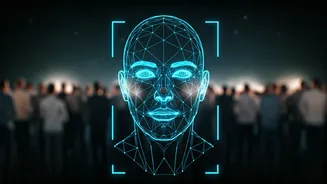
One of AI’s most powerful applications is in video analysis. Major cities are covered by thousands of CCTV cameras, generating an insurmountable amount of footage. AI-powered systems can scan thousands of hours of video in minutes, looking for a specific face, piece of clothing, or vehicle type. In a missing person case, for example, an AI can be fed a photograph and then scan footage from across a city's transport network to create a timeline of the person's last known movements. It can also analyse social media for a person's last posts, location tags, or signs of emotional distress, helping to build a picture of their state of mind and social circle.
Connecting the Dots
Beyond visual data, AI excels at connecting disparate pieces of information that might otherwise seem unrelated. An AI platform can integrate data from different systems—such as police records, hospital admissions, and public databases—to find links that a human might miss. For instance, a person admitted to a hospital in one district could be automatically matched with a missing person report from a neighbouring state. By analysing historical crime data, communication records, and social media activity, AI can also help map criminal networks or predict where a missing person might be, allowing police to prioritise search areas and deploy resources more effectively.
The Ethical Tightrope and Human Oversight
The promise of AI in policing is immense, but so are the challenges. The use of technologies like facial recognition raises significant privacy concerns. There is also the critical issue of algorithmic bias. If an AI model is trained on historical data that reflects existing societal biases, its predictions could unfairly target certain communities. Experts in India and abroad stress that the current regulatory framework is struggling to keep pace with the technology, highlighting a need for greater transparency and accountability. To mitigate these risks, the consensus is that AI should be a tool to assist, not replace, human investigators. Human oversight is essential to verify the findings of any AI system, ensure evidence is admissible in court, and make the final, ethically-grounded decisions.