

A Mountain on the Move
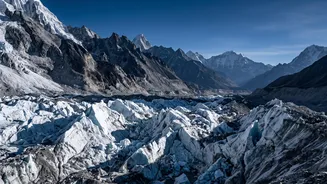
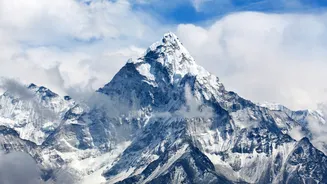
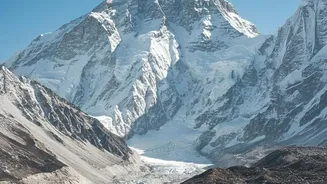
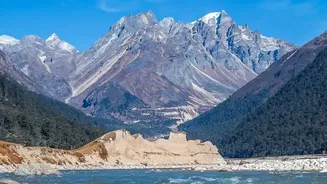
On August 26, 2026, a catastrophic event unfolded on the border of Nepal and Tibet. It wasn't an earthquake or heavy rain that triggered disaster. Instead, a massive section of a glacier, along with the bedrock beneath it, broke away from a peak near
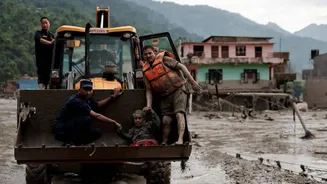
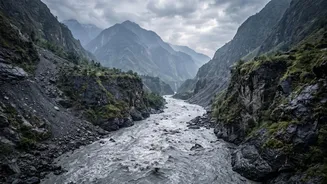
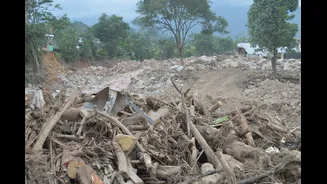
Langtang Lirung. The sheer volume of ice and rock, estimated to be the equivalent of millions of tonnes, thundered thousands of feet into the narrow valley below. The impact was so powerful that seismic stations initially registered it as a magnitude 5.2 earthquake. This avalanche of debris immediately triggered flash floods that roared down the Lhende Khola and Trishuli river systems, wiping out homes, bridges, and infrastructure, leading to a tragic loss of life.
The Temporary Dam Hypothesis
In the aftermath, scientists quickly zeroed in on a crucial theory known as a 'cascading hazard'. The initial avalanche of ice and rock was destructive, but evidence suggests it was only the first step. The leading hypothesis is that the immense volume of debris fell directly into the Lhende River, forming a massive, unstable blockage—a temporary dam. Behind this natural dam, the river's flow would have backed up, creating a large, impromptu lake. These natural dams, made of loose ice and rock, are inherently weak. Investigators believe that as the water pressure built, the dam failed catastrophically. This breach would have released not just the normal river flow, but the entire volume of the newly formed lake in a single, devastating pulse, explaining the extreme and sudden rise in water levels observed far downstream.
The Hunt for Evidence
Confirming the dam-break theory requires a kind of forensic investigation using remote technology. Scientists are comparing high-resolution satellite images taken before and after August 26 to identify the massive scar left on the mountainside and to spot changes in the river valley that indicate a blockage and subsequent release. The seismic data, once re-analysed, clearly points to a massive landslide rather than a tectonic quake. Perhaps the most compelling evidence comes from river monitoring stations downstream. At one point, the Trishuli River level reportedly surged by nine meters in just 30 minutes—a dramatic spike that is very difficult to explain without the sudden failure of an upstream blockage. This combination of data helps piece together the sequence of events from miles away.
The Looming Threat of GLOFs
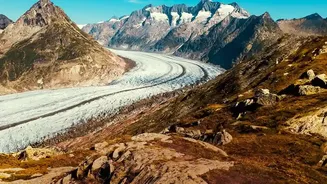
This event is a textbook, if terrifying, example of a Glacial Lake Outburst Flood (GLOF). While many GLOFs come from pre-existing lakes formed by retreating glaciers, this incident highlights the 'cascading' variety, where the flood hazard is created and unleashed in a matter of hours. These events are among the most dangerous natural hazards in high-mountain regions. The floodwaters are not just water; they are a thick slurry of mud, rock, and ice boulders that can travel at high speeds and destroy anything in their path. The 2021 disaster in Chamoli, Uttarakhand, was a similar rock and ice avalanche that caused immense destruction, reminding us that this threat is present across the Himalayan range. The failure of natural dams, whether from long-forming glacial lakes or sudden collapses, poses a severe risk to downstream communities and vital infrastructure like hydropower plants.
A Sign of a Warmer Future
While scientists are cautious about blaming any single event entirely on climate change, the broader context is undeniable. The Hindu Kush Himalaya region is warming at nearly double the global average rate. A 2023 UN report noted that Himalayan glaciers melted 65% faster in the 2010s than in the previous decade. This rapid warming thaws the permafrost that acts like glue holding mountainsides together and destabilises glaciers, making collapses like this one more likely. As glaciers retreat, they are not only contributing to GLOFs but also changing the landscape in unpredictable ways. The recent tragedy on the Nepal-Tibet border serves as a stark warning sign of the growing 'cryosphere' hazards—dangers stemming from the world's frozen regions—that mountain communities will increasingly face.