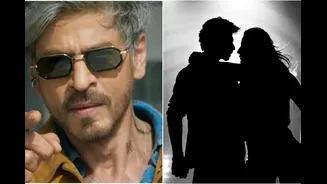



In the world of high-stakes cinema, few details generate as much buzz as a film's runtime. The latest subject of intense fan speculation is Shah Rukh Khan's 'King', with unconfirmed reports of an epic length creating a storm of online debate.
The Three-Hour Rumour
The internet
was set ablaze when a listing on the American movie ticketing website Fandango suggested that 'King', directed by Siddharth Anand, would clock in at a staggering 3 hours and 17 minutes. If this proves accurate, it would mark Shah Rukh Khan's first film in two decades to surpass the three-hour mark, with the last being 'Kabhi Alvida Naa Kehna' in 2006. For years, SRK's films have largely adhered to a sub-three-hour format, making this potential return to a longer narrative a significant talking point. In his early career, lengthy films were common, with classics like 'Mohabbatein', 'Kabhi Khushi Kabhie Gham', and 'Veer-Zaara' all comfortably exceeding three hours. The rumour, therefore, isn't just about a number; it's about a potential shift back to a style of epic storytelling many associate with his golden era.
Silence from the Top
Despite the widespread discussion, the makers of 'King'—including director Siddharth Anand and the production house—have remained completely silent on the matter. This radio silence is standard practice in the film industry, where key details are often guarded as part of a meticulously planned marketing strategy. Officially, a film's runtime is only confirmed after it has been certified by the Central Board of Film Certification (CBFC) in India. Until that stamp is received, any listed duration on ticketing sites is considered preliminary and subject to change. The final cut could still be undergoing tweaks, or the studio may simply be waiting for the perfect moment to make an official announcement, using the suspense to build anticipation for the December 24 release.
Why The Secrecy?
Keeping a film's runtime under wraps serves multiple purposes. Firstly, it prevents premature judgment. A long runtime can sometimes deter audiences who fear a slow pace, while a shorter one might disappoint those expecting an epic. By controlling the narrative, filmmakers can frame the length as a necessary component of a grand, unmissable story when they finally reveal it. Secondly, the final edit may genuinely not be locked. Directors and studios often test different versions of a film with audiences to find the perfect pacing. What is being reported could be the length of a preliminary 'director's cut' before the final theatrical version is finalised. This process allows the creative team to trim scenes or even re-edit sequences for maximum impact, meaning the final product could be shorter.
The Return of the Epic
The discussion around 'King's runtime is part of a broader trend in both Indian and global cinema. For a period, the consensus was that modern audiences, with their shorter attention spans, preferred tighter, faster films. However, recent blockbusters have challenged this notion. Films like 'RRR', 'Animal', and 'Pushpa 2: The Rule' have all been massive commercial successes despite runtimes exceeding three hours, proving that audiences are willing to invest their time if the content is compelling. Indian cinema, in particular, has a rich history of long-form storytelling, with classics like 'Lagaan' and 'Jodhaa Akbar' celebrated for their depth. The success of these films suggests that 'content is king' and a long runtime is no longer a barrier, but can be a selling point for a story that promises scale, emotion, and spectacle.