


What Exactly Is Shadow Boxing?
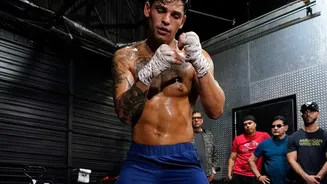
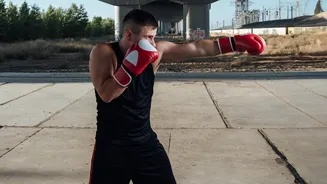
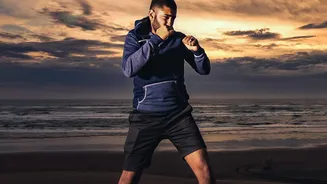
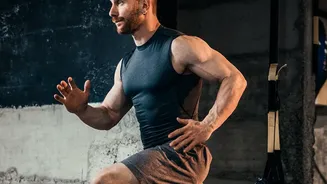
At its core, shadow boxing is the art of sparring with an imaginary opponent. It involves throwing punches, practicing defensive movements, and using footwork as if you were in a real match, but without any physical contact. This allows you to focus purely
on your form, movement, and rhythm without the distraction of a moving target. While it’s a foundational drill for professional fighters, it has gained popularity as a standalone fitness routine due to its incredible versatility and effectiveness.
A True Full-Body Workout
Shadow boxing is far more than just waving your arms around; it’s a demanding cardiovascular exercise that engages multiple muscle groups simultaneously. Every punch starts from the ground up, engaging your legs, hips, and core to generate power that travels through your shoulders and arms. This coordinated effort torches calories, with some estimates suggesting you can burn upwards of 400 per hour. It improves muscular endurance, tones your shoulders and arms, and strengthens your core, all while being a low-impact activity that’s easier on your joints than running.
Sharpen Your Mind and Coordination
The benefits aren't just physical. Shadow boxing is an exercise in mindfulness, requiring intense focus and concentration. Visualizing an opponent and reacting to their imagined moves creates a powerful mind-body connection, improving your balance, agility, and overall coordination. This mental engagement also serves as a potent form of stress relief, allowing you to release tension and clear your mind through rhythmic, powerful movements.
For the Beginner: Build a Solid Foundation
If you're new to shadow boxing, the key is to start slow and prioritize form over speed. Begin by finding your basic boxing stance: feet shoulder-width apart with your non-dominant foot forward, knees slightly bent, and hands raised to protect your face. Practice the four fundamental punches: the jab (a quick, straight punch with your lead hand), the cross (a powerful punch from your rear hand), the hook (a semi-circular punch), and the uppercut (an upward punch). Focus on fluid movements and returning your hands to your guard position after every punch. Try working in one- to two-minute rounds, focusing solely on footwork and single punches.
For the Intermediate: Add Layers and Rhythm
Once you're comfortable with the basics, it's time to increase the complexity. Start stringing punches together into simple combinations, like a jab-cross (1-2) or a jab-cross-hook (1-2-3). Introduce defensive movements like slips (moving your head side-to-side) and rolls (ducking under imaginary punches). Your footwork should become more active; practice moving forward, backward, and laterally while maintaining your stance. You can increase your rounds to three minutes to build endurance and challenge your cardiovascular system.
For the Advanced: Increase Intensity and Power
Advanced practitioners can elevate their shadow boxing workouts by adding external resistance. Holding light dumbbells (1-2 kg) or wearing wrist weights can help build shoulder strength and punching power. Incorporate more complex combinations and defensive manoeuvres, and work on your agility by using ladder drills. At this stage, your focus should be on maintaining speed, power, and flawless technique through longer, more intense rounds. You can also simulate a real fight by varying your intensity, mixing bursts of explosive flurries with periods of active recovery.