





A New World Record in Solar
In the world of renewable energy, efficiency is everything. Recently, researchers have made headlines by pushing the efficiency of a new type of solar cell, known as a crystalline silicon-perovskite tandem cell, past the 30% mark. In July 2026, LONGi,
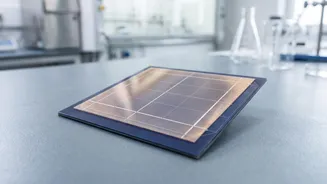
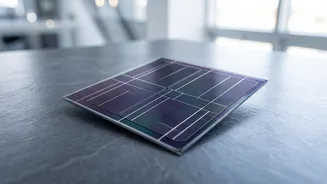
a major player in the solar industry, announced a certified world record efficiency of 35.5%. This isn't just a minor improvement; it's a significant jump that surpasses the theoretical efficiency limit of conventional silicon-only solar cells, which experts place at around 33.7%. This achievement signals that the next generation of ultra-high-efficiency solar technology is moving from theoretical possibility to tangible reality, bringing the promise of more power from smaller spaces closer than ever.
What Are Tandem Solar Cells?
Think of a standard solar panel as a single net trying to catch fish of all sizes. It does a decent job, but some will always slip through. A tandem solar cell, by contrast, is like using two different nets stacked on top of each other. The top layer, made from a material called perovskite, is designed to capture high-energy blue light from the solar spectrum. The light that passes through is then caught by a bottom layer, typically made of traditional silicon, which is excellent at capturing lower-energy red light. By dividing the work, this two-layer approach allows the cell to convert a much broader range of sunlight into electrical energy, wasting less and generating more power. This is how tandem cells are able to break the efficiency ceiling that limits their single-junction silicon predecessors.
Why 30% Is a Game-Changer
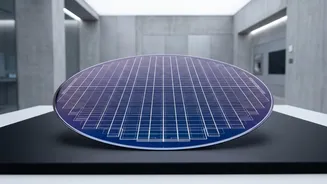
For decades, the solar industry has been dominated by silicon-based cells, which are now approaching their maximum practical efficiency of around 27%. The 30% milestone is critical because it demonstrates a clear performance advantage for tandem technology that justifies the investment in a new manufacturing approach. Achieving efficiencies well above 30% in lab settings, and even demonstrating over 30% on larger, commercially-sized wafers, proves the technology's potential for industrial application. Higher efficiency means a solar panel can generate significantly more electricity from the same surface area. This could lead to lower overall system costs, as fewer panels, less wiring, and less land would be needed to produce the same amount of power, making solar energy more competitive and accessible.
The Road to Your Rooftop
While lab records are exciting, the path from a small, record-breaking cell to a commercially available solar panel on your roof is a long one. Several key challenges remain. The first is stability; perovskite materials can degrade when exposed to moisture and heat, so researchers are working to develop durable coatings and structures that can withstand real-world conditions for 25 years or more. The second hurdle is manufacturing scale. Processes that work perfectly in a controlled lab must be adapted to produce millions of large, uniform panels reliably and affordably. Companies like Oxford PV have already begun pilot production, but widespread commercial availability is still a few years away.
What This Means for India's Solar Ambitions
For India, which has ambitious goals for renewable energy and receives abundant sunshine, this breakthrough is particularly significant. The nation is targeting 280 GW of installed solar capacity by 2030 to enhance its energy security and reduce carbon emissions. High-efficiency tandem cells could help achieve these targets faster and more economically. Generating more power from each panel is crucial in a country where land can be a constraint. Furthermore, developing domestic manufacturing capabilities for this next-generation technology aligns perfectly with the 'Make in India' initiative, potentially creating jobs and establishing India as a leader in the future of solar technology.