


Meet PRIMA: NASA's New Cosmic Explorer
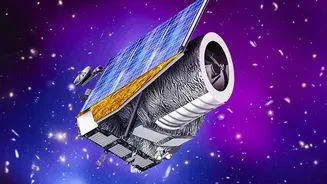
In late September 2026, NASA announced it is moving forward with the Probe far-Infrared Mission for Astrophysics, or PRIMA. This mission represents the first of a new class of billion-dollar observatories called Probe Explorers, designed to tackle high-priority
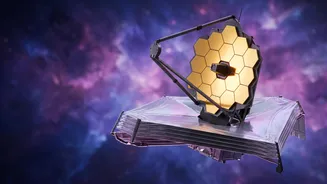
scientific questions without the massive scale of flagship projects like the James Webb Space Telescope (JWST). With a projected cost cap of $1.2 billion and a launch target of 2033, PRIMA is set to become humanity's next major window into the deep universe. The project will be led by NASA's Jet Propulsion Laboratory (JPL) with significant contributions from Caltech and international partners, including space agencies in Canada, France, and Germany. It fills a crucial gap in astronomy left by the retirement of previous far-infrared observatories like the Herschel Space Observatory.
The Power of Far-Infrared Light
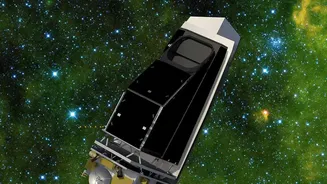
So, what makes far-infrared light so special? Imagine trying to see through a thick cloud of smoke. Visible light scatters and gets blocked, but the heat from a fire can be felt through it. Far-infrared light is similar to that heat signature. It allows astronomers to see the faint, cool glow of objects that are otherwise hidden by dense lanes of interstellar dust. This part of the electromagnetic spectrum is largely invisible to telescopes like Hubble and even the mighty JWST, which primarily sees in the near- and mid-infrared. PRIMA is specifically designed to operate in this far-infrared range, with a 1.8-meter telescope and its instruments cryogenically cooled to near absolute zero to reduce interference. This will make it orders of magnitude more sensitive than any previous far-infrared mission.
Unlocking the Secrets of Planet Formation
One of PRIMA's primary goals is to understand how planets, including ones like our own, are born. Stars form within vast, cold clouds of gas and dust. Within these stellar nurseries, leftover material gathers into rotating protoplanetary disks, where planets begin to take shape. The far-infrared is the perfect wavelength to study these disks. PRIMA will be able to measure key molecules like water vapor, which plays a crucial role in driving planet formation. Scientists are eager to use PRIMA to determine the total gas masses and the abundance of elements like carbon and oxygen in these disks, providing essential clues about where and how exoplanets form—questions that JWST cannot answer because the required spectral lines fall outside its range.
Galaxies, Black Holes, and Cosmic Dust
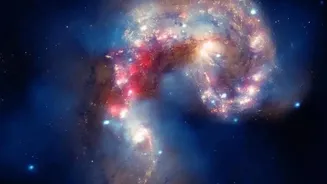
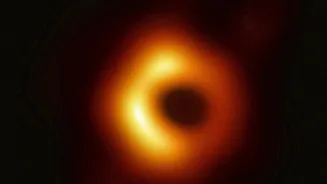
Beyond planetary systems, PRIMA will tackle some of the biggest questions in cosmology. It will investigate how the first galaxies and their supermassive black holes grew and evolved over cosmic time. By surveying large swaths of the sky, the telescope will trace how cosmic dust and heavy elements have built up throughout the universe's history. This includes studying how magnetic fields influence star formation and mapping how material is driven out of galaxies by their active central black holes. According to Nicky Fox, associate administrator at NASA, the mission will “unveil the obscure across cosmic time” and could even shed light on how water, a key ingredient for life, first arrived on Earth.