


A Landmark Test for a New Cosmic Eye
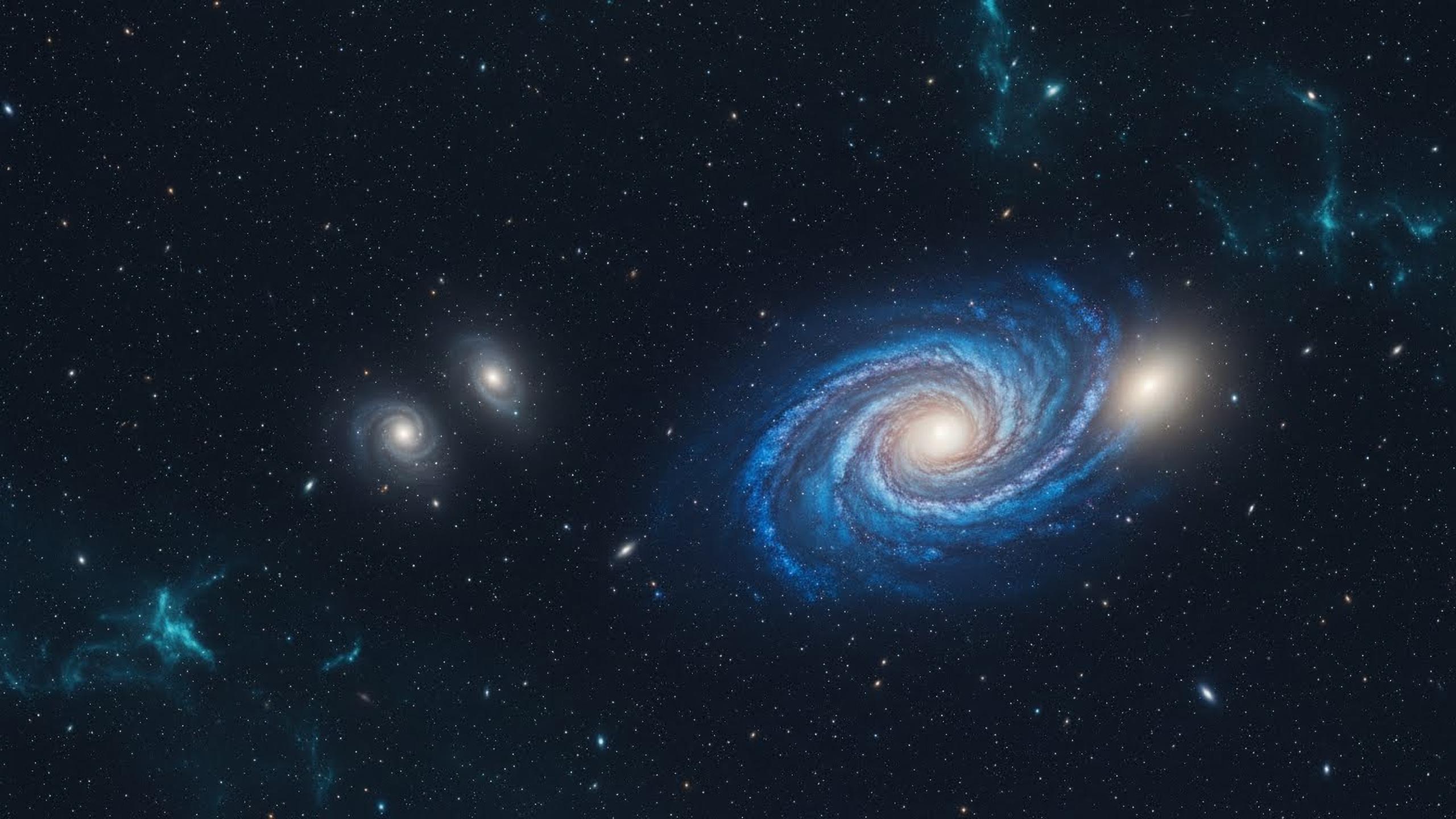
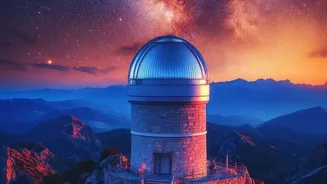
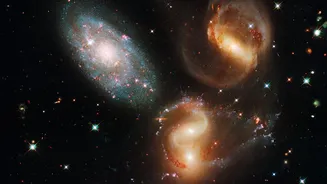
The Vera C. Rubin Observatory, perched atop Cerro Pachón in Chile, has released a stunning image packed with more than 500,000 galaxies. This isn't just another beautiful space photograph. It's a critical commissioning image, proving that the observatory's
complex systems are working in harmony before its main scientific mission begins. The target was the COSMOS field, a well-studied patch of sky that provides a perfect benchmark for the new instrument. Because this area has been observed by Hubble, Webb, and other major telescopes, astronomers can use it to calibrate Rubin's incredible power and precision. Think of it as an eye exam for the world's most powerful digital camera, ensuring it's ready for its decade-long marathon.
The Power of a 3,200-Megapixel Camera
At the heart of the observatory is the LSST Camera, the largest digital camera ever constructed for astronomy. Weighing three tons and roughly the size of a small car, this 3,200-megapixel instrument is a feat of engineering. Its massive focal plane allows it to capture a section of the sky equivalent to 45 full moons in a single exposure. This vast field of view is what enables it to photograph hundreds of thousands of galaxies at once, a task that would have previously required countless smaller images stitched together. The new image, a composite of multiple exposures, demonstrates the camera's ability to not only see wide but also deep into the universe's history.
From a Static Photo to a Cosmic Movie
The half-million-galaxy image is just a preview of the observatory's primary mission: the Legacy Survey of Space and Time (LSST). This ambitious 10-year project will scan the entire southern sky every few nights, creating a time-lapse video of the cosmos. Instead of a static atlas, scientists will have a dynamic map, watching the universe change in near-real-time. Each night, the observatory will generate about 20 terabytes of data and issue up to 10 million alerts for objects that have moved, brightened, or vanished. This will allow astronomers worldwide to track everything from exploding stars (supernovae) to potentially hazardous asteroids, transforming how transient celestial events are studied.
Tackling the Universe's Biggest Mysteries
The ultimate goal of the LSST is to address some of the most fundamental questions in science. A key focus is understanding dark matter and dark energy, the mysterious components that make up about 95% of the universe. By mapping the precise locations and shapes of billions of galaxies over time, scientists can measure how dark energy is driving the accelerating expansion of the universe and how dark matter's gravity has sculpted cosmic structures. In addition, the survey will create an unparalleled inventory of our own solar system. It is expected to catalogue millions of asteroids and other small bodies, dramatically improving our models of planetary defense and our understanding of the solar system's formation. Scientists also hope it might finally reveal the location of the hypothesized Planet Nine.