



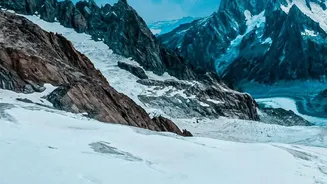
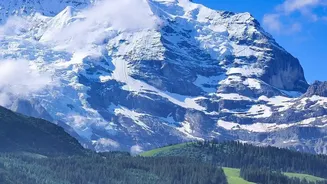

The New Measurement
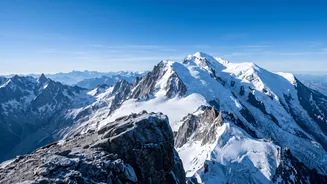
On October 14, 2026, a team of French surveyors announced the new official height of Mont Blanc: 4,807.47 metres. This is a significant change from the previous measurement in 2023, which clocked the peak at 4,805.59 metres, marking an increase of 1.88
metres. These biennial expeditions have been tracking the summit's height since 2001 to build a model of how the ice cap evolves. The team of experts ascends the peak armed with high-precision GPS tools and, more recently, drones to take readings over several hours. This ongoing project creates a vital dataset for future generations of scientists.
Why the Height Is Not Fixed
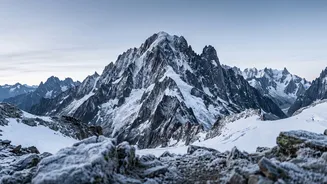
It’s important to understand what is actually being measured. The rock summit of Mont Blanc stands at a stable altitude of around 4,792 metres. The variation comes from the thick cap of ice and snow that sits on top of this rock. This layer can be 15 to 20 metres thick, and its volume changes depending on weather conditions. Think of it as the mountain wearing a winter hat of varying thickness. As chief surveyor Jean des Garets noted, the summit is in 'constant motion'. The height fluctuates based on a delicate balance of natural forces from one year to the next.
The Role of Wind and Snow
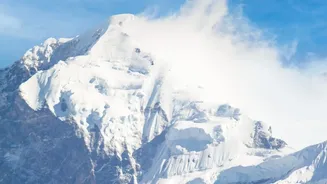
The primary reason for the fluctuating height is the interplay between precipitation and wind. The summit's altitude is determined by the amount of snow accumulated over the year, especially during the summer, minus what gets blown away by high-altitude winds. In years with less summer precipitation, the snow cap can shrink, leading to a lower measurement. Conversely, more snow and less wind erosion can cause the peak to 'grow'. This latest increase reverses a downward trend seen in previous years. For instance, in 2023, the mountain had shrunk by over two metres compared to the 2021 measurement. This oscillation is a natural phenomenon; surveyors have noted the peak could easily be taller or shorter again in two years.
A History of Fluctuation
This isn't the first time Mont Blanc's height has surprised researchers. The mountain's height has been recorded for over a century, with significant variations. The iconic height of 4,807 metres was established in the 19th century. Since systematic measurements began in 2001, the summit has seen several ups and downs. The highest recorded altitude in recent history was in 2007, when the peak reached 4,810.90 metres. Just a few years later, in 2023, it was measured at one of its lowest recent points, 4,805.59 metres, before rebounding in the 2026 survey. This history underscores that these short-term changes are part of the mountain's normal rhythm.
What About Climate Change?
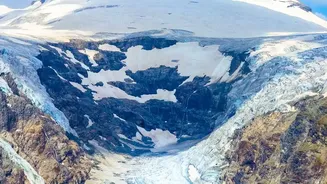
While it's tempting to link every change in our environment to global warming, the experts urge caution. Glaciologists involved in the project state that this single measurement is not representative of broader climate change. The conditions at Mont Blanc's summit are polar, and the height fluctuations are primarily driven by annual weather patterns. Scientists estimate that it would take around 50 years of continuous measurement to draw firm conclusions about the long-term impact of climate change at this specific altitude. However, there is no doubt that glaciers across the Alps are shrinking at an alarming rate, losing a significant portion of their volume in recent decades. So, while the height of the summit tells a story of weather, the health of the mountain's glaciers tells a much larger story about our warming climate.