





The Legend of the Air-Purifying Plant
The popular belief that houseplants are natural air purifiers can be traced back to a landmark 1989 NASA study. In a search for ways to clean the air in sealed environments like space stations, researchers found that common indoor plants could remove
volatile organic compounds (VOCs) like formaldehyde and benzene from small, sealed chambers. The study was a success, showing that plants like the Snake Plant, Spider Plant, and Peace Lily could indeed absorb these airborne toxins. This exciting finding quickly grew into a widely accepted piece of advice: fill your home with plants for cleaner, healthier air. The idea was simple, affordable, and aesthetically pleasing, making it an easy myth to embrace.
Putting the Science in Perspective
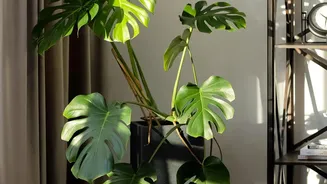
Unfortunately, what works in a sealed lab chamber doesn't quite translate to the average home or office. More recent analyses of this topic have concluded that while plants do remove pollutants, the rate at which they do so is incredibly slow. The air exchange from simply opening a window or door, or from a standard ventilation system, dilutes pollutants much faster than a few potted plants can. To replicate the effects seen in the NASA study, you would need an impractical number of plants. Some studies estimate you'd need anywhere from 10 to 1,000 plants per square metre to make a significant difference in a room's air quality. So, while your monstera is technically an air filter, its impact is too small to notice in a normal, ventilated living space.
The Real Superpower: Beauty and Well-Being
This doesn't mean you should give up on your green friends. The headline gets it right: indoor plants beautify rooms reliably, and their biggest benefit might be psychological. This is the core idea of biophilic design, which suggests humans have an innate need to connect with nature. Studies have shown that the presence of indoor plants can reduce stress and anxiety, lower blood pressure, and improve mood and concentration. Caring for a living thing can also provide a sense of purpose and mindfulness. Thriving, healthy plants make a space feel more inviting and can even improve our perception of air quality, regardless of the actual VOC levels. The visual appeal of a lush, green corner is a powerful and proven mood booster.
So, What Should a Plant Lover Do?
The takeaway isn't to abandon your indoor garden but to appreciate it for the right reasons. Continue to fill your home with plants because they bring you joy, add natural beauty, and foster a connection to the outdoors. They are living sculptures that make a house feel like a home. However, if your primary concern is genuinely poor indoor air quality, your efforts are better spent elsewhere. Focus on good ventilation by opening windows regularly, use exhaust fans in kitchens and bathrooms, and consider investing in a high-quality air purifier with a HEPA filter, which is designed to efficiently remove a wide range of airborne particles. Think of plants as the beautiful decor, and an air purifier as the functional appliance.