




Execution vs. Judgment
In a recent report on its own internal use of AI, OpenAI drew a sharp distinction between tasks that can be automated and decisions that cannot. The company found significant gains in using AI for tasks like writing and reviewing code, analysing experiment
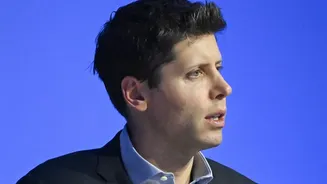
results, and technical support. These are areas of execution, where a process can be clearly defined and optimised. However, when it came to making decisions—what projects to pursue, how to allocate resources, or which research to stop—human involvement remained paramount. According to the company, tasks requiring judgment, context, and the weighing of complex tradeoffs are still firmly in human hands. This isn't just a temporary limitation; it's a desired outcome. OpenAI's CEO Sam Altman has stated that a future where everything is automated is not only unfulfilling but also dangerous. The emerging consensus, even from within the world’s leading AI lab, is that the most critical role for people will be deciding what is worth doing in the first place.
Why AI Can't Handle Tradeoffs
The reason AI struggles with high-stakes decisions isn't about processing power; it's about values. AI systems learn to identify patterns from vast amounts of data, but they don't possess genuine understanding, consciousness, or a moral compass. They calculate, but they don't comprehend meaning or morality. High-stakes tradeoffs—like those in medicine, law, or autonomous vehicle safety—are not just complex calculations. They involve empathy, cultural context, and ethical principles that are notoriously difficult to codify into rules. For example, how do you program an autonomous car to decide between two unavoidable, harmful outcomes? These are moral dilemmas that humans have debated for centuries, and there is often no single correct answer. AI can be trained on historical data, but this data is often a reflection of existing societal biases, which the AI can then amplify at an unprecedented scale.
Real-World Scenarios and Moral Deskilling
Consider a few practical examples where this limitation becomes critical. In healthcare, an AI might be able to diagnose a disease from a scan with incredible accuracy, but should it be the one to decide on a palliative care plan? That decision requires a conversation involving empathy and a patient's personal values. In the justice system, an AI could analyse case files to predict recidivism rates, but relying on it for sentencing could bake in historical biases and remove the crucial element of human judicial discretion. There's also a more subtle risk experts call "moral deskilling." If we increasingly delegate ethical judgments to machines, we may lose our own ability to make difficult moral choices. Like a pilot who relies too much on autopilot and forgets how to fly in an emergency, a society that outsources its ethics to algorithms could find itself dangerously unprepared when those systems fail or face a novel situation.
The Future is Human-AI Collaboration
This doesn't mean automation is a dead end. Instead, it points toward a future built on human-AI collaboration. The goal of AI is not to replace people, but to augment their capabilities and redirect their energy to where it creates the most value. Think of AI as an incredibly powerful tool that handles repetitive, data-intensive tasks, freeing up humans to focus on what they do best: creative thinking, strategic planning, emotional intelligence, and making nuanced judgment calls. In this model, the human is not just a passive overseer but an active participant—a "human-in-the-loop" who sets goals, interprets the AI's output, and makes the final decision in any situation where the stakes are high. This shift redefines valuable workplace skills, placing a premium on critical thinking, ethical reasoning, and the ability to ask the right questions.