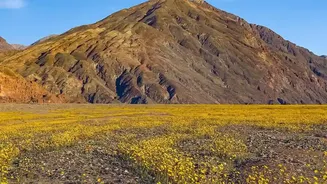



A Surprising Bloom in the High Desert
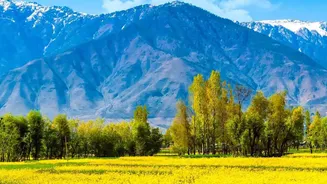
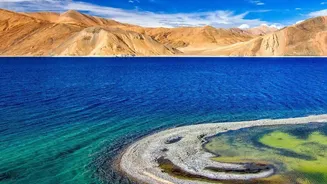
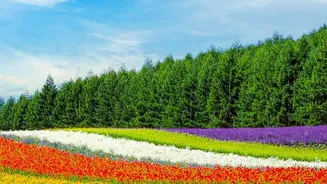
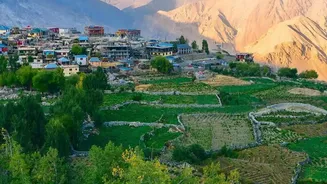
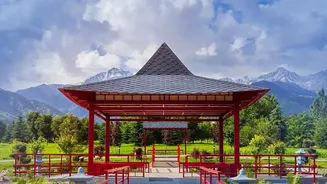
In a region famed for its stark, mountainous beauty, vibrant fields of flowers are painting a new picture of Ladakh's future. At Choglamsar and Stakna in the Leh district, an unprecedented floriculture project has taken root at an altitude of around 10,600
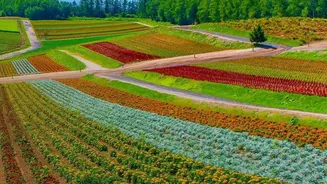
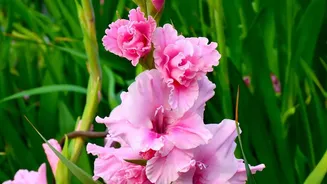
feet. Spread across 40 acres, these twin sites now host over 2.5 million flowering plants, transforming the landscape and local ambitions. The project, inaugurated in September 2026 by Lieutenant Governor Vinai Kumar Saxena, is dominated by approximately 2.4 million Lilium plants and 100,000 Gladiolus plants, making it one of the largest high-altitude floriculture parks in the country. This isn't just about creating a scenic attraction; it's a calculated move to test and demonstrate the viability of large-scale commercial flower cultivation in one of India's most challenging climates.
The Science Behind the Spectacle
Making a cold desert bloom required significant scientific and technical expertise. The project is a collaboration between the Ladakh administration's Agriculture Department and the Council of Scientific and Industrial Research's Institute of Himalayan Bioresource Technology (CSIR-IHBT) from Palampur. This partnership provides the crucial know-how for cultivating high-value flowers like Lilium, Gladiolus, and Tulips in such extreme conditions. The initiative leverages Ladakh's unique agro-climatic conditions, which, while harsh, are surprisingly suitable for certain bulbous flowers that perform well in cold temperatures. The Choglamsar site was developed in a record time of about two months, with plantation starting in mid-July 2026 and the first flowers appearing by early September. This rapid implementation demonstrates the focused effort to turn scientific potential into a tangible reality.
An Economic Diversification Strategy
The ambition behind the flower fields is fundamentally economic. Ladakh's administration is actively seeking to diversify the local economy, reducing its heavy reliance on tourism and traditional agriculture. Floriculture presents a lucrative alternative. High-value flowers like Lilium can command wholesale prices of ₹60-₹70 per stem in national markets, offering a significant income source for local farmers. The project is structured to directly empower the community. Initially managed by the Agriculture Department, the fields are set to be transferred to local Self-Help Groups (SHGs) and cooperatives. These groups will receive training in scientific cultivation, harvesting, and marketing, ensuring the project's long-term sustainability and creating a new class of rural entrepreneurs.
From Local Fields to National Markets
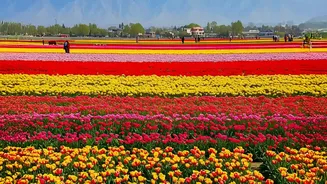
The ultimate goal is to position Ladakh as a niche producer of premium flowers for both domestic and international markets. A critical step towards this was achieved in late September 2026, when the first commercial air shipment of 15,000 Lilium flowers was sent from Leh to Delhi. This milestone proved the logistical feasibility of connecting Ladakh's high-altitude farms to major urban markets, a crucial link for any commercial agricultural venture dealing with perishable goods. By tapping into the off-season window and unique growing conditions, Ladakh can potentially supply flowers that are in high demand across the country. The initiative also adds a new dimension to the region's tourism, with the colourful fields expected to become visitor attractions in their own right, blending profitable agriculture with sustainable tourism.