
A Major Milestone: The First Coach
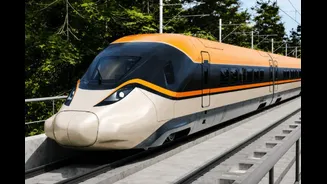
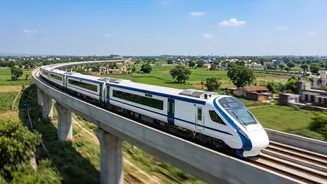
Railway Minister Ashwini Vaishnaw confirmed that the first coach manufactured for testing purposes has been completed. This is a crucial step forward, moving the project from large-scale civil engineering works to the rolling stock that will eventually
carry passengers. While this is a test coach and not yet ready for commercial service, its completion is a landmark achievement. It allows engineers to conduct essential structural tests before track trials, which are anticipated to begin around May or June 2027. This development keeps the project on track for its initial operational phase and marks progress in India's efforts to build domestic high-speed rail manufacturing capabilities.
The Priority Corridor: Surat to Bilimora
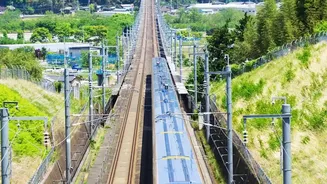
The first section of the bullet train corridor slated to open to the public is the stretch between Surat and Bilimora in Gujarat. This portion is targeted for commissioning in 2027, with some officials pointing to August 2027 as a potential launch window. The focus on this segment allows the National High Speed Rail Corporation Ltd (NHSRCL), the agency implementing the project, to open the corridor in phases. Work on the related Vapi-Surat section is also advancing rapidly, with civil construction expected to be finished by December 2026. This phased approach ensures that parts of the corridor can become operational as soon as they are ready, allowing the public to experience high-speed rail sooner.
The Big Picture: Connecting Mumbai and Ahmedabad
The full Mumbai-Ahmedabad High-Speed Rail (MAHSR) corridor is a massive undertaking, spanning 508 kilometres across Maharashtra, Gujarat, and Dadra and Nagar Haveli. Recent progress updates show that construction is advancing steadily, with hundreds of kilometres of viaducts and piers already completed. The project includes 12 stations: Mumbai (BKC), Thane, Virar, Boisar, Vapi, Bilimora, Surat, Bharuch, Vadodara, Anand, Ahmedabad, and Sabarmati. The entire line is not expected to be complete by 2027; that date is the target for the first operational section only. The full corridor, including a complex undersea tunnel in Maharashtra, is anticipated to be finished by 2029.
Technology and Speed: What to Expect Onboard
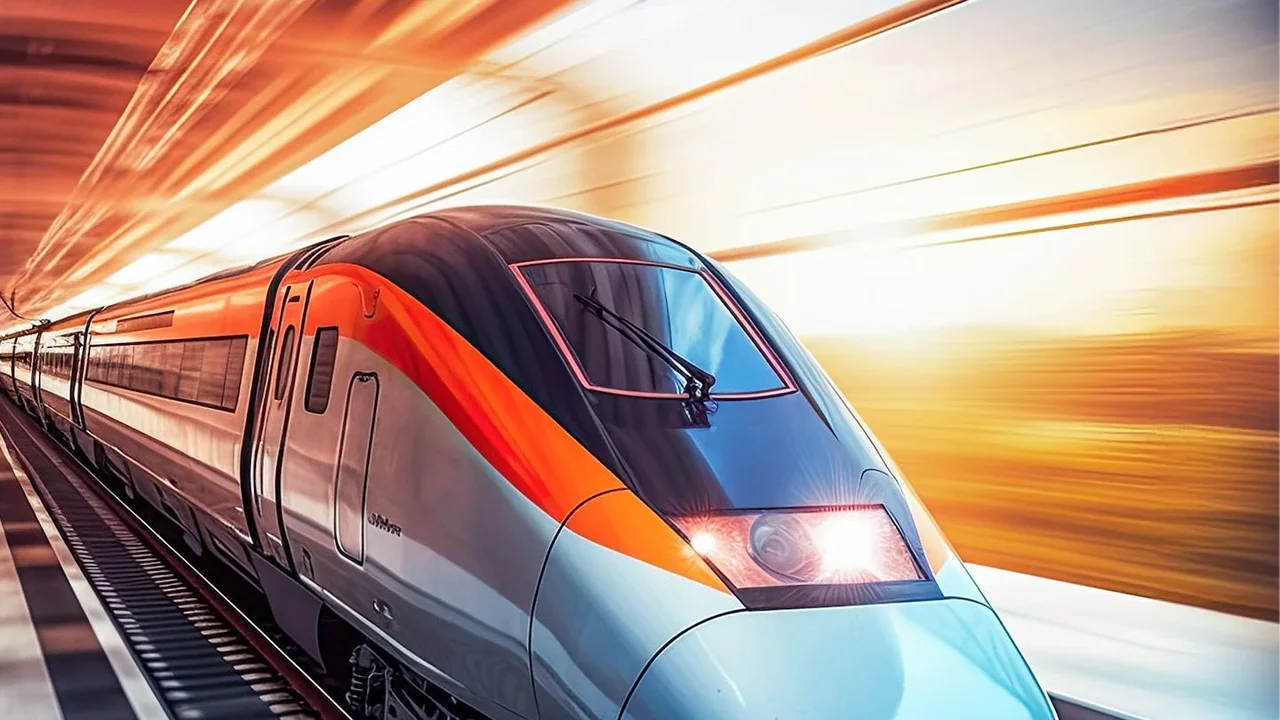
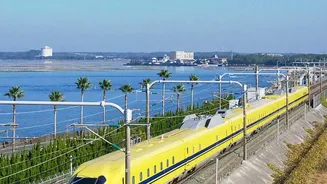
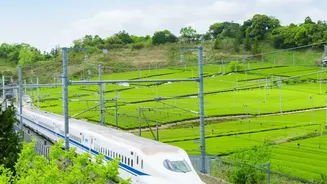
The trains running on this corridor will be based on Japan's E5 Series Shinkansen technology, renowned for its safety and reliability. These trains are designed to operate at a speed of 320 km/h. The journey time between Mumbai and Ahmedabad is expected to be just over two hours with limited stops, a dramatic reduction from current travel times. The E5 series trains are engineered for passenger comfort and feature an aerodynamic long-nose design that minimises the loud "tunnel boom" effect when entering tunnels at high speed. They will offer multiple seating classes, including a premium option. While initial train sets are being procured from Japan, there is a strong push to assemble some coaches in India under the 'Make in India' initiative.
The Road Ahead to 2027
With the first test coach ready and construction progressing, the next major milestones will be the completion of civil works on the priority sections and the commencement of track testing in mid-2027. After a trial period of two to four months, the Surat-Bilimora section could be inaugurated. Challenges remain, but the recent announcements from the Railway Ministry indicate a renewed confidence in the project's timeline. The completion of the first section will not only be a victory for Indian infrastructure but will also serve as a template for future high-speed rail corridors planned across the country, fundamentally changing how Indians travel.