






The Cool Comfort of a Woven Mat
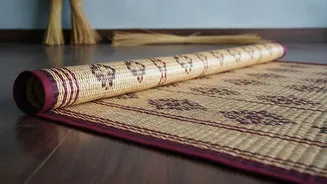
Sitalpati, translating literally to “cool mat,” is a cornerstone of Bengali heritage, deeply intertwined with daily life. These aren't just ordinary floor coverings; they are marvels of natural air conditioning, famous for providing a cool surface to rest
on during India’s hot and humid summers. Traditionally used for sitting or sleeping, the mats are renowned for their smooth, glossy texture. The finest Sitalpati is said to be so smooth that even a snake cannot glide across its surface. This unique quality comes from the primary raw material: the Mutra reed (Schumannianthus dichotomus), a plant that grows in the marshy lands of West Bengal, Assam, and Tripura. The craft holds such significance that it has been recognized by UNESCO as an Intangible Cultural Heritage of Humanity.
From Reed to Regal Mat
The creation of a Sitalpati is a painstaking process that showcases immense skill and patience, often involving an entire family. The work is traditionally divided, with men harvesting the long Mutra reeds and preparing them, while women take up the intricate task of weaving. After harvesting, the reeds are soaked, sometimes in rice water, then boiled and sliced into fine strips. These strips are dried in the sun and left out overnight to absorb the dew, which enhances their smoothness and quality. The weaving itself, called 'Muri Bandha', is done by hand, with weavers manipulating the fine slips to create simple geometric checks or complex narrative designs featuring animals, birds, and mythological motifs. In recognition of its unique origin and quality, Sitalpati from Cooch Behar was recently awarded the Geographical Indication (GI) tag, protecting its authenticity.
Weaving Against the Odds
Despite its cultural importance and recent accolades, the Sitalpati craft faces significant challenges. Artisans are struggling against the tide of modernity, where cheaper, mass-produced plastic mats have flooded the market. This competition has driven down prices and made it difficult for weavers to earn a sustainable livelihood. The economics are often disheartening; a mat that takes hours or even days of meticulous labor might be sold to a middleman for a fraction of its final market price, leaving the creators with minimal profit. Furthermore, there is a growing disinterest among the younger generation, who are often drawn to more lucrative opportunities in urban centres rather than inheriting the demanding family craft. Environmental factors, including changes in weather patterns, also pose a threat to the consistent growth of high-quality Mutra reeds.
A Thread of Hope and Innovation
But the story of Sitalpati is not one of decline; it is one of resilience. A concerted effort from government bodies, NGOs, and the artisans themselves is breathing new life into the craft. The GI tag is a major step, helping to brand and market authentic Cooch Behar mats, ensuring better prices and global recognition. In villages like Ghughumari, which has become a Rural Craft Hub, artisans are innovating. While still producing the traditional mats, they have diversified their product line to appeal to contemporary tastes. Today, the delicate weave of Sitalpati can be found on fashionable handbags, coasters, wall hangings, and other home décor items. This fusion of tradition with modern utility is opening up new markets and creating a fresh appreciation for the age-old skill, ensuring that the looms of Cooch Behar continue to hum with activity.