
A Grand Tour That Never Ended
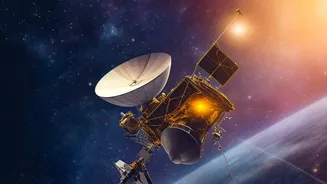
Voyager 2, and its twin Voyager 1, were launched by NASA in 1977. Their original goal was a 'grand tour' of the outer planets. Voyager 2 is the only spacecraft to have ever visited Uranus and Neptune, making incredible discoveries along the way. But its mission
didn't end there. After completing its planetary flybys in 1989, it began an extended journey toward the edge of our solar system. Its twin, Voyager 1, which launched 16 days later but took a faster route, became the most distant human-made object in 1998, a title it still holds today.
What Does 'Interstellar Space' Mean?
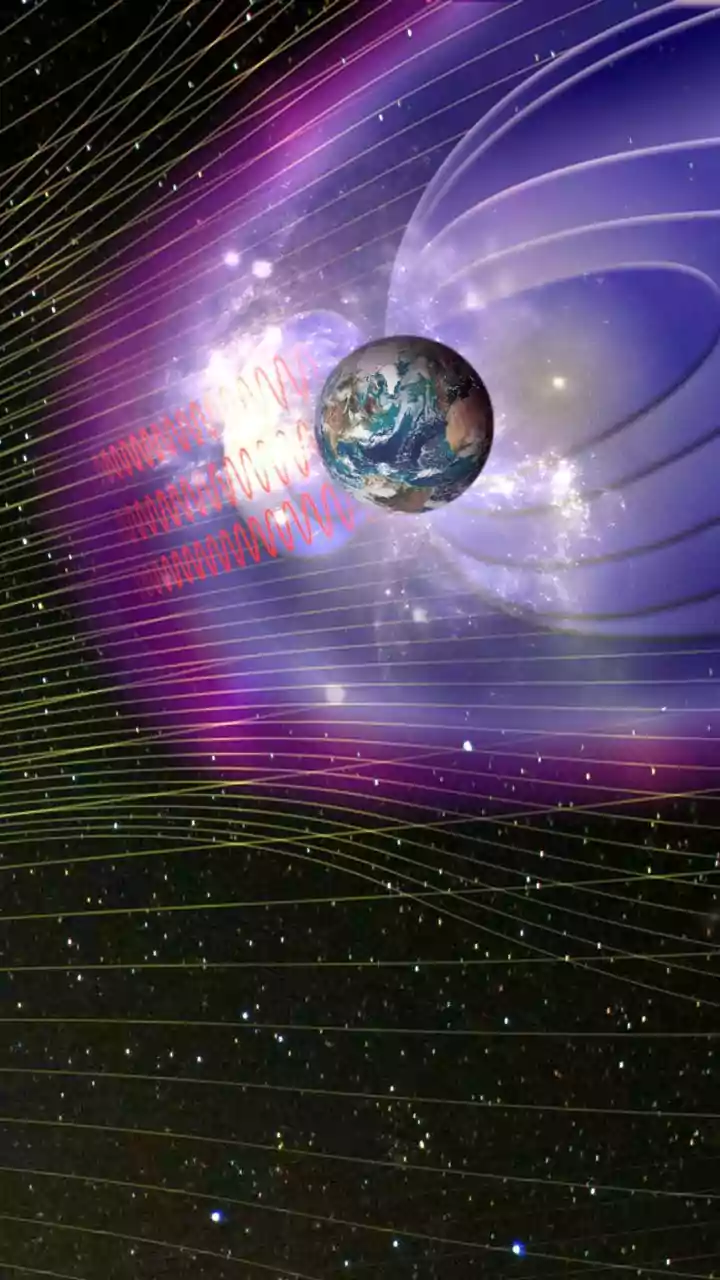
Entering interstellar space isn't like crossing a painted line. It means leaving the 'heliosphere,' a massive protective bubble of particles and magnetic fields generated by our Sun. This bubble, inflated by the constant stream of the solar wind, shields our solar system from much of the radiation of deep space. The outer boundary of this bubble is called the heliopause. It’s the point where the Sun's solar wind is no longer strong enough to push back against the 'wind' from other stars in the interstellar medium. Crossing this boundary is a monumental achievement, like a ship leaving its home harbour for the open ocean.
The Historic Crossing of 2018
On November 5, 2018, Voyager 2 crossed the heliopause at a distance of about 18 billion kilometres from the Sun. Its instruments detected a sharp drop in solar wind particles and a dramatic increase in galactic cosmic rays, confirming it had left the solar system's protective bubble. Voyager 1 had made the same crossing back in August 2012, but having a second spacecraft achieve this in a different location provided scientists with unprecedented data. For the first time, humanity had two separate points of observation in the space between the stars, providing a much richer understanding of this frontier.
A Faint Whisper from the Void
Even after nearly 50 years and travelling billions of kilometres, Voyager 2 is still in contact with Earth. Its power comes from radioisotope thermoelectric generators, which convert the heat from decaying plutonium into electricity. That power supply is dwindling, losing about 4 watts per year, and engineers at NASA have had to make difficult decisions, shutting down certain instruments to conserve energy and extend the mission's life. Yet it continues to send back invaluable data about the density and temperature of the interstellar plasma, information we could never obtain from within our solar system. Communicating with the probe is a feat in itself; a signal travelling at the speed of light can take nearly a full day to reach the even more distant Voyager 1.
A Message in a Cosmic Bottle
Attached to both Voyager spacecraft is a Golden Record, a 12-inch gold-plated copper disk intended as a time capsule. Selected by a committee led by famed astronomer Carl Sagan, it contains a story of our world for any extraterrestrial civilization that might one day find it. The records include 116 images, a variety of natural sounds like wind, rain, and animal calls, musical selections from different cultures, and spoken greetings in 55 languages. It's a message of peace and a portrait of life on Earth, sent out into the cosmic ocean as a testament to human curiosity and hope.