




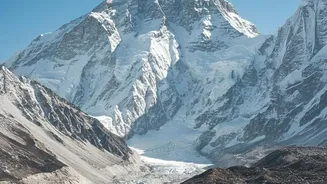
The Third Pole is Thawing
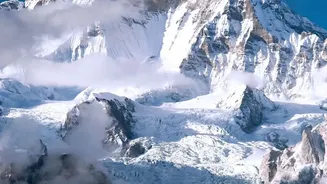
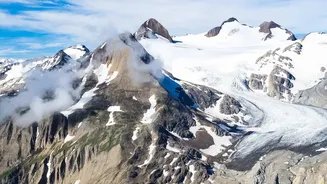
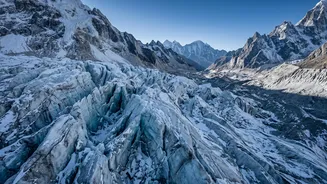
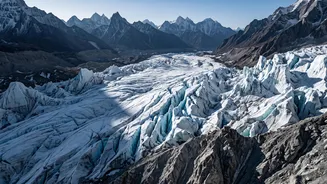
The Hindu Kush Himalaya region holds the largest volume of ice outside the polar caps, feeding ten major river systems that support nearly two billion people. However, these glaciers are now retreating at an alarming pace. Recent reports confirm that the rate
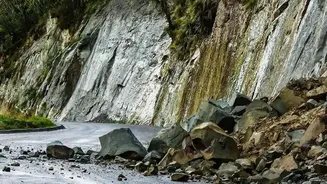
of ice loss has doubled since the year 2000, a stark indicator of a system under immense stress. This accelerated melt is not a distant problem; it is a crisis unfolding in real-time. The warming is causing glaciers to thin and shrink, with some studies showing a total loss of up to 27 metres in ice thickness since 1975. This rapid transformation of the landscape is making the mountains increasingly unstable.
The New Threat: Cascading Hazards
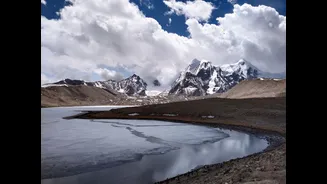
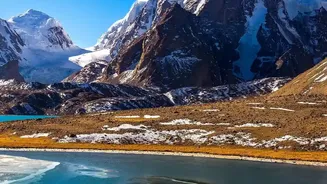
The most immediate danger comes from new and expanding glacial lakes. As glaciers melt, water accumulates behind unstable natural dams of rock and debris. A sudden breach of one of these dams can cause a Glacial Lake Outburst Flood (GLOF), a catastrophic event often described as a “tsunami in a mountain gorge”. These floods are powerful and sudden, as seen in the 2023 Sikkim disaster where a GLOF generated a 20-metre high wave that wiped out infrastructure downstream. But the risks are more complex than just floods. Scientists now speak of “cascading hazards,” where one event triggers another. For instance, a chunk of a glacier breaking off can cause a landslide, which in turn could temporarily dam a river, leading to an even more devastating flash flood when the dam gives way. A recent deadly flood in Nepal was likely caused by such a sequence, with water levels rising by 9 meters in just 30 minutes.
Rethinking Himalayan Development
These evolving dangers are forcing experts and policymakers to ask tough questions about safety and development in the region. The traditional models for building infrastructure may no longer be adequate for this new reality. The expansion of roads, hydropower schemes, and tourism facilities adds another layer of risk to an already unstable landscape. A hydropower dam, for example, is vulnerable to the immense force of a GLOF. The challenge is to balance the need for energy security and connectivity with the idiosyncrasies of mountain ecology. This raises fresh questions: Are large-scale construction projects in fragile valleys still wise? How should environmental assessments account for these new, cumulative risks? And how can construction standards be updated to reflect the reality of an unstable environment?
A Human Crisis Unfolding
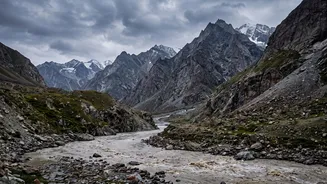
Ultimately, the impacts are felt most acutely by people. Communities living in high mountain valleys face immediate threats to their lives and property from these unpredictable disasters. The destruction of roads, bridges, and communication lines can isolate entire villages for weeks, hampering rescue and relief efforts. But the consequences also extend far downstream. The glaciers and snowpack of the Himalayas feed rivers that provide water for drinking, irrigation, and energy for over a billion people. An initial surge in water from melting may be followed by long-term declines, threatening water and food security for millions. This environmental crisis is rapidly becoming a human one, prompting climate-induced migration and placing immense strain on communities that have the least responsibility for the climate change causing it.
The Urgent Need for Adaptation
There is a growing consensus that simply building bigger walls is not the answer. The focus is shifting towards adaptation and resilience. This includes a massive scaling-up of glacier monitoring to create better early warning systems for GLOFs and other hazards. Currently, many at-risk lakes in the Indian Himalayas remain insufficiently monitored. While India has a national program for GLOF risk mitigation, experts say it needs to be scaled up immediately as a matter of national security. Adaptation also involves empowering local communities with knowledge and resources, from developing community-led disaster preparedness programs to adopting sustainable livelihoods like climate-resilient agriculture. Without a new approach that respects the mountains' increasing fragility, the safety of the entire region remains in question.