


The Common 'Healthy' Vegetarian Trap
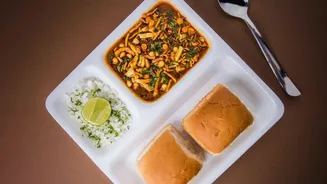
In India, it's easy to be a vegetarian. But it's just as easy to become a 'carbitarian'—someone who replaces meat with an over-reliance on refined carbohydrates like white rice, roti, and potatoes, with minimal protein or diverse vegetables. A typical
meal might be heavy on grains and light on protein and fibre, which can lead to energy slumps and nutrient gaps. The assumption that any vegetarian meal is inherently healthy is a significant pitfall. A balanced plate isn't just about avoiding certain foods; it's about intentionally including the right ones in the right proportions. The goal is to move from a grain-heavy plate to one that is balanced with colourful vegetables and adequate protein.
Solving the Protein Puzzle
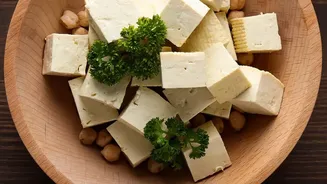
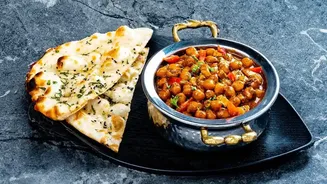
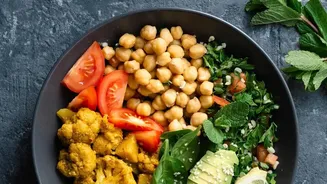
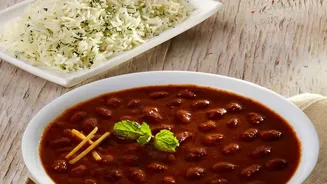
Protein is crucial for muscle repair, immunity, and feeling full. While dairy products like paneer, curd, and milk are excellent complete protein sources for lacto-vegetarians, plant-based proteins often need a partner. Most plant foods are 'incomplete' proteins, meaning they lack one or more essential amino acids. However, Indian cuisine has a built-in solution: food pairing. Classic combinations like dal with rice, or rajma with roti, create a complete amino acid profile. The key is variety. Don't just rely on one type of dal. Rotate between different legumes like chana, moong, and masoor, and supplement with other sources like soya chunks, tofu, and nuts to ensure you get the full spectrum of proteins your body needs. Aiming for a distinct protein source at every meal is a simple but powerful strategy.
The Micronutrients You Can't Ignore
Several key micronutrients require special attention in a vegetarian diet. Vitamin B12, which is crucial for nerve function and preventing anaemia, is almost exclusively found in animal products. Vegetarians must rely on dairy products like milk, yogurt, and paneer, or fortified foods such as certain breakfast cereals and plant milks (soy or almond). Iron is another major concern, particularly non-heme iron from plant sources, which is harder for the body to absorb. While spinach, lentils, and beans are good sources, their power needs to be unlocked. Calcium is also vital for bone health. While dairy is a primary source, those who consume less can turn to foods like white beans, almonds, sesame seeds, and broccoli.
The Art of Nutrient Absorption
Eating nutrient-rich foods is only half the battle; you also have to absorb those nutrients. This is especially true for iron. Plant-based (non-heme) iron absorption can be significantly boosted by pairing it with Vitamin C. This is as simple as squeezing lemon juice over your dal and sabzi, having a side of tomato salad, or including amla in your meal. Conversely, compounds in tea and coffee can block iron absorption, so it's best to avoid drinking them with your meals. For calcium, ensuring you get enough Vitamin D is crucial, as it helps your body absorb the mineral. While some foods are fortified, sensible sun exposure remains a key source.
How to Build Your Ideal Vegetarian Plate
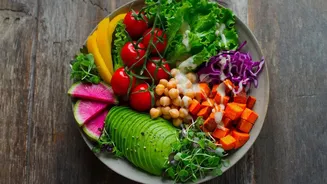
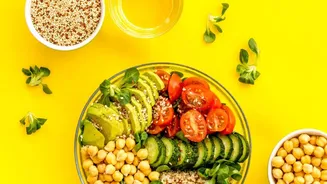
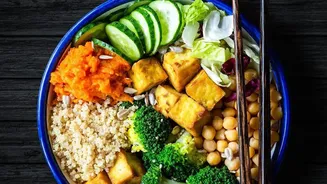
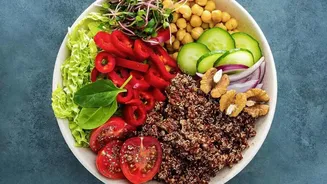
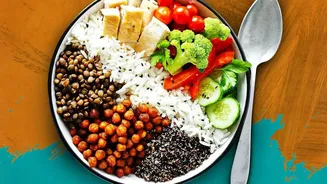
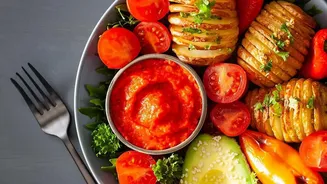
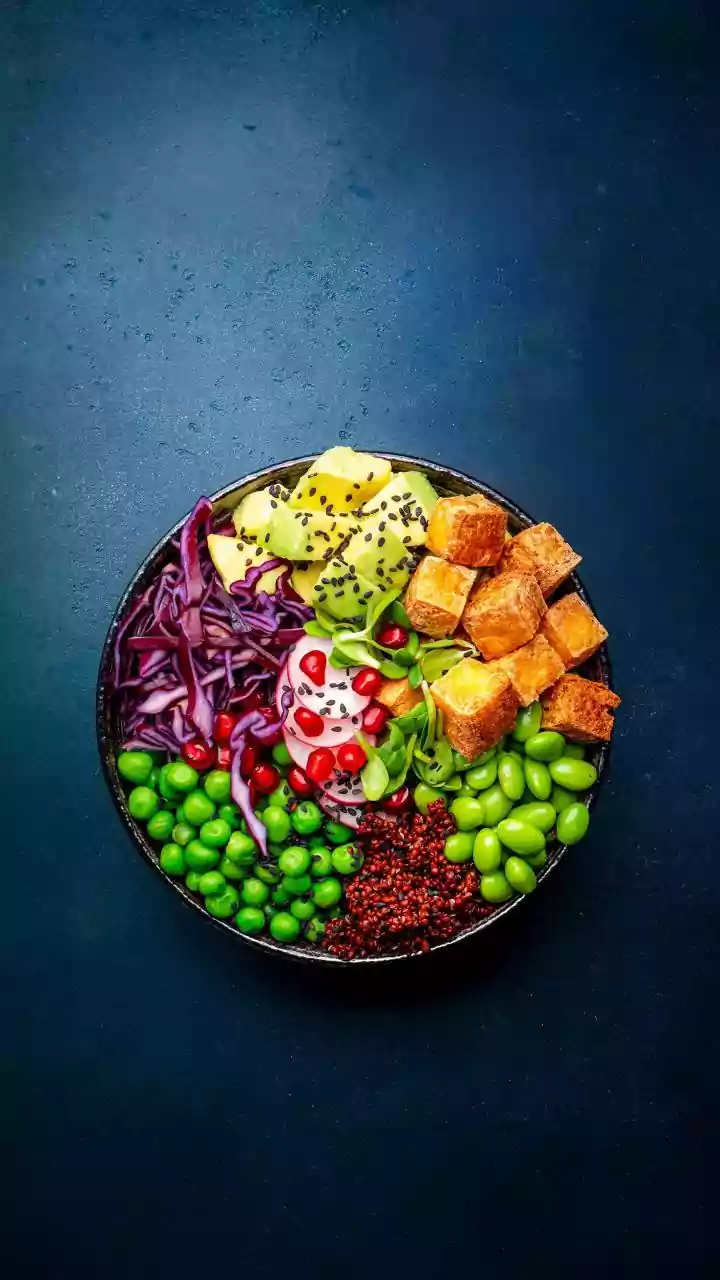
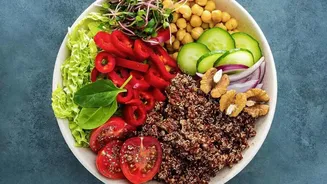
Forget complicated calorie counting. A visual guide, known as the 'plate method', is the easiest way to ensure balance. Aim to fill half of your plate with non-starchy vegetables (think sabzi, salads). This ensures you get plenty of fibre, vitamins, and minerals. One-quarter of your plate should be dedicated to a quality protein source, such as a bowl of dal, rajma, chana, or a serving of paneer or tofu. The final quarter should be for complex carbohydrates like whole-wheat roti, brown rice, or millets such as jowar or ragi. To finish, add a small amount of healthy fat, like a teaspoon of ghee or a sprinkle of nuts and seeds, and consider a side of curd for probiotics and extra protein.