



A Frightening Reminder Over India
On August 4, 2026, passengers on Air India flight AI2379 from Phuket to Delhi experienced a terrifying few moments. While cruising, the aircraft hit a pocket of severe turbulence, causing it to drop suddenly. The event, which occurred about 90 minutes
after takeoff, was abrupt and violent, injuring thirteen passengers and four crew members. Eyewitness accounts describe a chaotic scene where people who were not buckled in were thrown against the cabin ceiling before falling back down. One passenger told reporters they thought they would die, highlighting the fear and shock of the event. The incident damaged parts of the cabin interior, illustrating the sheer force involved. While the aircraft landed safely in Delhi with medical teams on standby, it served as a stark illustration of what can happen during unexpected turbulence.
The Invisible Danger: Clear Air Turbulence
What makes incidents like the one on the Air India flight so dangerous is that they often stem from Clear Air Turbulence, or CAT. As the name suggests, CAT occurs in cloudless, clear skies, making it invisible to the naked eye and undetectable by conventional weather radar. It's caused by the meeting of air masses moving at different speeds, often near jet streams where planes cruise for fuel efficiency. Because it strikes without warning, pilots have no time to alert passengers to buckle up. The 'fasten seatbelt' sign is typically illuminated for predictable turbulence, like when flying through a storm system or during take-off and landing. CAT, however, is completely unpredictable, and it is the leading cause of turbulence-related injuries on commercial flights.
A Growing Concern for Flyers
If it feels like you're hearing about turbulence more often, you're not wrong. Scientific studies indicate that climate change is increasing the frequency and severity of CAT. Research from the University of Reading found that severe clear-air turbulence increased by 55% between 1979 and 2020 on a busy North Atlantic route. Warmer atmospheric temperatures, driven by carbon dioxide emissions, are strengthening wind shear in the jet streams—the primary cause of CAT. This means the chances of encountering these invisible air pockets are on the rise, making personal safety measures even more crucial for passengers.
The Physics of a Simple Buckle
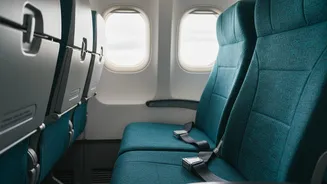
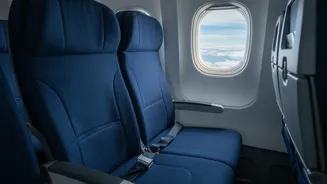
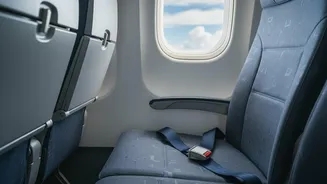
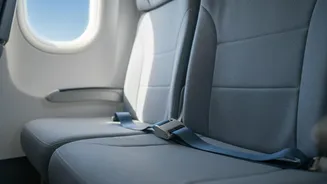
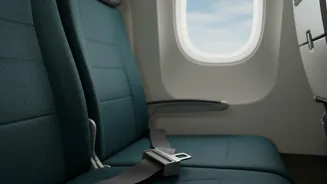
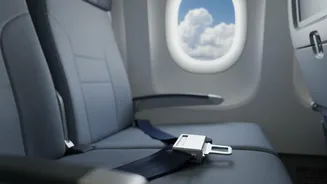
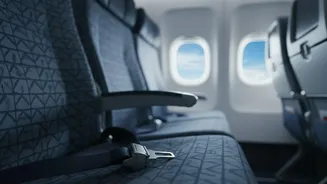
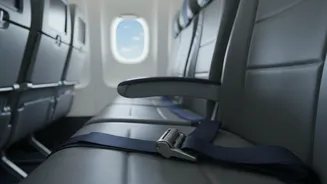
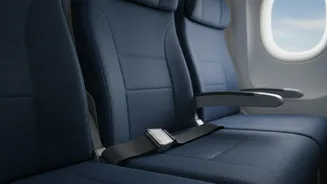
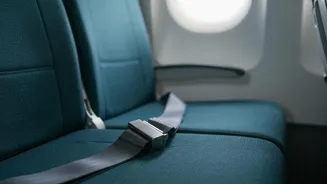
An airplane seatbelt might seem like a simple strap, but it’s an engineered safety device designed to handle incredible forces. During severe turbulence, an aircraft can be jolted vertically and laterally with violent force. Without a seatbelt, a passenger’s inertia means they continue to move until they hit an object—be it the seat in front, the window, or the cabin ceiling. A person can effectively become a projectile, posing a risk not only to themselves but to others. The seatbelt works by anchoring you to your seat, which is firmly secured to the aircraft's frame. It distributes the immense forces across the strongest part of your skeleton, your pelvis, preventing you from being thrown around the cabin.
Your Best Defence Is the Easiest One
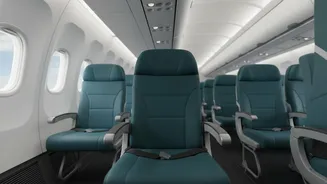
Pilots and cabin crew consistently offer one piece of advice that is often ignored once the seatbelt sign is switched off: keep your seatbelt fastened whenever you are seated. Even a loosely fastened belt is enough to prevent you from being launched out of your seat during sudden, severe turbulence. It’s the single most effective action a passenger can take to prevent injury from turbulence. While modern aircraft are built to withstand even the most extreme turbulence, the human body is not. The recent Air India incident, and many others before it, prove that the difference between a frightening story and a serious injury is often as simple as a click.