






There’s a new potato making waves from farm to fork across India. Meet Kufri Jamunia, a vibrant purple variety developed to offer more than just carbohydrates. It's a crop with a story, promising unique benefits for both growers and home cooks.
An Introduction to the Purple Powerhouse
Kufri Jamunia
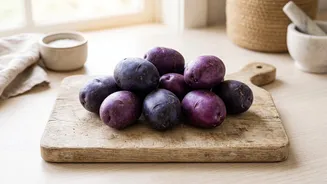
is a biofortified potato variety developed by the ICAR-Central Potato Research Institute (CPRI) in Shimla and officially released in 2024. The name itself, referencing the deep colour of 'jamun', points to its most striking feature: its dark purple skin and flesh. This isn't just for looks; the colour comes from anthocyanins, powerful antioxidants also found in blueberries and jamuns. Developed as a tool to help combat 'hidden hunger'—micronutrient deficiencies despite sufficient calorie intake—this potato is naturally packed with more nutrients than its conventional counterparts.
For Farmers: Yield, Resilience, and Marketability
For agricultural producers, Kufri Jamunia presents an interesting proposition. It's a medium-maturing variety, typically ready for harvest in about 90-100 days. Under recommended cultivation practices, it offers a high yield potential of 32-35 tonnes per hectare, with some station trials reporting yields as high as 49 tonnes. Each plant produces 10-12 medium-to-large oblong tubers. One of its key agronomic advantages is its good storability. The variety has a dormancy period of 6-8 weeks, which means it resists premature sprouting and shows minimal weight loss and rotting post-harvest, a significant benefit for managing supply and reducing waste. It is recommended for cultivation across the North Indian plains, including states like Punjab, Haryana, Uttar Pradesh, and Bihar. However, while it shows moderate resistance to late blight in labs, it has been found to be susceptible in field conditions, meaning farmers may still need to apply fungicides.
For Consumers: A Nutritional Upgrade for Your Kitchen
In the kitchen, Kufri Jamunia offers a chance to make everyday meals more nutritious. Its standout feature is its high concentration of antioxidants. Compared to regular potatoes, it contains significantly more Vitamin C, iron, and zinc. A 100g serving of Kufri Jamunia contains around 42.75 mg of Vitamin C, 3.22 mg of iron, and 2.28 mg of zinc. The vibrant purple colour signifies the presence of anthocyanins, which are retained in the flesh even after peeling. These compounds are known for their antioxidant properties, which help combat cellular damage in the body. The potato has a mealy texture, which makes it versatile for a variety of Indian dishes. Its taste has been rated positively in initial assessments, suggesting good consumer acceptance.
Culinary Uses and Cooking Tips
The mealy texture of Kufri Jamunia makes it suitable for a wide range of preparations. Researchers and culinary experts suggest it works well in traditional curries, parathas, puris, and soups. Its unique colour can add a novel visual appeal to dishes. Beyond traditional cooking, it can be processed into nutrient_rich flour, suji, and daliya for use in baked goods or breakfast items, expanding its utility. To best preserve its nutritional content, cooking methods like steaming or microwaving are generally recommended over stir_frying, as high heat can degrade some of the beneficial compounds. Its unique properties open up possibilities for creating value_added food products that cater to health_conscious consumers, potentially commanding a premium in the market.