

More Than Just Breakfast
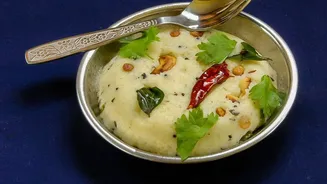
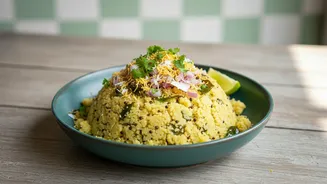
While traditional South Indian upma is a respected breakfast staple, the version served on the streets of Mumbai is an entirely different experience. Known locally as 'masala upma' or 'tomato upma', this dish sheds its simpler origins for a bolder, more
flavourful avatar. It's distinguished by its vibrant colour, fluffy texture where every grain is separate, and a complex taste profile that is spicy, tangy, and deeply satisfying. This isn't just a quick morning meal; it’s a go-to snack for office-goers and students, a testament to the city’s vibrant street food culture.
The Foundation: Perfectly Roasted Rava
The secret to the non-sticky, 'khila-khila' (fluffy and separate) texture of Mumbai-style upma lies in one crucial first step: roasting the semolina (rava or sooji). Street vendors meticulously dry-roast the rava in a large kadai until it becomes fragrant and the grains feel light and crisp, ensuring they don't clump together later. This step is non-negotiable for achieving that signature restaurant-style finish. The most commonly used variety is Bombay rava, a medium-coarse semolina that holds its shape well. Getting this right prevents the final dish from becoming pasty or lumpy.
The Tadka: A Symphony of Aromas
The heart of any great upma is its tempering, or 'tadka', and the Mumbai version is robust. It begins with heating oil or ghee, then sputtering mustard seeds and often cumin seeds. This is immediately followed by urad dal (split black gram) and chana dal (split Bengal gram), which are fried until golden to add a nutty aroma and a delightful crunch. Curry leaves, green chillies, and finely chopped ginger are then tossed in, releasing a wave of fragrance that forms the foundational flavour of the dish. This aromatic base is what separates a good upma from a great one.
Building the Masala Base
This is where Mumbai-style upma truly defines itself. After the initial tempering, finely chopped onions are sautéed until they turn soft and translucent. Then come the tomatoes, which are cooked down to form a rich, tangy base. Along with the tomatoes, a blend of spices is introduced. Turmeric powder provides a warm, yellow hue, while red chilli powder adds a kick of heat. Some vendors even add a pinch of garam masala or pav bhaji masala, a classic Mumbai street food trick that lends the upma a unique, spicy, and savoury depth that is utterly addictive.
Cooking to Fluffy Perfection
The water-to-rava ratio is critical for texture. While a traditional recipe might use a 2:1 ratio, many Mumbai vendors favour a slightly higher ratio, around 2.5:1 or even 3:1, to create a softer yet still fluffy result. The water, seasoned with salt, is brought to a rolling boil before the roasted rava is added. The technique is to pour the rava in a slow, steady stream with one hand while continuously stirring with the other. This prevents lumps from forming. Once all the rava is incorporated, the pan is covered, and the heat is lowered, allowing the semolina to steam and absorb the water until it's perfectly cooked and every grain is distinct.
The Grand Finale: Toppings
What truly crowns the Mumbai street-style upma is the garnish. A generous squeeze of fresh lemon or lime juice is essential, cutting through the richness and adding a final burst of tanginess. It’s then showered with a lavish amount of freshly chopped coriander leaves. But the street-style experience doesn't end there. Many vendors offer a final flourish of crispy sev (fried gram flour noodles), which adds another layer of texture and a salty crunch. In some variations, you might also find grated fresh coconut, adding a hint of sweetness and richness to complete this iconic snack.