

The Smallest Stowaways
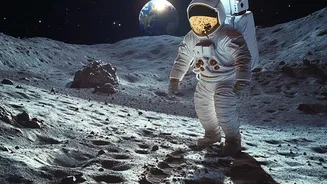
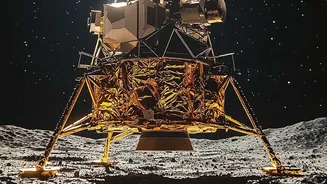
When astronauts travel to space, they don’t go alone. Their bodies, equipment, and spacecraft are teeming with microorganisms. While the Moon seems utterly inhospitable—with its lack of air, extreme temperatures, and intense radiation—scientists have
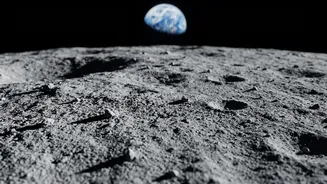
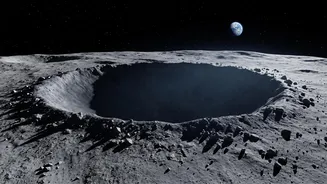
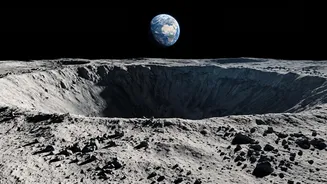
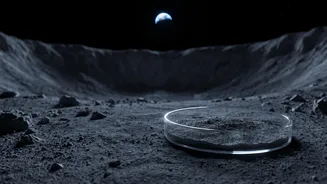
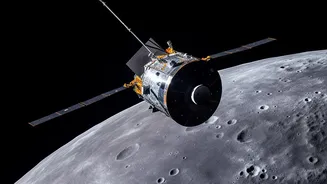
long wondered if any of these microbial hitchhikers could survive. A recent NASA-led study sought to answer this very question by modeling the harsh conditions near the Moon's South Pole. Using data from NASA's Lunar Reconnaissance Orbiter, researchers simulated the environment at potential Artemis landing sites, including areas that are permanently shadowed. They then tested the theoretical survivability of five common microbes known to be resilient and often found on spacecraft: three types of bacteria and two types of fungi.
Survival of the Tiniest
The results were eye-opening. While all the tested microbes showed some potential to survive for short periods in specific, sheltered locations, the fungi were the clear champions of resilience. In particular, a common black mould called Aspergillus niger proved to be extraordinarily tough. This fungus, often found in damp places on Earth like bathrooms, has also been identified aboard the International Space Station (ISS). The study found that its dark pigmentation and thick cell walls provide significant protection from ultraviolet (UV) radiation, one of the biggest threats on the lunar surface. The simulations showed that Aspergillus niger could potentially survive for days in shaded areas, and in some permanently shadowed craters, its survivability could extend for weeks or even months. The bacteria were less resilient to the UV radiation and heat but could still persist in the most protected niches.
Why This Matters for Artemis
These findings have significant implications for NASA's Artemis program, which aims to establish a long-term human presence on the Moon. The survival of these microbes is a double-edged sword. On one hand, their hardiness raises concerns about astronaut health. Fungi like Aspergillus niger can pose health risks in closed environments and damage life-support equipment. On the other hand, the study raises a critical issue of planetary protection: preventing "forward contamination," where we inadvertently introduce Earth life to other celestial bodies. If Earth microbes contaminate lunar soil samples, it could complicate our search for the Moon's native chemistry and our understanding of its history. Scientists need a clear baseline of what the Moon is like before we get there, and that means knowing exactly what we're bringing with us.
Protecting the Moon and Its Explorers
The study emphasizes that survival is not the same as growth or reproduction. The lunar surface still lacks the liquid water and stable environment needed for these microbes to thrive and spread. However, their ability to remain dormant and viable is a major concern. This research underscores the need for strict contamination control protocols for all hardware and spacesuits heading to the Moon, especially for missions targeting the scientifically valuable polar regions. Organizations like COSPAR (Committee on Space Research) set international planetary protection policies, which are updated as new information, like this study, becomes available. Understanding which microbes are most likely to survive helps NASA refine its sterilization techniques and assess risks more accurately, ensuring that our exploration doesn't compromise the very science we aim to conduct.