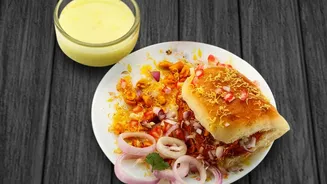






In the perpetual motion of Mumbai, where every second counts, the city’s heartbeat can be found in the simple, satisfying act of grabbing a vada pav. This isn't just a snack; it's the definitive grab-and-go breakfast that fuels millions.
The Anatomy of a Perfect Bite
For the uninitiated,
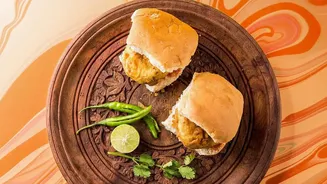
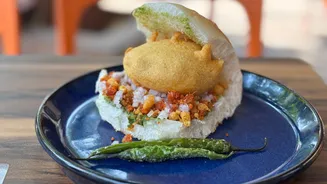
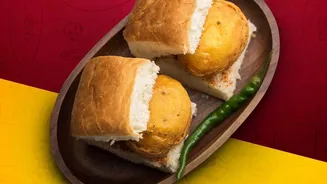
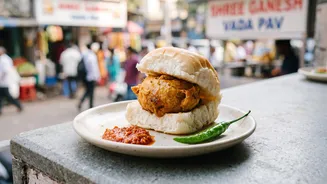
a vada pav is a masterclass in simplicity and flavour. It consists of a spiced potato dumpling, or 'batata vada', which is mashed with green chillies, garlic, and spices, coated in a chickpea flour batter, and deep-fried to a golden crisp. This flavour-packed fritter is then nestled inside a soft, unsweetened bread roll known as a 'pav'. It's typically served with one or more chutneys, often a fiery dry garlic and coconut one, and a fresh green chilli on the side for the brave. Its resemblance to a burger has earned it the nickname 'Bombay Burger'.
Born From the City's Hustle
The vada pav is a relatively recent invention, with its origin story firmly rooted in the 1960s. Ashok Vaidya is widely credited with creating the first one in 1966 from his stall outside Dadar station, a bustling hub for the city’s textile mill workers. At the time, Girangaon, or 'mill village', was the industrial heart of Mumbai. Workers on tight schedules needed a meal that was cheap, filling, and portable enough to be eaten on a crowded local train. The vada pav was the perfect solution—a convenient, carbohydrate-rich meal that was more practical than a traditional combination of chapati and sabzi.
An Engine of Opportunity
The rise of the vada pav was also intertwined with the city's political landscape. During the 1960s and 70s, a period of social and economic change, the Shiv Sena political party encouraged local Marathi people to become entrepreneurs. As the textile mills began to close in the following decades, many former mill workers, with encouragement from the party, opened their own vada pav stalls. This turned the humble snack into a symbol of self-reliance and an accessible business opportunity for thousands, cementing its place in the city's economic fabric.
The Great Social Equaliser
One of the most remarkable aspects of vada pav is its ability to transcend all social and economic barriers. It is a democratic food, enjoyed by everyone from students and daily wage labourers to business executives and Bollywood stars. Lines of people from all walks of life can be seen at popular stalls, all waiting for the same affordable and satisfying meal. In a city of immense diversity and disparity, the vada pav acts as a great equaliser, a shared cultural experience that unites Mumbaikars. It is more than just food; it is a ritual and a community meeting place.
An Icon in a Modern World
Even with the arrival of international fast food chains, the vada pav's status remains unshaken. In fact, it has evolved, with vendors now offering creative variations like cheese or Schezwan vada pav. Local entrepreneurs have even created branded chains, marketing it as the 'Indian Burger' to a new generation. Yet, for most, the original roadside version, served quickly and without fuss, remains the undisputed champion. Its enduring popularity is a testament to its perfect design for a city that never stops, proving that some of the best things in life are simple, delicious, and can be eaten on the run.