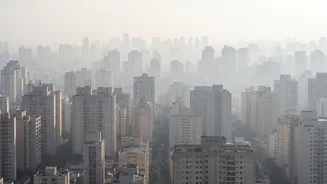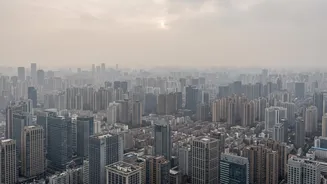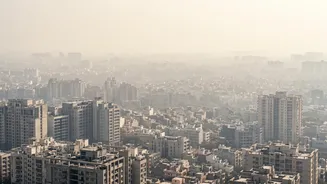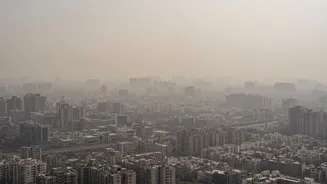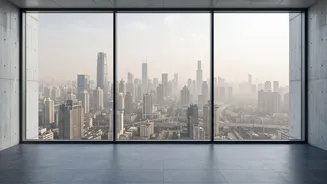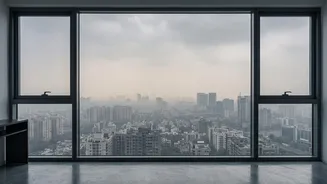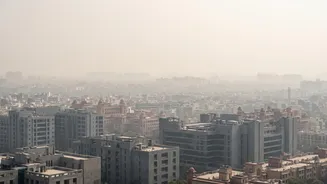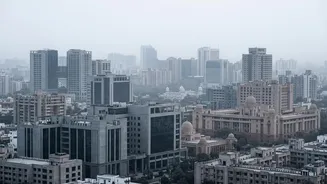




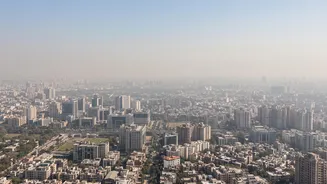
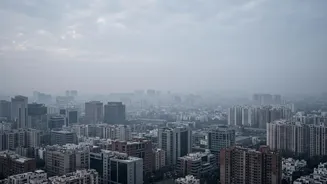
The Global View: What International Reports Say
While there isn't one single, recurring "UN Report" on Delhi, agencies like the UN Environment Programme (UNEP) and the World Health Organization (WHO) consistently highlight the city's air quality crisis in their global assessments. A recent September
2026 report from UNEP and the Climate and Clean Air Coalition (CCAC) warned that delaying clean air action has severe health and economic costs. It projected that if Delhi meets its national air quality standards starting in 2026, it could reduce the PM2.5 exposure burden by 20% by 2040. However, an eight-year delay would cut that improvement in half, leading to far greater health risks. These international reports confirm Delhi’s status as one of the world's most polluted capitals and stress that air pollution is a global health emergency, responsible for millions of premature deaths worldwide annually.
Decoding the Data: AQI and PM2.5
Air Quality Index (AQI) is a simplified scale from 0 to 500+, where higher numbers mean worse pollution. PM2.5 refers to fine particulate matter smaller than 2.5 micrometers, so tiny it can penetrate deep into the lungs and bloodstream, causing severe health issues. For context, India's annual permissible limit for PM2.5 is 40 micrograms per cubic meter. In 2025, Delhi's annual average PM2.5 was 97, more than double the national standard. While strong winds and rains can bring temporary relief, sometimes lowering the AQI to the 'satisfactory' range (51-100) as seen in early September 2026, the city often endures long stretches in the 'Very Poor' (301-400) and 'Severe' (401-500) categories, especially from October to February. In January 2026, for example, conditions deteriorated so badly that PM2.5 levels were 73 times higher than WHO guidelines.
The Blame Game: Stubble Burning vs. Year-Round Villains
Crop stubble burning in neighboring states like Punjab and Haryana is a major, visible contributor to Delhi's winter smog, sometimes accounting for up to 45% of pollution during peak season. However, it's a seasonal scapegoat for a year-round problem. A 2018 study by the Ministry of Earth Sciences attributed nearly 41% of Delhi's pollution to vehicular emissions, 21.5% to dust (from roads and construction), and 18% to industries. These local sources form the city's high baseline pollution. Vehicular traffic, industrial exhaust, construction activities, and waste burning are the persistent culprits that keep Delhi's air quality poor even when farmers aren't burning their fields. This toxic mix gets trapped by meteorological conditions in winter, leading to the infamous smog episodes.
The Human Cost: More Than Just a Cough
The health impacts of Delhi's air are devastating and go far beyond a sore throat. The WHO and other health institutes have linked long-term exposure to particulate matter to strokes, heart disease, lung cancer, and chronic respiratory illnesses. In India, air pollution is estimated to cause around 2 million deaths annually. For Delhi's residents, studies have suggested a staggering loss of life expectancy, with some estimates ranging from 8 to 11.9 years. Children are particularly vulnerable; reports have shown that the city's poor air has caused irreversible lung damage to millions of kids. A January 2026 study even quantified the benefits of pollution control, estimating that emergency measures potentially prevented hundreds of short-term deaths.
Policy in Action: Is GRAP Working?
The Graded Response Action Plan (GRAP) is an emergency mechanism implemented in Delhi-NCR to tackle air pollution when it reaches critical levels. It works in four stages, imposing progressively stricter measures like halting construction, banning certain vehicles, and closing industries as the AQI worsens. In recent years, the plan has become predictive, using forecasts to act before pollution peaks. Studies suggest GRAP has had a positive impact, with one analysis indicating it may have prevented a 60% increase in 'severe-AQI' hours and saved thousands of life-years. However, its effectiveness is still debated. On-the-ground implementation has faced challenges with enforcement and coordination between agencies, as highlighted by the Supreme Court in late 2024. Furthermore, some analyses conclude that improvements in air quality during GRAP periods are often driven more by favorable weather than the efficacy of the measures themselves.