



A Tale of Two Timelines
The latest oil market analysis presents a complex picture, with different agencies offering varied outlooks for the period through 2027. One S&P Global projection suggests Brent crude could average around $80 per barrel in 2027. Yet, the inherent volatility
of the market is highlighted by other analyses, which indicate prices could swing dramatically, potentially peaking as high as $125 or falling into the $60s depending on production decisions in the Middle East. Another forecast anticipates Brent to remain above $100 per barrel until mid-2027, driven by geopolitical risk premiums following disruptions to key export infrastructure. This wide range underscores the central theme: forecasting is an exercise in probabilities, not certainties. The coming years appear to be defined by a tug-of-war between recovering supply and fluctuating demand, all under the shadow of geopolitical events.
The Supply Side Surplus
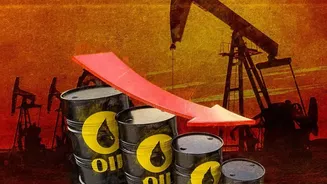
A major theme in the forecast is the potential for a supply glut. Several analyses point to global oil supply growing faster than demand, creating a market surplus. OPEC+ members are expected to continue unwinding production cuts, which, combined with growth from non-OPEC countries like Canada, Guyana, and Brazil, could flood the market. S&P Global Commodity Insights projects that global crude production growth in the second half of 2025 could vastly outpace demand growth, leading to an oversupplied market. This has led to downward revisions in price outlooks, with some forecasts seeing Dated Brent falling into the mid-$60s or even lower for a time. The International Energy Agency (IEA) echoes this sentiment, suggesting the market could return to a surplus as early as the final quarter of 2026, with global supplies potentially surging by 8 million barrels per day by 2027.
Demand Dynamics and Doubts
On the demand side, the picture is one of sluggish growth and significant uncertainty. S&P Global has revised its demand growth forecasts sharply downward, citing weak economic performance in key markets like China and the OECD region. Annual global oil demand growth for 2025 is expected to be the weakest in over two decades, excluding major crises like the 2008 financial crash and the COVID-19 pandemic. However, looking further ahead, OPEC has raised its demand growth forecast for 2027, anticipating a sharp rebound driven by a wave of inventory rebuilding after recent global disruptions. This push-pull dynamic—between immediate economic headwinds and a future need to restock—makes demand one of the most difficult variables to predict. The pace of the energy transition, including the adoption of electric vehicles and biofuels, adds another layer of long-term complexity.
The US Shale Factor
The United States, which has been a primary source of global supply growth in recent years, is expected to be significantly affected by these market shifts. According to S&P Global, the oversupplied market will disproportionately impact US shale production, which is more responsive to price signals than other non-OPEC sources. Projections indicate a slowdown in US oil production growth, with a potential year-on-year decline in 2026—the first in about a decade, excluding the pandemic anomaly. In a lower price environment, US operators are likely to reduce spending to protect shareholder returns, leading to a deceleration in production. This shift could have major geopolitical implications, potentially allowing the OPEC+ coalition to regain market dominance as US output wanes.
Why It's a Forecast, Not a Guarantee
The headline's crucial reminder is that oil markets are notoriously difficult to predict. Forecasts are built on complex models with numerous assumptions about economic growth, policy decisions, and geopolitical stability. A sudden conflict, a surprise policy shift from OPEC+, or a faster-than-expected economic downturn can render any projection obsolete overnight. For instance, recent tensions in the Middle East and attacks on export infrastructure have added a significant 'geopolitical risk premium' to prices, something models can struggle to quantify accurately. Furthermore, the behaviour of major consumers like China and India, and the speed of technological change in the transport sector, are all moving parts that can alter the trajectory of both supply and demand. This is why firms like S&P Global provide forecasts as a guide to possible outcomes, not as a definitive roadmap of the future.