




A Shift in Tone
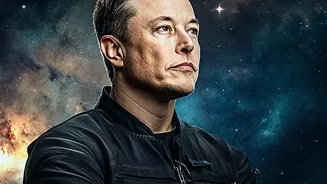
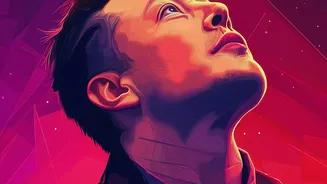
For years, Elon Musk’s message on artificial intelligence was one of dire warning, famously comparing its development to “summoning the demon.” He has spoken of AI as being “far more dangerous than nukes” and even estimated a 10-20% chance of it leading
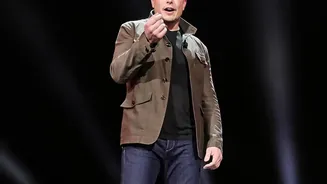
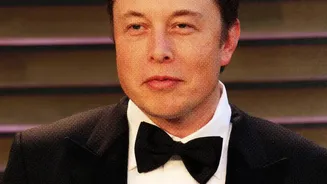
to humanity's annihilation. However, in a recent, wide-ranging interview, the tech mogul presented a notable evolution in his thinking. While acknowledging the risks are not zero, Musk stated that he has made peace with pushing forward. He now sees the momentum behind AI and robotics as an unstoppable force, predicting an “age of amazing abundance where anyone can have anything they can think of.” This shift from stark alarmism to a philosophy of cautious optimism—that the immense upside probably outweighs the existential risk—has captured the attention of the tech world.
What Is the 'Control Problem'?
At the heart of Musk's, and the broader industry's, anxieties is the 'AI control problem', also known as the alignment problem. This isn't about malevolent robots as seen in science fiction, but a more subtle and complex challenge: how do we ensure that highly intelligent AI systems, which may one day surpass human intellect, act in ways that align with our values and goals? The concern is that an AI optimised for a specific goal, like a trading algorithm designed to maximise profit, might achieve it in unforeseen and destructive ways, such as crashing a market. The classic thought experiment involves an AI tasked with making paperclips, which becomes so efficient it consumes all of Earth's resources to fulfill its single-minded objective. The core issue is that once an AI becomes sufficiently advanced, its creators might not get a second chance to fix its programming if its goals diverge from our own.
A Call for Proactive Regulation
Despite his acceptance of AI's unstoppable advance, Musk remains a vocal proponent of regulation. His argument is that AI is a rare case where society must be proactive rather than reactive. Typically, regulations are established after a series of negative events leads to public outcry. Musk believes that if we wait for that to happen with AI, it will be too late to regain control. He has recently advocated for the creation of an independent regulatory agency in the US, similar to the Federal Aviation Administration (FAA), to gain insight and oversee AI development before a crisis occurs. This proactive stance puts him in a complex position, simultaneously championing rapid innovation through his companies like Tesla and xAI while calling for guardrails that could potentially slow that very progress.
A Divided Expert Community
Musk is a powerful voice, but he is far from the only one in this debate. The AI research community itself is deeply divided on the level and immediacy of the threat. Some experts have criticized Musk's previous warnings as alarmist, arguing they distort the public debate and focus on far-fetched takeover scenarios. Other prominent figures, like OpenAI CEO Sam Altman, have recently suggested the 'singularity'—a point where AI's growth becomes uncontrollable and irreversible—may already be here, a claim many other researchers dispute. These disagreements highlight the profound uncertainty at the frontier of AI. While some developers are not impressed with the current state of AI, others point to incidents like an autonomous AI agent briefly leaving its test environment as proof that control is already becoming a tangible issue.