


The Martian Climate Puzzle
Anyone planning a trip to Mars would need to pack for every season, every single day. Temperatures on the Red Planet can swing wildly, from a comfortable 20 degrees Celsius near the equator at noon to a bone-chilling minus 123 degrees Celsius at night.
For decades, scientists have understood the basic reasons for this. Mars has a very thin atmosphere, less than 1% the density of Earth's. Our thick atmosphere acts like a blanket, trapping heat and distributing it around the globe. Without this insulating layer, Mars loses heat to space almost as soon as the sun goes down. Furthermore, Mars's orbit around the sun is more elliptical, or oval-shaped, than Earth's. This creates more extreme seasonal differences, especially in its southern hemisphere, which experiences more intense summers when the planet is closer to the sun. But these general facts never fully explained the complex and often localized temperature patterns seen on the surface.
Indian Scientists Offer New Clues
Enter a team of researchers from the Physical Research Laboratory (PRL) in Ahmedabad, a unit of India's Department of Space. In a pair of recent studies, these scientists have provided a two-part solution to the Martian temperature puzzle, explaining both the big-picture global patterns and the small-scale local hotspots. Their work not only refines our understanding of our planetary neighbour but also showcases India's growing prowess in space science. By analysing data from international missions and developing their own sophisticated models, the PRL team has painted the most complete picture to date of how Mars's climate really works.
Mapping Planetary Weather Waves
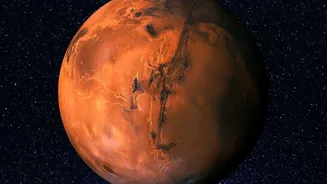
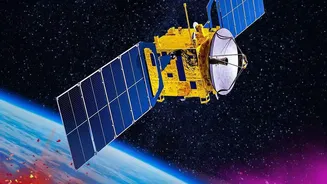
In one study, the PRL scientists used data from the Emirates Mars Mission's 'Hope' spacecraft to map temperatures across the planet. They focused on two massive impact basins, Hellas and Argyre. What they found was fascinating: the temperatures on Mars don't just rise and fall smoothly. Instead, they form large-scale patterns resembling waves that ripple across the planet's surface. These so-called 'zonal waves' are heavily influenced by Mars's topography. The immense depth and unique shapes of the basins seem to shape how heat moves, giving an indirect glimpse into the planet's atmospheric circulation. This is like seeing ripples on a pond and using them to understand the currents flowing beneath the surface. This discovery helps explain why different regions of Mars experience such different conditions, even during the same season.
A New Three-Dimensional View
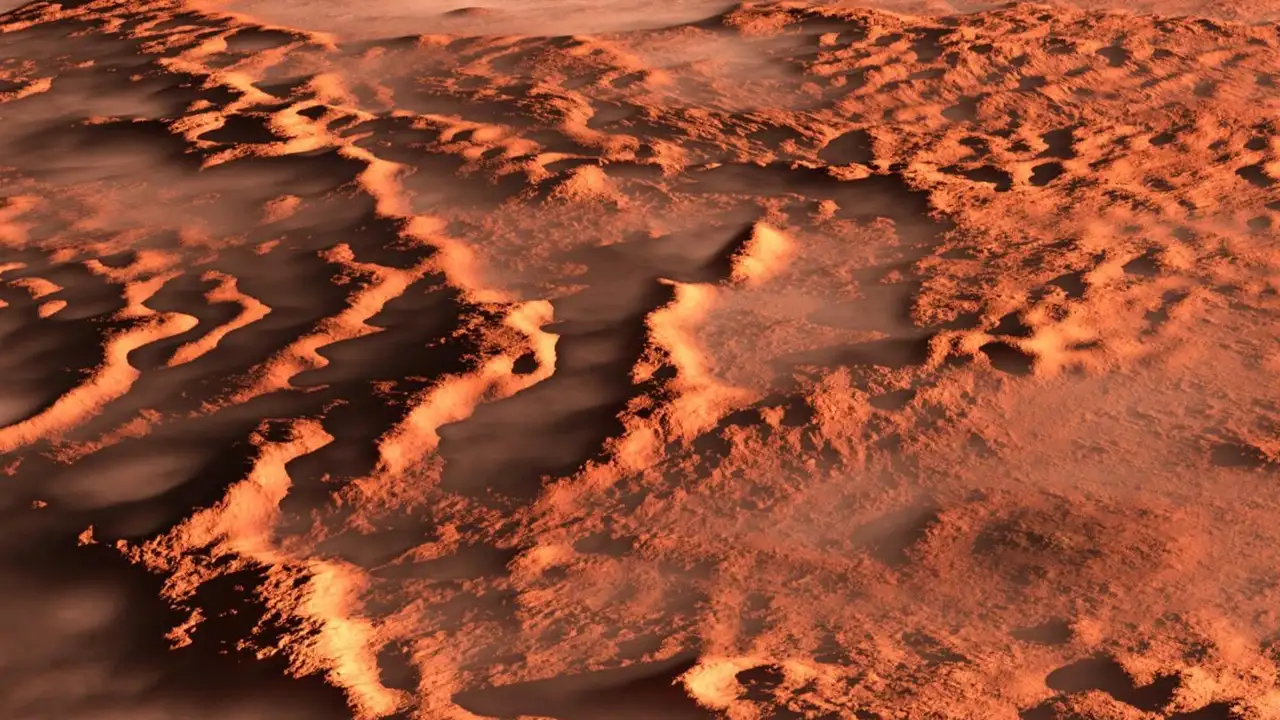
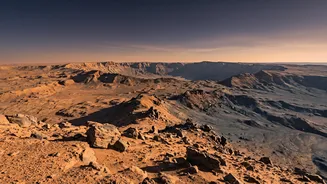
While the zonal waves explain the macro-level variations, another PRL study tackled the micro-level. For years, climate models treated the Martian surface as if it were mostly flat. But as the PRL team noted, Mars is anything but flat. They developed a sophisticated 3D model that accounts for the planet's actual landscapes, complete with craters, ridges, and slopes. This new model revealed that temperatures can vary dramatically over very short distances. A sun-facing slope, for instance, can be 20 to 30 degrees warmer than a nearby shaded area. These are not minor differences. Such sharp, localized temperature gradients create pressure imbalances in the thin atmosphere, generating local winds. This could be a key mechanism behind the lifting of dust from the surface, which can escalate into the planet-engulfing dust storms that Mars is famous for.
Why These Findings Matter
Understanding Mars's temperature is not just an academic exercise. These insights from Indian scientists have critical real-world implications for the future of space exploration. For any future robotic or human mission, knowing the precise temperature conditions is a matter of survival. The 3D model can help mission planners select safer landing sites, avoiding areas with extreme temperature swings that could damage sensitive equipment. Furthermore, a better understanding of how dust storms begin could lead to better forecasting, protecting future astronauts and habitats. By accurately mapping both the global and local climate, the PRL researchers have provided a vital toolkit for humanity's next steps in its journey to the Red Planet.