




A Curious Discovery in a Valley
For over a decade, the Curiosity rover has been diligently exploring Gale Crater, a vast, dried-up ancient lakebed. Its journey up the slopes of Mount Sharp, a massive mountain in the crater's center, allows scientists to read the planet's history book,
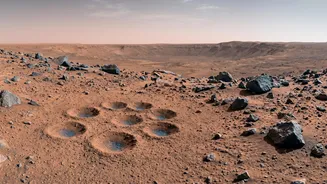
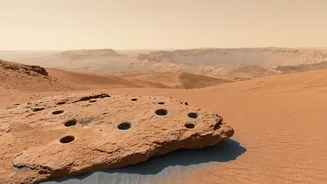
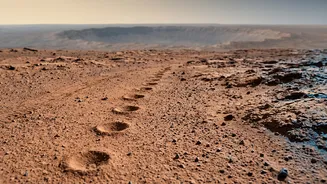
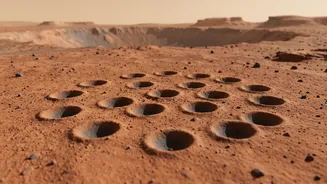
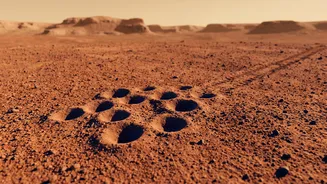
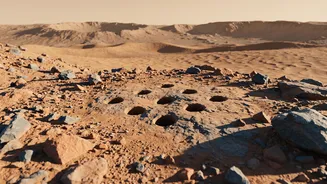
layer by rocky layer. It was during its trek through a region called Valle Grande that the rover stumbled upon something unexpected. Dotting the rocky ground were a number of small, shallow divots. While holes on a planet constantly bombarded by meteorites are nothing new, these were different, unlike anything the rover had seen before.
Not Just Any Pockmarks
So, what makes these holes so intriguing? Normally, small pits in Martian bedrock have a straightforward explanation. They are often left behind when harder pebbles or mineral nodules, once embedded in softer rock, are weathered away by the elements. But these newfound holes don't fit that mold. They are unusually broad and shallow, and crucially, there are no obvious pebbles or mineral remnants nearby that would have once filled them. This lack of a clear cause has stumped the mission's scientists. After 14 years of exploration, Mars can still find new ways to be weird.
The Scientific Investigation Begins
Faced with a genuine mystery, the Curiosity team put the rover's instruments to work. They used the Mars Hand Lens Imager (MAHLI) to get extreme close-up shots of the tiny pits, some of which are only a centimeter across. At the same time, the Mastcam cameras captured a series of overlapping stereo images of the surrounding area. This data allows the science team back on Earth to build detailed 3D models of the surface. By precisely measuring the shape and depth of the holes, they hope to work backward and figure out the geological process that formed them. For now, the origin is an open question, with no immediate answers.
Clues to an Ancient, Changing Mars
While the holes themselves are a puzzle, their location is just as important. The rover is currently in a zone where the rock layers show evidence of rapid changes in the ancient Martian environment. Scientists are particularly interested in the history of water in Gale Crater, which is believed to have been filled with water billions of years ago before it dried up. Unraveling the story of these strange holes could provide a new piece of that puzzle. Whether they were formed by escaping gas, the dissolution of ancient salt crystals, or another unknown process, the answer will add to our understanding of how Mars transformed from a potentially habitable wet world into the cold, dry planet we see today. The investigation continues, reminding us that there are still many secrets waiting to be unearthed on our planetary neighbor.