


More Than Just Heavy Rain
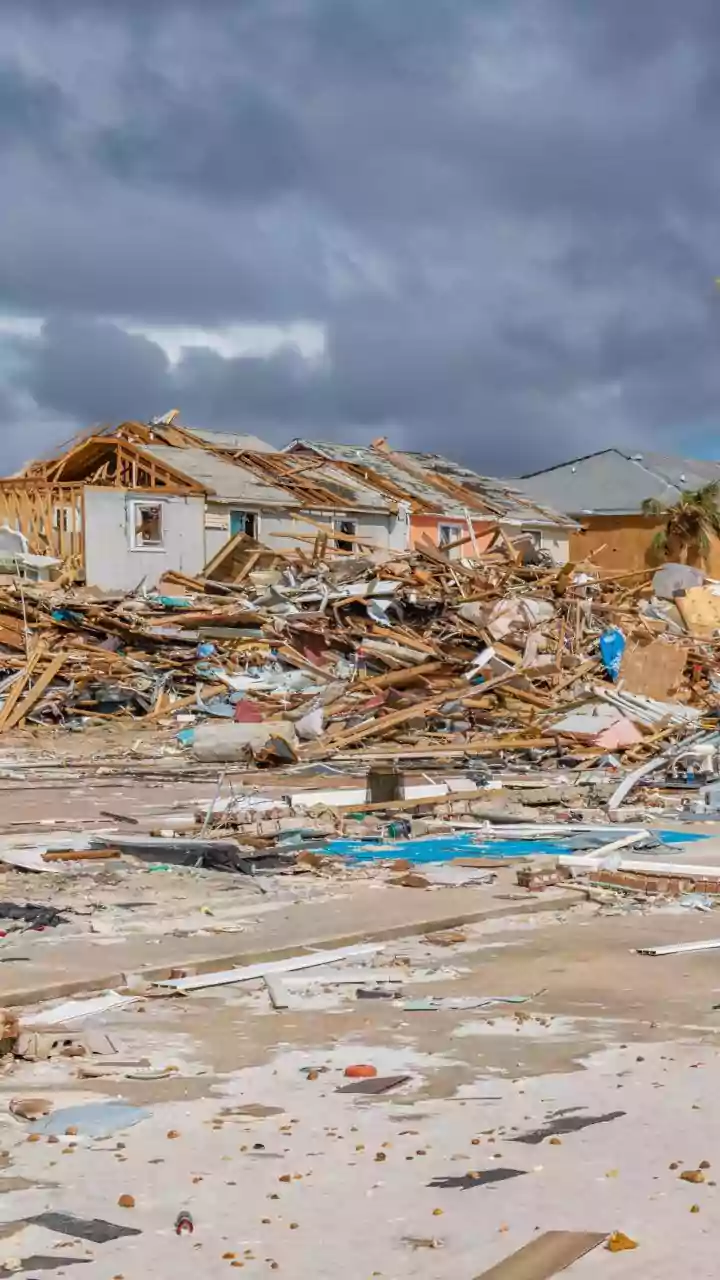
For communities downstream, the event is a flash flood of unimaginable power, arriving with little warning and capable of wiping out homes, bridges, and hydropower dams. However, scientists piecing together satellite data and seismic signals often discover
the disaster didn't begin with rain. Instead, it was the final, devastating outcome of a multi-stage event known as a cascading hazard. This phenomenon, where one failure triggers the next, is becoming a hallmark of a new and dangerous era in the Himalayas.
The First Domino: A Glacier Collapse
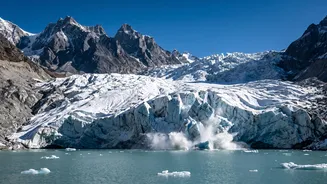
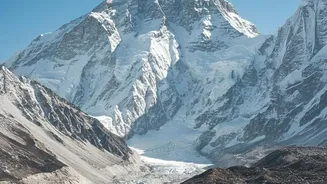
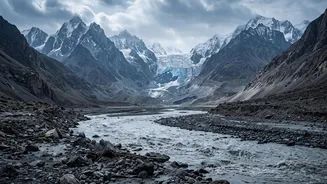
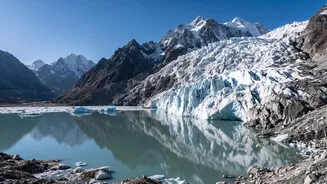
Many of these catastrophic chains begin thousands of metres up, on steep, icy slopes. In several recent events, the initial trigger was a massive section of a glacier breaking away. This isn't just a few ice cubes; it can be millions of cubic metres of ice and rock detaching at once. Scientists believe that as the Himalayas warm at an accelerated rate, the permafrost and ice that once acted as a glue, holding steep rock faces together, are thawing and weakening. This makes the slopes unstable, priming them for collapse. The impact of this massive rock-and-ice avalanche is so powerful it can register on seismographs like an earthquake.
From Avalanche to Debris Flow
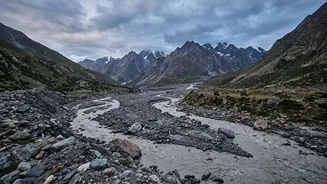
As the enormous mass of ice and rock crashes down the mountain, the immense energy from the fall generates intense heat, melting much of the ice. This water instantly mixes with the rock, soil, and loose sediment on the valley floor, transforming the avalanche into a fast-moving, semi-liquid slurry called a debris flow. This torrent is far more destructive than water alone. It has the consistency of wet concrete and moves with incredible speed, carrying boulders the size of cars that can obliterate anything in their path.
The Damming and The Deluge
The disaster can escalate even further. In many cases, the debris flow is so immense that it temporarily blocks the main river in the valley below, forming a natural, but highly unstable, dam. Water builds up rapidly behind this blockage. Eventually, the immense pressure of the impounded lake causes the debris dam to fail. The result is a sudden, catastrophic release of the entire lake, creating a second, even larger flood wave that surges downstream with renewed destructive power, compounding the initial disaster.
A Global Warning from the Third Pole
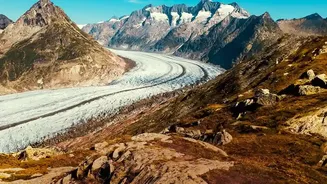
While the exact contribution of climate change to any single event is complex, the trend is clear. The Hindu Kush Himalayan region, often called the 'Third Pole' for its vast ice reserves, is warming significantly faster than the global average. Glaciers that provide fresh water to nearly two billion people are melting at an accelerated rate. This retreat not only creates new, potentially unstable glacial lakes but also exposes mountain slopes that were supported by ice for millennia. Events like these in Nepal are not isolated incidents but a clear signal of the growing instability in the world’s highest mountains, posing a direct threat to millions living downstream in Nepal, India, and beyond.