







Your Body's Master Clock
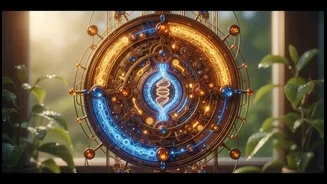
Deep inside your brain lies a tiny region called the suprachiasmatic nucleus, or SCN. Think of it as your body's master clock. This internal clock operates on a roughly 24-hour cycle known as the circadian rhythm, governing everything from your energy
levels and hunger to your sleep-wake cycle. Light is the single most important signal that keeps this clock synchronized with the outside world. Without the right light cues, your internal rhythm can drift, making you feel tired at the wrong times and wide awake when you should be sleeping.
How Morning Light Sets the Timer
When natural light enters your eyes first thing in the morning, it sends a powerful signal directly to your SCN. This message accomplishes two critical tasks. First, it suppresses the production of melatonin, the hormone that makes you feel sleepy. Second, it triggers a healthy release of cortisol, a hormone that promotes alertness and focus. This hormonal shift effectively tells your body that the day has begun and starts a roughly 14 to 16-hour countdown to when your brain will naturally start producing melatonin again, preparing you for sleep in the evening. Consistently getting this morning light reinforces this cycle, making it easier to wake up and easier to fall asleep.
An Action Plan for Morning Light
Making this a habit is simpler than it sounds. The goal is to get outside within 30 to 60 minutes of waking. You don't need to stare directly at the sun—in fact, you shouldn't. Just being outdoors is enough. On a clear, sunny day, aim for about 5 to 10 minutes of exposure. If it's overcast, you'll need a bit longer, around 15 to 20 minutes, because clouds filter the light. Even on a very dark or rainy day, the light outside is significantly more powerful than typical indoor lighting and still provides the necessary signal to your brain. Trying to get this light through a window isn't nearly as effective, as glass filters out many of the specific wavelengths of light your brain needs. And leave the sunglasses at home for these few minutes to get the full benefit.
What About Dark Mornings?
If you wake up before the sun rises or live in a climate with very dark winters, getting natural sunlight isn't always possible. In these cases, the next best thing is to use artificial light. Turn on as many bright indoor lights as you can upon waking to mimic the effect of sunlight. While not a perfect substitute, it can still help signal to your brain that it's time to be alert. For those who consistently struggle with dark mornings, a light therapy box that provides 10,000 lux of brightness can be a highly effective tool for setting your circadian rhythm. Using one for 15 to 30 minutes while you have your morning coffee can help trigger the same cortisol response and keep your internal clock on track.
Protecting Your Progress at Night
The same system that makes morning light so beneficial can work against you at night. Exposing your eyes to bright light in the evening—especially the blue light from phones, tablets, and TV screens—can suppress melatonin production just when your body is supposed to be winding down. This effectively confuses your internal clock, delaying the onset of sleep and undoing the strong signal you sent it in the morning. To protect your sleep, try to dim the lights in your home in the two hours before bed and avoid screens as much as possible. This contrast between bright days and dark nights is crucial for a healthy sleep-wake cycle.