



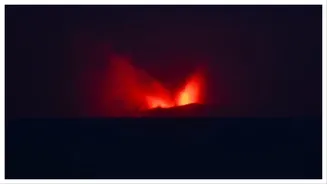
Anak Krakatau's Latest Activity
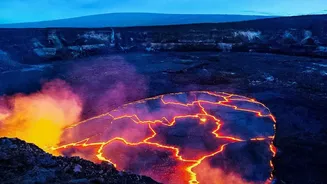
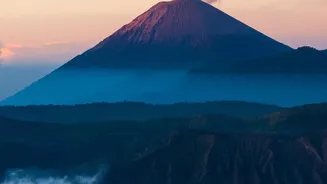
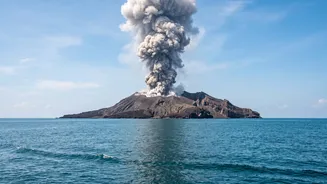
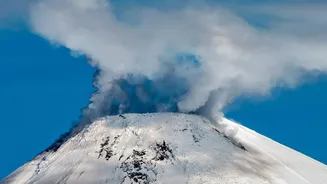
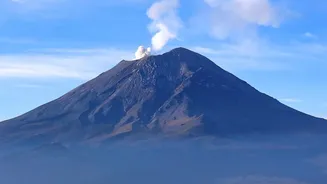
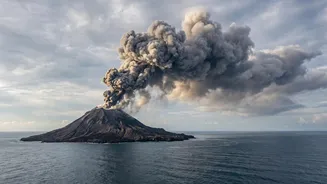
In early September 2026, Mount Anak Krakatau, located in the Sunda Strait between Java and Sumatra, erupted, spewing ash clouds up to 15 kilometres into the atmosphere. The activity, which began intensifying in July, prompted Indonesian authorities to close
at least eight airports, including Jakarta's main Soekarno-Hatta International Airport. By the evening of September 6, over 1,500 flights were cancelled, impacting an estimated 170,000 passengers. While the most intense, continuous 25-hour eruption phase ended, authorities have kept the volcano at a Level III alert status, indicating that further eruptions remain a high probability.
What Exactly Is Volcanic Ash?
Unlike the soft, fluffy ash that results from burning wood, volcanic ash is not a product of combustion. It is composed of tiny, jagged particles of rock, minerals, and volcanic glass less than 2 millimetres in diameter. These fragments are created when explosive eruptions shatter solid rock and blast molten magma into the air, where it cools and solidifies. The result is a hard, extremely abrasive, and mildly corrosive material that does not dissolve in water. Because the particles are so small, they can be carried by wind for thousands of kilometres, posing a risk to areas far from the actual volcano.
The Engine-Killing Threat to Aircraft
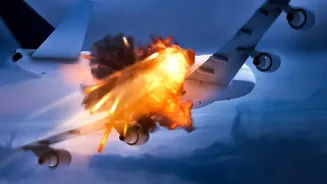
The primary danger of volcanic ash to an aircraft lies in its effect on jet engines. The melting point of the glassy silicate material in ash is lower than the combustion temperatures inside modern jet engines, which can exceed 2,000 degrees Celsius. When an aircraft flies through an ash cloud, these fine particles are sucked into the engines. In the hot section of the engine, the ash melts into a molten glass. This molten material then sticks to cooler components like turbine blades and fuel nozzles, solidifying into a ceramic-like coating. This process, sometimes called "glassification," can block the flow of air, cause the engine to lose power, surge, or fail completely.
More Than Just Engine Trouble
Beyond the catastrophic risk of engine failure, volcanic ash poses several other dangers. The abrasive particles act like sandpaper, scouring cockpit windows and impairing pilot visibility. They can also erode compressor blades, antennae, and the leading edges of wings. Furthermore, ash can clog the pitot-static system—the instruments that measure airspeed and altitude—leading to unreliable flight data. The fine dust can also infiltrate the cabin's ventilation system, creating a haze and a distinct sulfuric smell for those on board. A critical issue is that dry ash clouds are often invisible to standard weather radar, which is designed to detect moisture, making them difficult for pilots to spot, especially at night.
The Global Watchdog Network
Following several near-disastrous encounters, including the famed 1982 incident where a British Airways 747 lost all four engines over Indonesia, the aviation industry established a global monitoring system. Today, a network of nine Volcanic Ash Advisory Centers (VAACs) operates around the clock, each responsible for a specific region of the globe. These centers, run by national weather organisations, use satellite imagery, pilot reports, and ground observations to detect and track ash plumes. They run sophisticated dispersion models to forecast the ash cloud's movement and issue advisories to air traffic controllers and airlines, allowing them to reroute flights safely.
The Ripple Effect on Global Travel
The economic consequences of a major eruption can be immense. The 2010 eruption of Iceland's Eyjafjallajökull volcano is the most dramatic modern example. The ash cloud led to the closure of vast swathes of European airspace for nearly a week, cancelling over 100,000 flights and affecting around 10 million passengers. The International Air Transport Association (IATA) estimated that the airline industry lost about $1.7 billion in revenue. The disruption cascaded through the global economy, affecting everything from the delivery of time-sensitive goods to Kenyan farmers who had to destroy tonnes of fresh flowers they could not export.