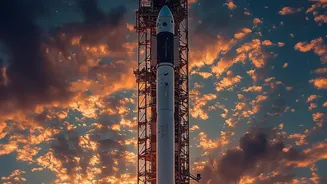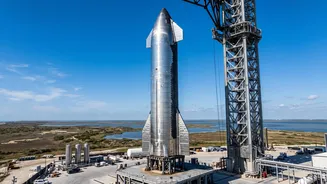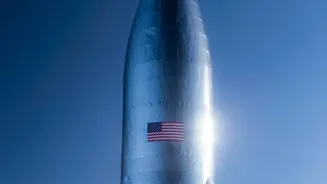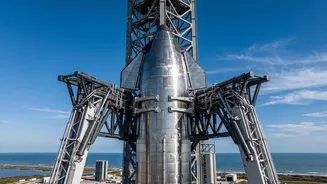





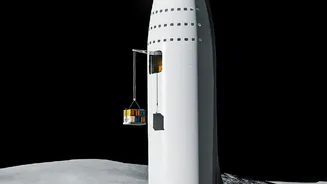
In a moment that felt ripped from science fiction, SpaceX successfully caught its Starship upper stage with giant robotic arms for the first time. This wasn't just a spectacle; it's a monumental leap towards the holy grail of spaceflight: full and rapid
reusability.
A Landmark Achievement
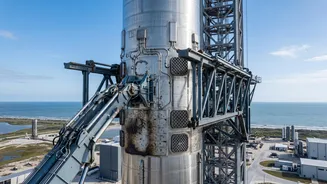
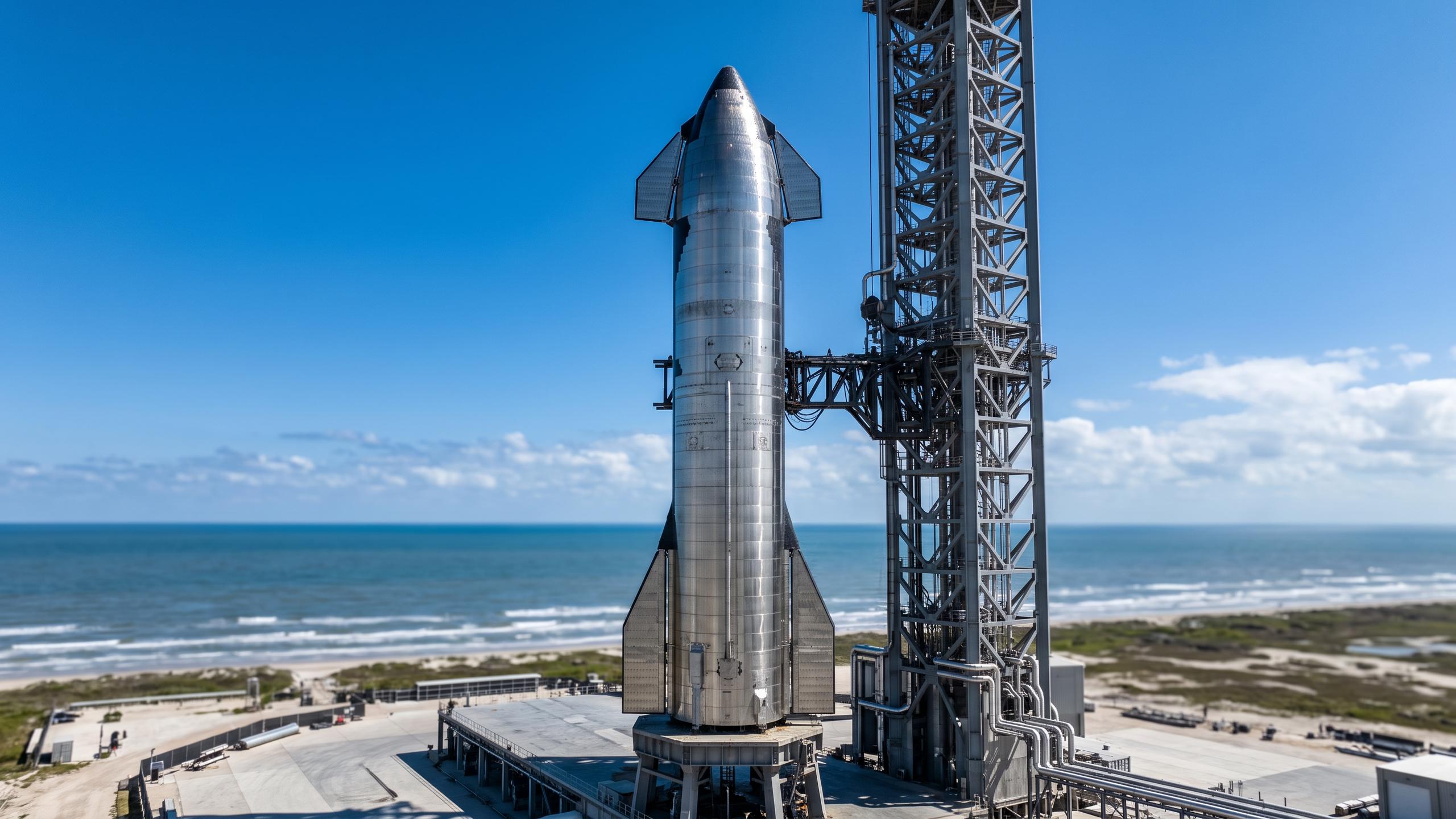
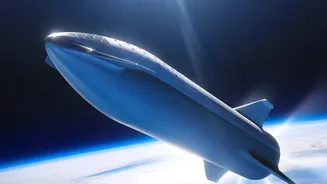
On November 14, 2026, after orbiting the Earth 14 times over 22.5 hours, the Starship upper stage, known as Ship 42, descended through the atmosphere and was deftly caught by the 'chopstick' arms of the Mechazilla launch tower at its Starbase facility in Texas. The maneuver, which had never been attempted with an orbital-class upper stage before, was a resounding success and a critical validation of SpaceX's ambitious design. While the primary goal of catching the Starship spacecraft was achieved, the mission was not without its challenges. The Super Heavy booster, which was also supposed to be caught by the tower, experienced an issue during its boostback burn and was safely diverted for a splashdown in the Gulf of Mexico. SpaceX is currently investigating the root cause, which initial reports suggest was related to a low fuel mass alarm.
The Economics of the Catch
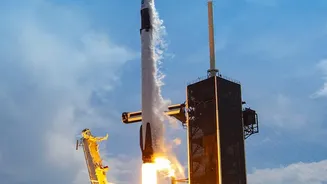
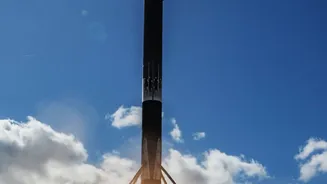
Catching a rocket might seem like an overly complicated way to land, but it is central to SpaceX's entire business model. For years, the company has landed its Falcon 9 boosters on drone ships and landing pads. While revolutionary, that process still requires time and resources for recovery, transport, and refurbishment. The Mechazilla catch system is designed to eliminate those steps entirely. By catching the booster and the ship directly on the launch mount, SpaceX can theoretically inspect, refuel, and relaunch the entire system in a matter of hours or days, not weeks or months. This 'aircraft-like' operational tempo is what will ultimately drive down the cost of access to space. Each Starship launch will be able to carry significantly larger payloads than any other rocket, and making them rapidly reusable amortizes the massive manufacturing cost over many flights, fundamentally changing the economics of deploying satellites and, eventually, sending humans to the Moon and Mars.
From Catch to Analysis and Reflight
With Ship 42 now secured in the tower's arms, SpaceX engineers have a treasure trove of data to analyze. According to CEO Elon Musk, the vehicle appears to be in good condition and 'could probably be reflown with a few weeks of refurbishment'. However, he also noted that the company will not take any chances with this particular historic vehicle. Ship 42 will be retired and put on public display, a testament to its groundbreaking achievement. The focus now shifts to applying the lessons learned to future flights. The goal is to reach a point where 'zero expected refurbishment' is needed outside of scheduled maintenance. While this first catch was a success, demonstrating the ability to do it consistently with both the ship and the booster is the next major hurdle. The loss of the booster in this flight underscores that challenges remain.
The Bigger Picture: Moon, Mars, and More
The successful recovery of a Starship upper stage is a direct enabler of SpaceX's long-term ambitions. NASA has selected a version of Starship to be the human landing system for its Artemis program, which aims to return astronauts to the Moon. Beyond that, Musk's ultimate goal is to build a self-sustaining city on Mars, a feat that would require a massive fleet of fully and rapidly reusable Starships. Musk has stated a goal of launching thousands of Starship missions per year. This high flight cadence is also necessary for deploying the next generation of SpaceX's own projects, including the massive Starlink V3 internet constellation and a proposed 'Starmind' AI data-center constellation. While this single catch is just one step, it is arguably the most critical technological leap required to make those ambitious futures a reality. As one SpaceX official put it, 'We caught a Starship, and now everything changes'.