




The Great Lunar Blind Spot
The Moon is tidally locked with Earth, meaning we only ever see one face—the near side. The other hemisphere, the far side, is permanently turned away. This isn't just a visual curiosity; it creates a massive communications challenge. Radio waves, which
are essential for communicating with spacecraft, rovers, and astronauts, cannot pass through the Moon's rocky body. As a result, any mission on the far side enters a total communication blackout when out of direct line-of-sight with Earth. During the Apollo program, this meant astronauts went completely silent for long periods while orbiting the Moon, a risky but accepted limitation of the era. This fundamental obstacle has historically limited exploration of the far side, leaving a vast and scientifically intriguing region largely untouched.
A Celestial Communication Network
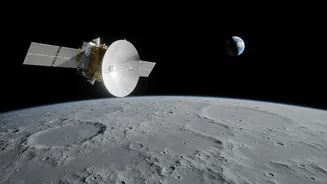
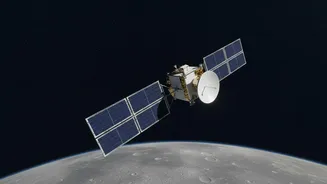
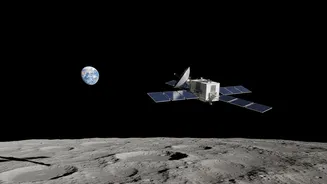
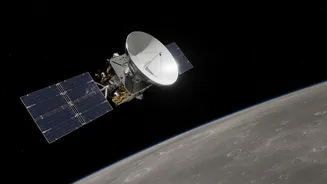
To solve this problem, NASA is developing the Lunar Communications Relay and Navigation Systems (LCRNS) project. The plan is to establish a network of satellites in orbit around the Moon. These satellites will act as space-based routers, receiving signals from missions on the far side or in other hard-to-reach areas and relaying them back to Earth, and vice versa. This eliminates the communication blackout. NASA is partnering with commercial companies like Intuitive Machines to build and operate this infrastructure, marking a shift toward using private industry to provide essential space services. The goal is to create a flexible and interoperable system—essentially, building the infrastructure for a lunar internet—that can support not just NASA's missions but those of international and commercial partners as well.
More Than Just a Phone Call Home
The LCRNS network reveals a vision for the Moon that goes far beyond simple communication. These satellites are designed to provide a suite of services critical for a sustained lunar presence. This includes high-bandwidth connections capable of streaming high-definition video and transferring massive amounts of scientific data in real time. Perhaps more importantly, the satellite constellation will function like a GPS system for the Moon, providing precise positioning, navigation, and timing (PNT) services. This is a game-changer for surface operations, allowing astronauts and rovers to navigate complex terrain with pinpoint accuracy and enhancing safety for landing and rendezvous operations. Without this infrastructure, establishing a permanent, functional outpost would be significantly more difficult and dangerous.
Unlocking the Far Side's Scientific Treasures
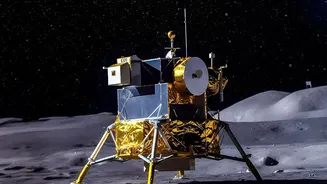
With continuous communication, the far side transforms from a mysterious, silent hemisphere into a premier scientific laboratory. Because it is shielded from the constant radio noise emanating from Earth, it is the most radio-quiet location in the inner solar system. This makes it the perfect place to build vast radio telescopes designed to listen for faint signals from the very dawn of the universe—the cosmic "Dark Ages"—which are impossible to detect from Earth. Experiments like the planned LuSEE-Night telescope will use the relay network to send their data back to scientists. Furthermore, the far side's heavily cratered and ancient surface holds clues to the history of the solar system, and a continuous presence will allow for in-depth geological study and the search for resources like water ice.
Paving the Way for a Sustained Presence
Ultimately, the planned lunar relay satellites reveal a critical shift in strategy: from one-off exploratory missions to building a permanent, sustainable infrastructure for humanity's future on the Moon. This network is a foundational element of the Artemis program, which aims to establish a long-term human presence on the Moon as a stepping stone to Mars. By creating a reliable communications and navigation grid, NASA is not just enabling science; it's laying the groundwork for future commercial activities, international collaboration, and a thriving lunar economy. This infrastructure makes every subsequent step—from building habitats to resource utilization—safer, more efficient, and more achievable. It's the less glamorous but utterly essential work required to turn science fiction into reality.