




More Than Just Food: The Meaning of 'Bhog'
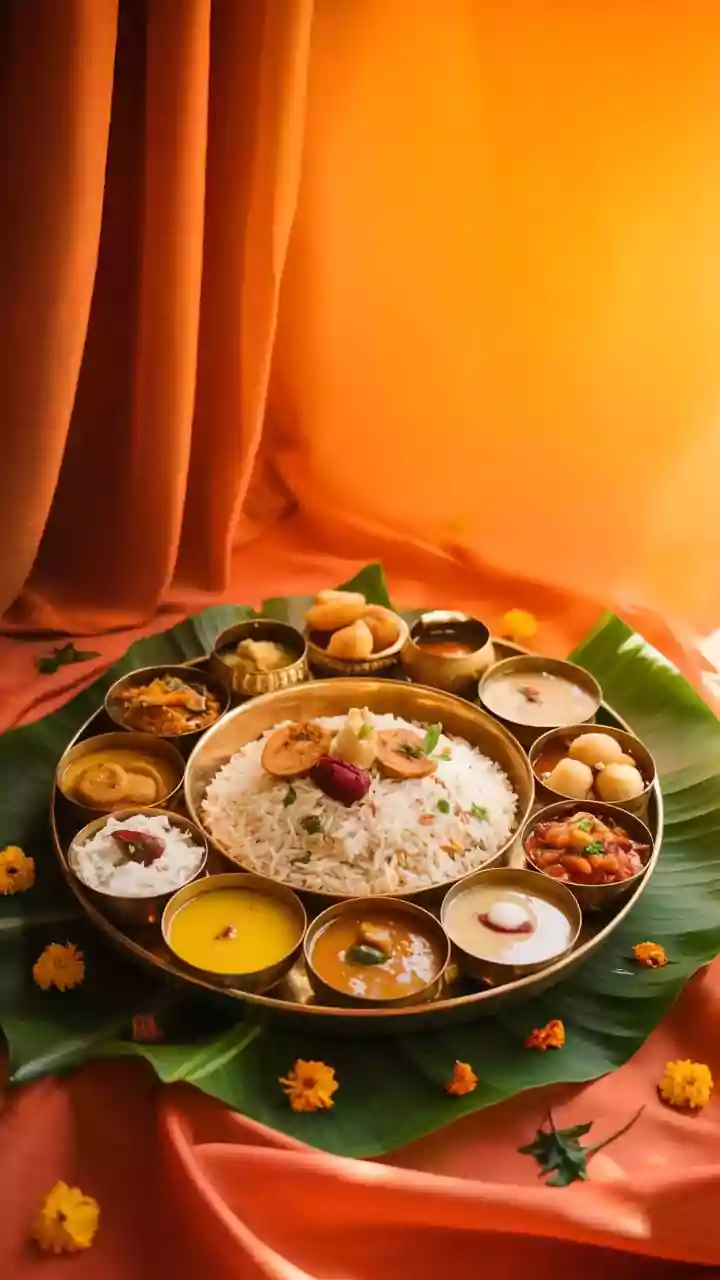
To understand the importance of this khichuri, one must first understand the concept of 'bhog'. In Hindu tradition, bhog is the food offered to a deity during worship. It is prepared with immense care and devotion, adhering to strict rules of purity.
The food must be 'sattvik', which means it is purely vegetarian and cooked without onions or garlic. After being offered to the deity, the food is considered blessed and is then distributed to devotees as 'prasad'. This act of sharing is central to the festival, transforming a simple meal into an act of communal devotion and divine grace.
The Soul of the Dish: Essential Ingredients
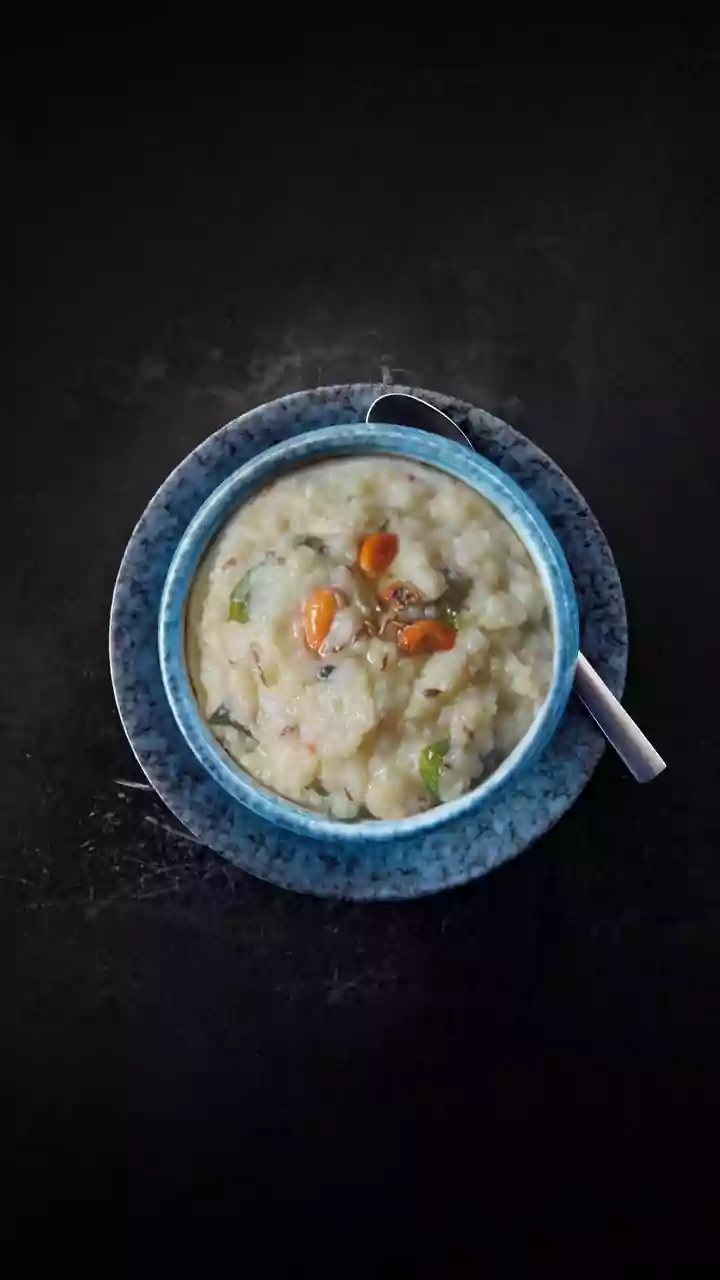
What makes Bhoger Khichuri distinct from any everyday khichdi are its specific ingredients. The foundation is a combination of Gobindobhog rice and sonar moong dal (split yellow lentils). Gobindobhog is a short-grained, aromatic rice native to West Bengal, prized for its fragrant quality which perfumes the entire dish. The moong dal is typically dry-roasted before cooking, which imparts a nutty, deeper flavour that is characteristic of the bhog preparation. This careful selection of rice and lentils forms the very soul of the dish.
A Symphony of Spices and Vegetables
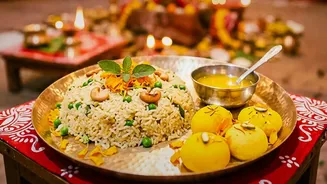
The khichuri is cooked with a medley of seasonal vegetables, most commonly potatoes, cauliflower, and green peas, which are often fried in mustard oil before being added. The flavour profile is built on a base of ginger paste and a tempering of whole spices in ghee or mustard oil. This can include bay leaves, dried red chillies, cumin seeds, cinnamon, cloves, and cardamom. A uniquely Bengali touch is the occasional use of 'paanch phoron', a five-spice blend. A hint of sugar or jaggery is often added to balance the flavours, giving the khichuri a subtly sweet and savoury taste that is both complex and comforting.
The Communal Cauldron: A Ritual of Togetherness
One of the most powerful aspects of Bhoger Khichuri is its preparation on a massive scale. In community pandals across the country, volunteers and cooks work together, often through the night, to prepare the bhog in enormous cauldrons. This act of cooking is a service in itself, a collective effort that brings people from all walks of life together. The process is a ritual, filled with the spirit of service and celebration. Watching the ingredients meld together in the giant pots is a sight to behold, a physical manifestation of the community spirit that defines Durga Puja.
An Offering of Equality and Unity
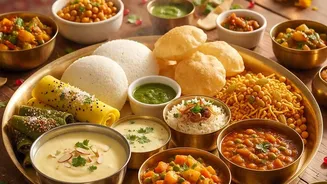
When the khichuri is finally served as prasad, it embodies the festival's spirit of equality. Devotees sit together in long rows, irrespective of social status, to receive the same blessed food. Served on simple leaf plates, the hot khichuri, often accompanied by a mixed vegetable dish called 'labra' and fried aubergine slices known as 'beguni', nourishes the body and the soul. It represents the idea of unity and the breaking down of social barriers, as everyone partakes in the same divine offering. This simple meal becomes a powerful symbol of togetherness, connecting each person to the goddess and to each other.