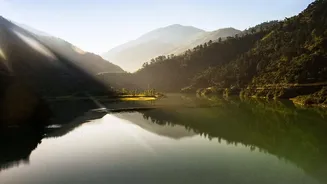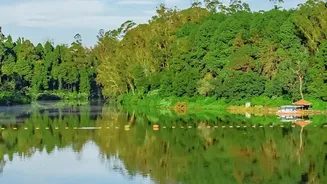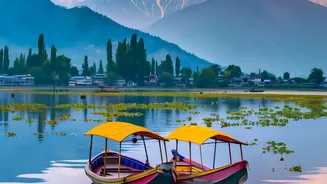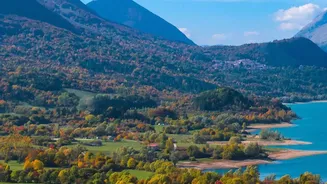




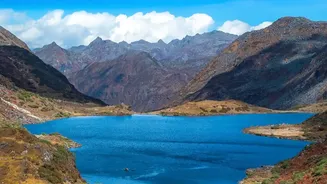
Pangong Tso, Ladakh: The Himalayan Icon
Pangong Tso, a name now etched in the memory of every Indian traveller, is a high-altitude saline lake that stretches from Ladakh to Tibet. Its fame comes from the almost supernatural ability of its waters to shift colour from azure to deep blue and even
green in a single day. At an altitude of about 4,350 metres, it's a spectacle of raw, high-desert beauty. The journey itself, typically over the formidable Chang La Pass, is an adventure with dramatic views at every turn.
Practical Tips for Pangong Tso
Getting There: The most common route is a 5-6 hour drive from Leh, which is well-connected by air to major Indian cities. Taxis can be hired in Leh for a two-day trip. It is highly recommended to acclimatise in Leh for at least 48 hours to avoid acute mountain sickness (AMS). Best Time to Visit: The ideal months are from May to mid-September when the weather is pleasant and the roads are accessible. Winters (December to February) see the lake completely frozen, which is a different kind of spectacle but travel is much harder.Permits: Indian nationals need an Inner Line Permit (ILP), which can be obtained online or through a travel agent in Leh.What to Do: Photography is the main activity, especially at sunrise and sunset. You can also spot migratory birds like the Bar-headed goose. Several campsites and homestays are available in nearby villages like Spangmik for an overnight stay.
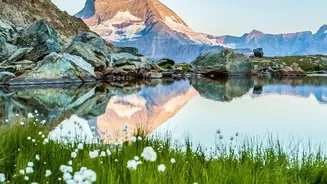
Tsomgo Lake, Sikkim: The Glacial Wonder
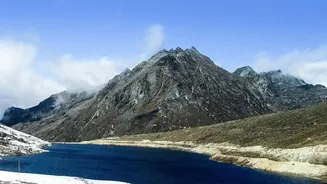
Just 40 kilometres from Gangtok, Tsomgo Lake (also called Changu Lake) is one of the most accessible high-altitude lakes in India. Situated at 12,300 feet, this glacial lake is held sacred by the local Sikkimese people. Its beauty transforms with the seasons. In winter, it's a frozen expanse of ice, while in late spring, the surrounding hills are carpeted with rhododendrons and other wildflowers. A ropeway offers panoramic views of the lake and the snow-capped mountains around it.
Practical Tips for Tsomgo Lake
Getting There: A scenic 2-hour drive from Gangtok. You must hire a vehicle from a registered tour operator who will also arrange your permits.Best Time to Visit: October and November offer clear skies and moderate temperatures. For those wanting to see snow, January to March is ideal, though the lake will be frozen. April and May are perfect for seeing blooms.Permits: Both Indian and foreign tourists need a permit. For Indian nationals, this is easily arranged by a registered travel agent in Gangtok. Foreigners need a Restricted Area Permit (RAP) and must be in a group of two or more.What to Do: Enjoy a yak ride along the lake's edge or take the cable car for breathtaking aerial views. The lake is on the way to the famous Nathula Pass, and a trip can often combine both destinations (subject to special permits).
Loktak Lake, Manipur: The Floating Paradise
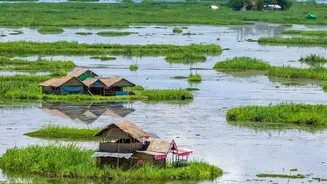
Moving to a different landscape, Loktak Lake in Manipur is the largest freshwater lake in Northeast India. Its most unique feature is the presence of 'phumdis' – floating islands of vegetation, soil, and organic matter. These phumdis are so large that local fishermen build their homes on them. The lake is a world away from the stark, icy beauty of the Himalayan lakes, offering a lush, green, and vibrant ecosystem. It is also home to the Keibul Lamjao National Park, the world's only floating national park and the last natural habitat of the endangered Sangai deer.
Practical Tips for Loktak Lake
Getting There: Loktak is about 48 km from Manipur's capital, Imphal. You can hire a taxi from Imphal to reach Moirang, the nearest town to the lake. Imphal is connected by air to major Indian cities.Best Time to Visit: October to March is the best time, with pleasant weather ideal for boating and sightseeing.Permits: Indian citizens need an Inner Line Permit (ILP) to enter the state of Manipur, which can be applied for online.What to Do: Take a boat tour through the phumdis to understand this unique ecosystem. Visit the Keibul Lamjao National Park for a chance to spot the Sangai deer. A visit to Sendra Island offers a great vantage point for panoramic views of the entire lake.