






What is the New Safety Plan?
India’s Ministry of Road Transport and Highways (MoRTH) has released a draft notification proposing that all new vehicles be equipped with Vehicle-to-Vehicle (V2V) communication systems starting from October 2028. The plan would apply to all new two-wheelers,
cars, buses, and trucks. This technology is designed to let vehicles “talk” to each other in real-time, sharing critical information like speed, position, direction, and braking status to prevent accidents before they happen. The rollout is planned in phases, with compliance for already-equipped vehicles starting in 2027 before the full mandate takes effect a year later.
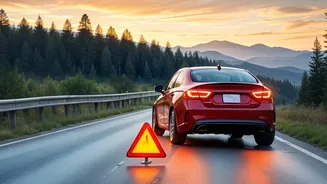
How Sudden-Braking Alerts Work
At the heart of this proposal is Vehicle-to-Everything (V2X) technology. This framework allows cars to communicate not just with each other (V2V), but also with roadside infrastructure like traffic lights (V2I) and even pedestrians (V2P). When a car equipped with this tech brakes suddenly, it broadcasts a tiny, high-speed radio message to all other V2X-enabled vehicles in the vicinity. This alert, which contains data on location and deceleration, is received by surrounding cars in milliseconds. Your car can then flash a warning on the dashboard or sound an alarm, giving you precious extra seconds to react—even if the hazard is around a blind corner or hidden by a large truck.
The Tech Behind the Connection
This constant conversation between cars is powered by a specific type of wireless communication. The proposed standard for India, known as AIS-230, is built on Cellular V2X (C-V2X) technology. This system uses a dedicated radio frequency band (5.9 GHz) that doesn't rely on commercial mobile networks, ensuring that safety messages get through instantly without interference. Think of it less like a phone call and more like a direct, secure data link between all vehicles in an area. This is a significant leap beyond current Advanced Driver-Assistance Systems (ADAS), which use cameras and radar. While ADAS can only react to what it can “see,” V2X provides information beyond the vehicle’s line of sight, creating a much wider safety net.
The Goal: Proactive, Not Reactive, Safety
For decades, car safety has been about surviving a crash—think seatbelts and airbags. The shift to V2X technology represents a move toward proactive safety, where the goal is to prevent the crash from ever happening. Rear-end collisions, often caused by a driver’s delayed reaction to a sudden stop, are a key target. By providing warnings about events happening hundreds of metres ahead, V2X can help reduce these incidents. The system is also designed to alert drivers to other dangers, such as forward collision risks, unsafe lane changes, wrong-way drivers, and the approach of emergency vehicles.
Hurdles on the Road Ahead
While the promise is immense, implementation faces challenges. The biggest hurdle is achieving critical mass; the system is only effective when a large percentage of vehicles on the road are equipped with it. Another challenge is interoperability—ensuring that a Tata, a Maruti, and a Mahindra can all speak the same digital language flawlessly. Beyond the technical aspects, there are also concerns about data privacy and the potential for cybersecurity threats, such as vehicle hacking. Finally, there's the human factor: drivers must trust the system and not become overwhelmed by too many alerts, a phenomenon known as “alert fatigue.”