







A Fiery, Historic Ascent
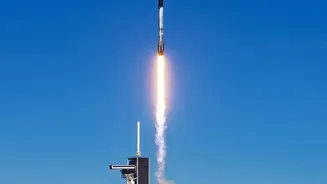
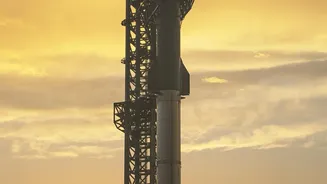
The world’s largest and most powerful rocket lifted off from SpaceX's Starbase facility at 7:48 a.m. local time, embarking on its 14th major test flight. The 33 engines of the Super Heavy booster ignited in a controlled fury, pushing the 121-metre-tall
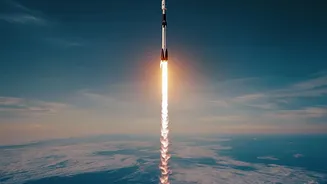
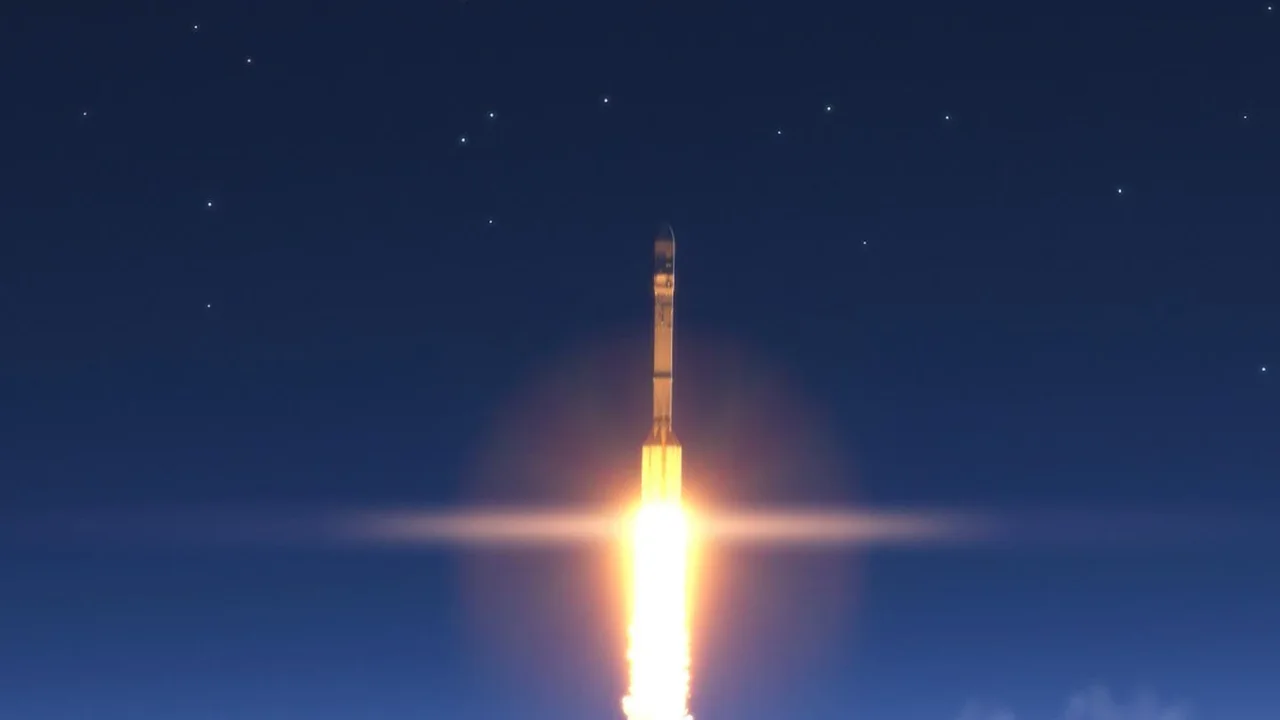
vehicle skyward. After a successful separation, the booster made a controlled splashdown in the Gulf of Mexico. The Starship upper stage then continued its journey, though not without a moment of high drama. One of its six Raptor engines shut down unexpectedly during the climb. For several tense minutes, mission control deliberated whether to abort the orbital attempt. Ultimately, they gave the 'go' for a final, 19-second burn from a single engine, which was enough to push the vehicle to the required 28,000 km/h and into a stable orbit about 275 kilometres above the Earth.
Why Reaching Orbit Is The Holy Grail
Previous Starship flights were impressive, but they followed suborbital paths. Think of it like throwing a rock very high into the air; it goes up into space but is always destined to come straight back down. Reaching orbit is a completely different challenge. It requires achieving enough horizontal speed so that as the spacecraft falls back toward Earth, the planet's surface curves away from it at the same rate. This state of continuous freefall is what defines being in orbit, and it is the essential first step for any long-duration space mission. By proving Starship can achieve this, SpaceX has unlocked the vehicle's potential, transforming it from a high-altitude test article into a platform capable of journeying to the Moon, Mars, and beyond.
An Unexpectedly Short, But Productive, Mission
The original plan for the mission was an ambitious 10-hour flight that would have seen Starship circle the globe six times. However, out of an abundance of caution following the engine issue during ascent, SpaceX decided to shorten the flight. Despite the change, the mission achieved a crucial secondary objective: deploying its first operational payload. The spacecraft's payload bay doors opened, and it released 26 next-generation Starlink V3 satellites into the company’s growing internet constellation. After approximately three hours in orbit, Starship performed a deorbit burn and began its fiery descent through the atmosphere, ending with a splashdown in the Pacific Ocean.
A Turning Point for NASA and Commercial Space
This successful orbital flight is a massive relief not just for SpaceX, but for NASA as well. The American space agency has selected a modified version of Starship to be the vehicle that will land its Artemis astronauts on the Moon, a mission targeted for 2028. Before humans can ride on it, Starship must prove its reliability through numerous flights. This test was a critical step in building that confidence. The achievement also solidifies SpaceX’s dominance in the commercial launch market. Starship is designed to be fully and rapidly reusable, a concept that promises to dramatically lower the cost of accessing space. By deploying its own Starlink satellites on this flight, the company demonstrated the vehicle’s dual purpose as both a test platform and a workhorse for its own business goals.
What Comes Next for the Starship Program
While reaching orbit is a monumental milestone, the work is far from over. The ultimate goal for Starship is full reusability, which means perfecting not just the launch and ascent, but also the re-entry and landing. The next major challenge will be to have the Super Heavy booster and the Starship upper stage return to the launch site and be caught by the giant mechanical arms of the launch tower, a feat yet to be attempted with the ship. Engineers will analyze the data from this flight, particularly the cause of the engine failure, to refine the hardware and software for subsequent missions. With launch sites being developed in Florida and Louisiana, SpaceX plans to significantly increase its launch cadence, moving toward a future where trips to orbit become routine.