





India's Next Address in Space
The Indian Space Research Organisation (ISRO) is embarking on one of its most ambitious projects to date: the construction of the Bharatiya Antariksh Station (BAS), or Indian Space Station. This landmark initiative will see India join a select group of nations
capable of maintaining a continuous human presence in space. Envisioned as a natural evolution of the Gaganyaan human spaceflight program, the station is a cornerstone of India's long-term space exploration strategy. It represents a significant step up from short-duration missions, providing a platform for astronauts to live and work in space for extended periods of three to six months. The project solidifies India's position as a major player in space science and technology.
A Laboratory Above the Clouds
At its core, the Bharatiya Antariksh Station will function as a cutting-edge research facility in low-Earth orbit (LEO), circling the globe at an altitude of about 400-450 kilometres. The station's unique microgravity environment—where the effects of gravity are greatly reduced—opens up unparalleled opportunities for scientific discovery. Researchers will conduct experiments in fields like life sciences, medicine, materials science, and biotechnology that are impossible to replicate on Earth. Key areas of study will include the physiological effects of long-term space travel on the human body, such as muscle atrophy and bone density loss. This research is not only crucial for ensuring astronaut health on future deep-space missions but also has potential applications for treating similar conditions on Earth.
Building Blocks in Orbit
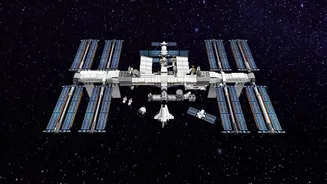
The station will not be launched in one piece but will be assembled in space using a modular design. It is planned to consist of five distinct modules, launched sequentially and connected in orbit. This phased approach allows for flexibility and upgrades over the station's lifespan. The completed station is expected to weigh around 52 tonnes. The first component, the BAS-01 Base Module, is slated for launch in 2028. This initial module will serve as a testbed for critical technologies, including life support systems and crew quarters. The entire five-module station is targeted for full operational capability by 2035. It will be designed to accommodate a crew of three to four astronauts for long-duration stays.
The Road to 2035
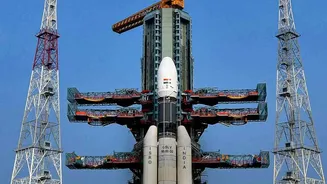
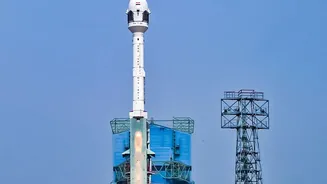
The journey to the Bharatiya Antariksh Station is intricately linked with the Gaganyaan programme, which is developing the foundational capabilities for human spaceflight. Technologies perfected for Gaganyaan, such as the human-rated launch vehicle, crew module, and life support systems, are essential building blocks for the space station. Before the first module launches, ISRO is conducting several precursor missions to validate key systems like docking, robotics, and long-duration habitation technologies. The government has approved the development of the first module as part of an expanded Gaganyaan programme, with recent reports in July 2026 confirming that ISRO has already begun designing critical subsystems. This structured, step-by-step plan aims to build a robust and reliable orbital platform by the 2035 target.
More Than Just Science
Beyond its scientific goals, the Bharatiya Antariksh Station holds immense strategic and economic importance for India. An indigenous space station provides sovereign access to space, reducing reliance on international partners. It will serve as a catalyst for innovation, driving advancements in indigenous technologies and boosting the domestic space industry. The station is also expected to enhance India's capabilities in Earth observation, aiding in climate monitoring and disaster management. Furthermore, it elevates India's global prestige, opening doors for international collaborations on research and future missions. As India looks to increase its share of the global space economy, the station could even support commercial activities like space tourism in the future.