





A Galactic Missing Persons Case
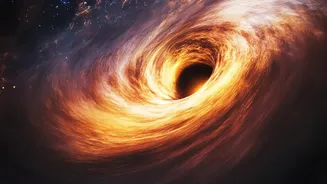
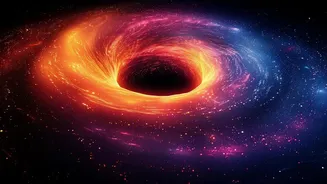
Imagine trying to take a census of a city where 99% of the residents are invisible. That’s the challenge facing astronomers in our own galaxy. Theories of stellar evolution predict that the Milky Way should be littered with around 100 million stellar-mass
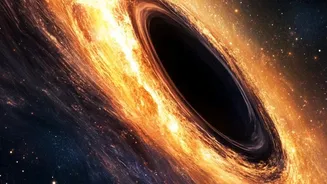
black holes, the collapsed corpses of giant stars. Yet, despite decades of searching, only about 70 have been confidently identified. This enormous discrepancy doesn't mean our theories are wrong; it just means most black holes are incredibly good at hiding. The ones we’ve found are typically 'active', meaning they are in a cosmic dance with a companion star, pulling off gas that heats up and shines brightly in X-rays. The vast majority, however, are thought to be 'dormant'—drifting silently through space without a meal, making them completely invisible.
NASA's Planet Hunter Gets a New Job
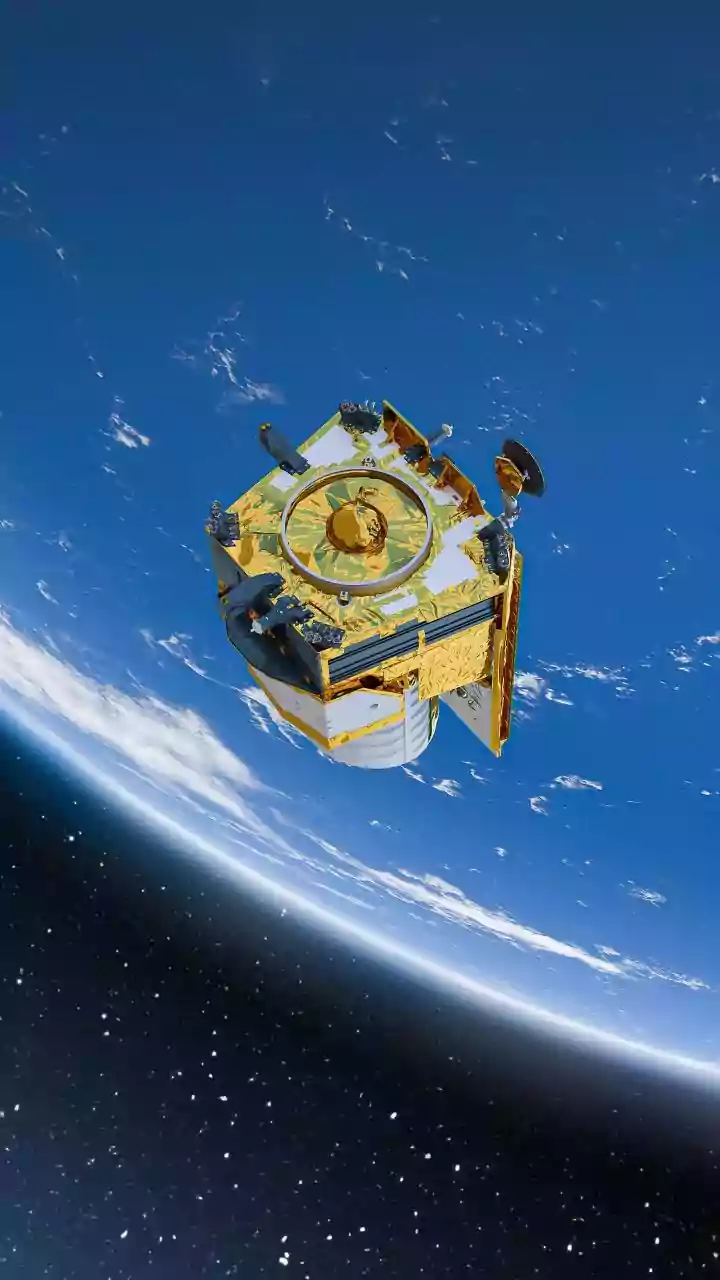
Enter NASA’s Transiting Exoplanet Survey Satellite, or TESS. This space telescope was designed for a completely different mission: to find planets outside our solar system. It does this by staring at hundreds of thousands of stars, looking for tiny, periodic dips in their brightness caused by a planet passing in front. This ability to measure subtle changes in starlight with incredible precision makes TESS an accidental but perfect tool for black hole hunting. Instead of looking for a dip in light, astronomers realized they could use TESS data to look for a specific kind of brightening. This repurposing of a powerful scientific instrument has opened a new frontier in the search for our galaxy’s most elusive inhabitants.
Meet the Black Hole Hunters
The sheer volume of data from TESS is too much for a small team of scientists to sift through alone. This is where the 'Black Hole Hunters' project comes in, a brilliant fusion of professional astronomy and citizen science. Hosted on the Zooniverse platform, the project invites volunteers from the public to help analyse graphs of star brightness, known as light curves. While artificial intelligence algorithms perform an initial scan to flag potential candidates from millions of stars, AI can be easily confused by natural stellar pulsations or flares. Human eyes are far better at recognizing the specific patterns that might signal a black hole. By showing each potential signal to multiple volunteers, the project crowdsources the immense task of finding a needle in a cosmic haystack.
Searching for a Cosmic Magnifying Glass
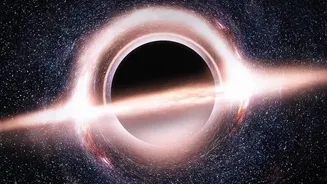
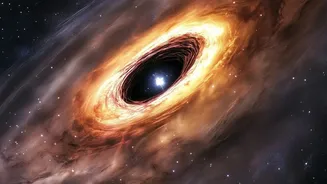
So what exactly are these volunteers looking for? Not a black silhouette, but a flash of light. The primary technique is called gravitational microlensing. If a dormant black hole in a binary system passes directly between its companion star and Earth, its immense gravity acts like a lens. As predicted by Einstein's theory of general relativity, the black hole's gravity bends and magnifies the light from the star behind it, causing a distinct, temporary brightening in the star's light curve. It’s a cosmic magnifying glass effect. Another subtle clue is 'ellipsoidal variation', where the black hole's gravity tidally distorts its companion star into a shape like a rugby ball. As this stretched-out star orbits, the amount of surface area we see changes, causing a smooth, periodic rise and fall in its brightness.
Why Finding Them Matters
This galactic ghost hunt is about more than just boosting the numbers. Finding this missing population of dormant black holes will provide a crucial check on our understanding of how the most massive stars live and die. It will help refine models of binary star evolution and the violent supernova explosions that create black holes. A complete census of black holes will give us a clearer picture of the structure of the Milky Way and the distribution of mass within it. Every new discovery is a new data point that helps us piece together the history and future of our own galaxy. With each new candidate flagged by a citizen scientist, we get one step closer to making the invisible visible and solving one of astronomy’s biggest missing persons cases.