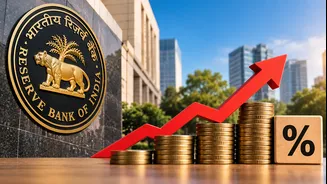







A Beacon in the Global Economy
In its latest World Economic Outlook report released in October 2026, the IMF increased India's GDP growth forecast for the fiscal year 2026-27 to 7.0%, a substantial jump from the 6.4% it projected in July. This revision places India firmly as the world's
fastest-growing major economy, standing out at a time when global growth is projected to be a more modest 3.1%. The upgrade is not a one-off, as the IMF also raised its projection for the following year, 2027-28, to 7%. This optimistic assessment aligns with other major institutions like the World Bank and the Reserve Bank of India, which have have also noted India's stronger-than-expected economic momentum.
The Engines of Growth
So, what's driving this confidence? The IMF points to several key factors. The primary engine is resilient domestic demand. Indian consumers and businesses are spending and investing, creating a powerful internal momentum that shields the economy from some external pressures. This is coupled with a robust services sector, which has shown remarkable strength. The report also highlights 'stronger growth potential' supported by favourable demographics—a young population—and a large, expanding domestic market. Ongoing structural reforms are also credited with bolstering the country's economic foundation, making it an exception among many energy-importing emerging markets that are seeing their forecasts downgraded.
Navigating a World of Risks
While the forecast is overwhelmingly positive, it does not exist in a vacuum. The IMF's report is set against a backdrop of significant global challenges. Persistent geopolitical tensions and conflicts, particularly in the Middle East, have led to elevated global oil prices. For a major energy importer like India, this remains a key risk. The IMF's projections are based on an assumed average crude oil price of nearly $96 per barrel in 2026, a sharp increase from the previous year. Such prices could increase India's import bill and contribute to domestic inflation, posing a challenge for policymakers. The global outlook is described as fragile and uneven, with India's resilience being a notable divergence from the trend in many other nations.
What This Means for India
An upgraded IMF forecast is more than just a number; it's a crucial signal to international investors, corporations, and policymakers. It reinforces the narrative of India as a stable and high-growth destination for capital at a time of global uncertainty. This can attract more foreign direct investment (FDI), potentially leading to job creation and infrastructure development. For the government, it provides a degree of validation for its economic policies and a stronger fiscal position. However, the report also serves as a reminder of the need for vigilance. Managing inflation, which the IMF expects to average 5% in the current fiscal year, will be crucial to ensure that the benefits of high growth are not eroded by rising costs for households and businesses.