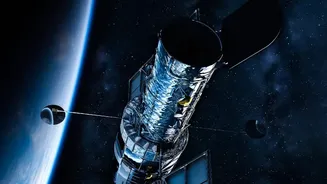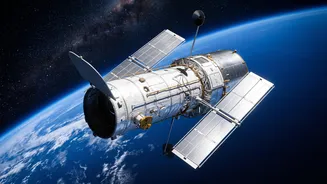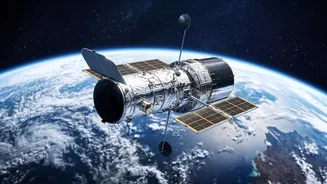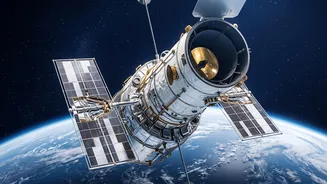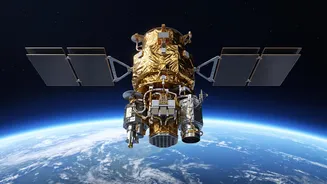

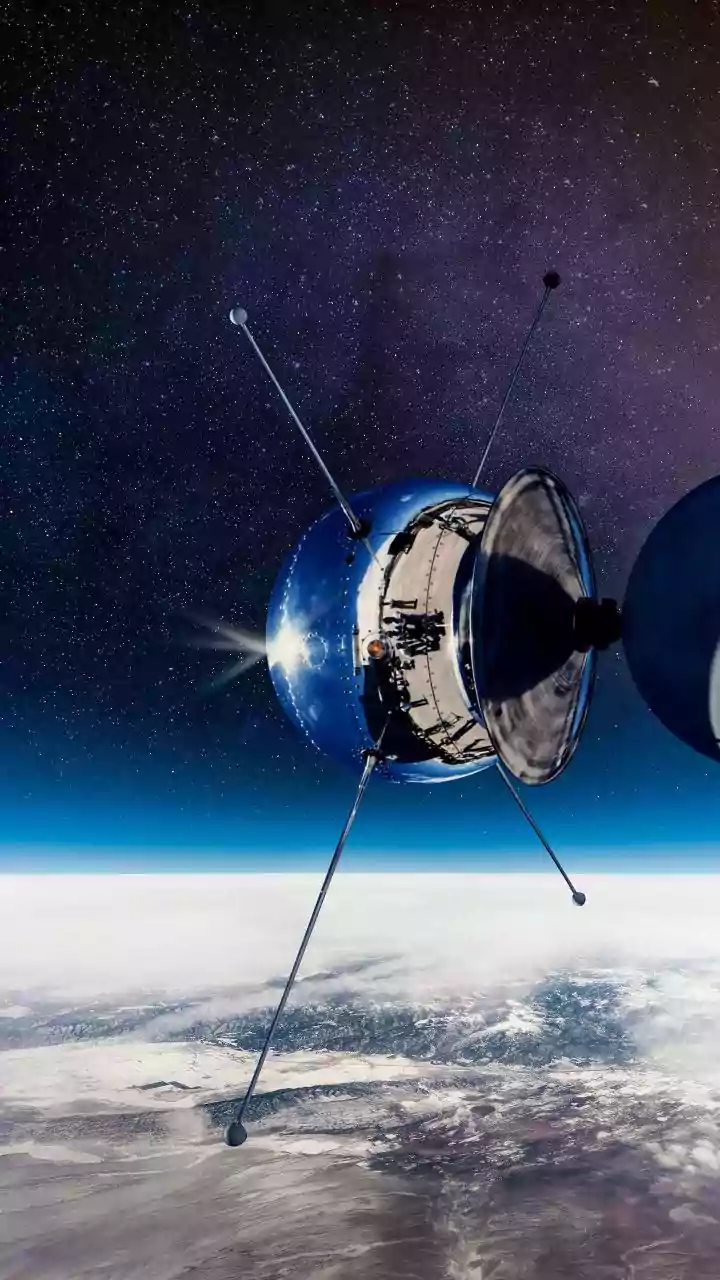
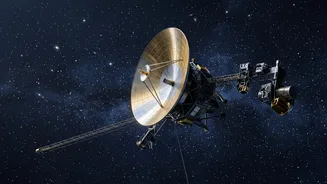
On November 4, NASA's Neil Gehrels Swift Observatory ended its nearly 22-year mission in a fiery plunge through Earth's atmosphere. But this was no tragedy; it was the final act for one of astronomy's most prolific explorers.
An End Foretold, A Legacy Secured
Launched in November 2004,
the Swift Observatory was designed for a two-year mission to solve the mystery of gamma-ray bursts (GRBs). It outlasted that initial plan by two decades, becoming a stalwart of space-based astronomy. In recent years, increased solar activity expanded Earth's upper atmosphere, increasing the drag on the satellite and causing its orbit to decay. After a failed commercial rescue attempt in the summer of 2026, the observatory's fate was sealed. On October 20, with its altitude too low to maintain stability, NASA and its mission partners at Penn State sent the final commands, ending its scientific operations ahead of its inevitable reentry.
The Universe's Most Powerful Explosions
Swift's primary purpose was to hunt for gamma-ray bursts, the most powerful explosions in the universe since the Big Bang. These fleeting, intensely bright flashes of energy can release as much power in seconds as our Sun will in its entire 10-billion-year lifetime. Before Swift, their origins were a profound puzzle. Scientists theorized they came from catastrophic events like the collapse of massive stars into black holes (long bursts) or the collision of dense neutron stars (short bursts). The problem was their transience; by the time telescopes could be pointed at their location, the crucial early moments were gone.
A Rapid-Response Revolution
Swift, whose name refers to its speed, was designed to solve this problem. It was a first-of-its-kind, multi-wavelength observatory capable of autonomous, rapid slewing. Its Burst Alert Telescope would detect a GRB, and within about a minute, the entire spacecraft would pivot to aim its more sensitive X-ray and Ultraviolet/Optical telescopes at the source. This ability to quickly find a burst and study its fading afterglow in different light spectrums was revolutionary. Swift detected over 2,000 GRBs during its mission, providing a massive catalog of data that helped confirm the origins of both long and short bursts. In 2005, it captured the first ever Xray afterglow from a short GRB, providing key evidence linking them to neutron star mergers.
More Than a One Trick Pony
While built for GRBs, Swift's agility made it an invaluable multi tool for 'time domain' astronomy—the study of objects that change over time. Scientists used it to observe over 1,400 supernovae, often catching them just after the explosion. It studied comets and asteroids in our own solar system, monitored flares from active galaxies powered by supermassive black holes, and even captured a star being torn apart by one. Famously, when the first gravitational waves from a neutron star merger were detected in 2017, Swift was among the first telescopes to observe the ultraviolet light from the event, a 'kilonova', helping to confirm that such collisions create many of the universe's heavy elements.