






An Eye on the Violent Universe
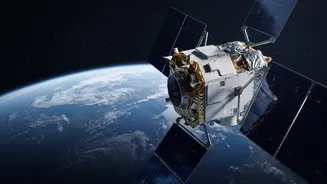
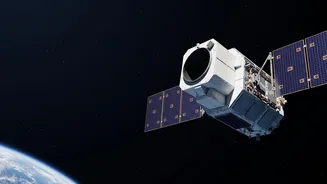
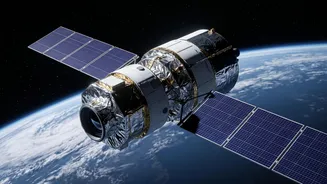
Launched in 2004, the Neil Gehrels Swift Observatory was designed for a mission of just two years, but it has delivered incredible science for over two decades. Its purpose is to be an agile cosmic detective, rapidly swivelling its suite of telescopes
to study some of the most powerful and fleeting events in the universe. When a massive star collapses into a black hole or two neutron stars merge, they can unleash a gamma-ray burst (GRB) — a blast of energy brighter than a billion suns. Swift's primary job is to detect these flashes, pinpoint their location, and study their fading afterglow across X-ray, ultraviolet, and visible light. This rapid-response capability has given astronomers a treasure trove of data, fundamentally changing our understanding of the universe's most violent phenomena.
The Inevitable Fall
Like any object in low Earth orbit, Swift is constantly dragged downward by the wisps of Earth’s upper atmosphere. The observatory was launched without its own propulsion system, so an eventual re-entry was always its destiny. However, in recent years, this process has accelerated dramatically. Increased activity from our Sun has heated and expanded the atmosphere, creating more drag on the spacecraft. Its orbit, which started at around 600 kilometres, decayed to a critical level, putting it on a collision course with the thicker atmosphere below. Projections showed that without intervention, the celebrated observatory would meet its end sometime in late 2026.
A Bold Rescue Plan
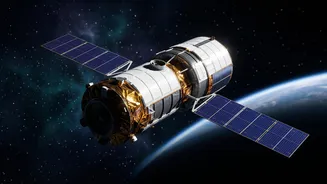
Refusing to let the valuable asset die, NASA embarked on a bold and unconventional plan: a commercial rescue mission. In late 2025, the agency awarded a $30 million contract to Katalyst Space, an Arizona-based startup, to build and fly a servicing spacecraft. Developed on an unprecedented, breakneck timeline of less than a year, the probe was named LINK. The plan was for LINK to launch, rendezvous with the aging Swift, carefully grapple it with robotic arms, and then use its own thrusters to gently push the observatory back into a higher, more stable orbit, extending its scientific life for years to come. It was a high-risk, high-reward mission that aimed to pioneer new capabilities for in-space servicing.
What Went Wrong
The LINK spacecraft launched successfully on July 3, 2026, and initial checkouts were positive. However, several weeks into its journey, disaster struck. The probe suffered a critical failure in its attitude control system, the hardware that allows a spacecraft to orient itself and remain stable. Two of its three reaction wheels failed, and a separate issue with its thruster system emerged, sending LINK into an uncontrollable spin in orbit. Ground controllers at Katalyst and NASA worked heroically to salvage the mission, managing to slow the tumble with software updates. But the damage was done. The persistent control problems meant LINK could no longer be trusted to perform the delicate, high-precision maneuver of docking with Swift without risking a collision.
Swift's Final Chapter
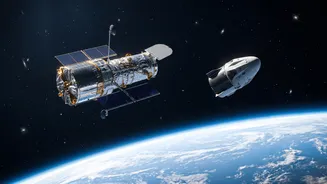
On August 19, 2026, NASA and Katalyst made the difficult call to officially abandon the orbit-boost attempt. The failure of the rescue mission means there are no further plans to save the Swift Observatory. Its fate is now sealed. Later this year, after more than 21 years of service, the 1,500-kilogram spacecraft will plunge into the atmosphere and burn up. While the primary mission failed, it is not a total loss. As a consolation, LINK will still attempt a close fly-by of Swift. This will allow engineers to test rendezvous and proximity operations, gathering crucial data that could help a future rescue mission — perhaps for another aging icon like the Hubble Space Telescope — succeed where this one did not.