


A Groundbreaking Look at Our Star
Scientists have released the sharpest images ever taken of the sun's surface, capturing phenomena that were previously only theoretical. The images, highlighted by NASA, reveal mesmerising, whirlpool-like structures of super-heated gas, or plasma, swirling
at the edges of the sun’s granular-looking surface. Some of these vortices are incredibly small by solar standards, measuring as little as 20 kilometres across. These are the first direct observations of a process known as the Kelvin-Helmholtz instability (KHI) on the sun's photosphere, its visible surface. This instability occurs when two streams of fluid—in this case, plasma—flow past each other at different speeds, creating a shearing effect that curls into swirls and waves. While we can see this effect on Earth in cloud formations and ocean waves, spotting it on the sun is a monumental achievement.
The Technology Behind the Triumph
These incredible views were captured by the Daniel K. Inouye Solar Telescope, the world's most powerful solar observatory, located atop the Haleakalā volcano in Hawaii. Operated by the U.S. National Science Foundation's National Solar Observatory, the telescope boasts a massive 4-metre mirror that allows it to resolve details on the sun's surface with astonishing clarity. While the telescope itself is an NSF facility, NASA plays a key role in sharing and interpreting the data, featuring the discovery as its prestigious Astronomy Picture of the Day. The resulting images are so detailed that they show the constant churn of the sun's plasma in a region near a sunspot, providing a live look into the physics that drive our home star.
Solving a Decades-Old Solar Mystery
One of the biggest puzzles in astrophysics is the coronal heating problem: why is the sun’s outer atmosphere, the corona, hundreds of times hotter than its surface? The sun’s surface is about 5,500 degrees Celsius, but the corona above it can blaze at over a million degrees. Scientists have long suspected that energy must be transferred from the surface to the atmosphere, but the mechanism was unclear. The newly observed Kelvin-Helmholtz vortices might be the answer. Researchers believe these tiny, energetic swirls act as conduits, helping to move magnetic energy from the roiling surface up into the corona, heating it to its extreme temperatures. By observing this process directly, scientists can finally test theories about how our star works.
Understanding Solar Flares and Space Weather
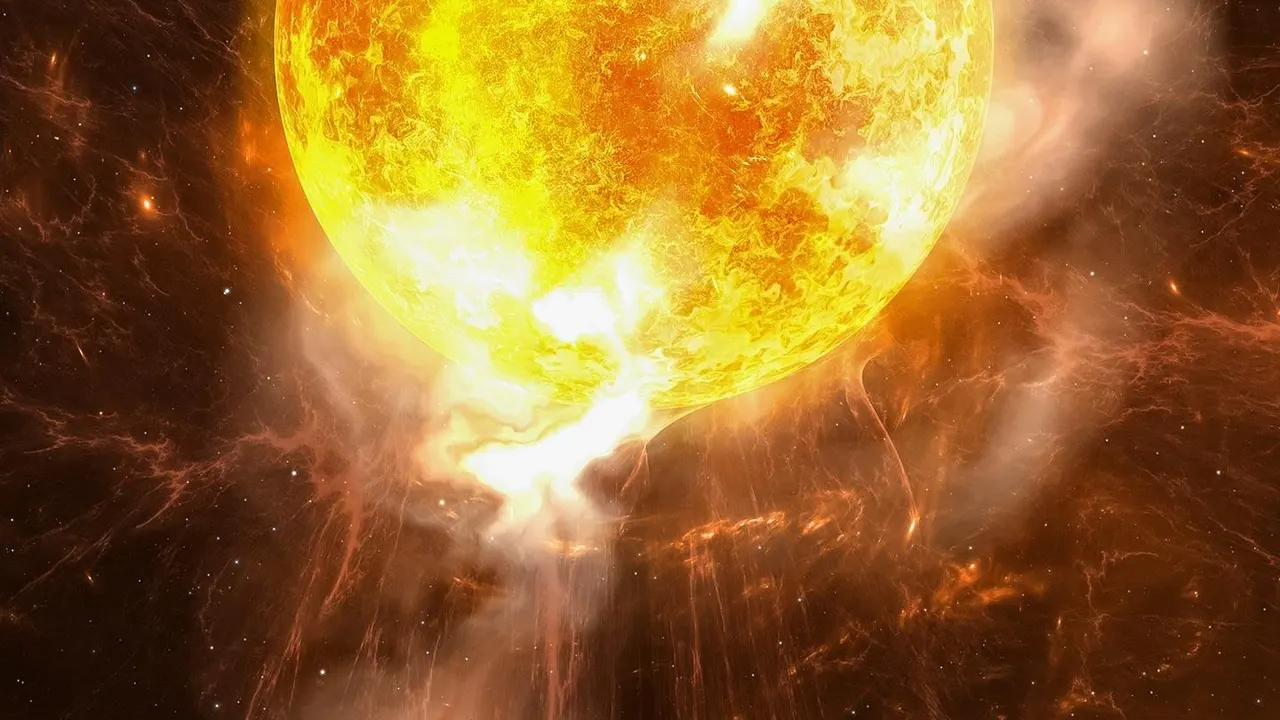
Beyond solving a fundamental mystery, these observations have practical implications for us on Earth. The sun's magnetic field is responsible for explosive events like solar flares and coronal mass ejections (CMEs). These eruptions blast huge amounts of radiation and charged particles into space. When directed at Earth, this 'space weather' can disrupt our satellites, cripple GPS and communication networks, and even take down power grids. The newly observed vortices are believed to play a crucial role in the build-up of magnetic energy that leads to these explosions. The twisting motions of the plasma braids and strains the sun's magnetic field lines like a rubber band being twisted until it snaps. Understanding what starts this process is the first step toward better predicting these powerful solar outbursts and protecting our vital infrastructure.